

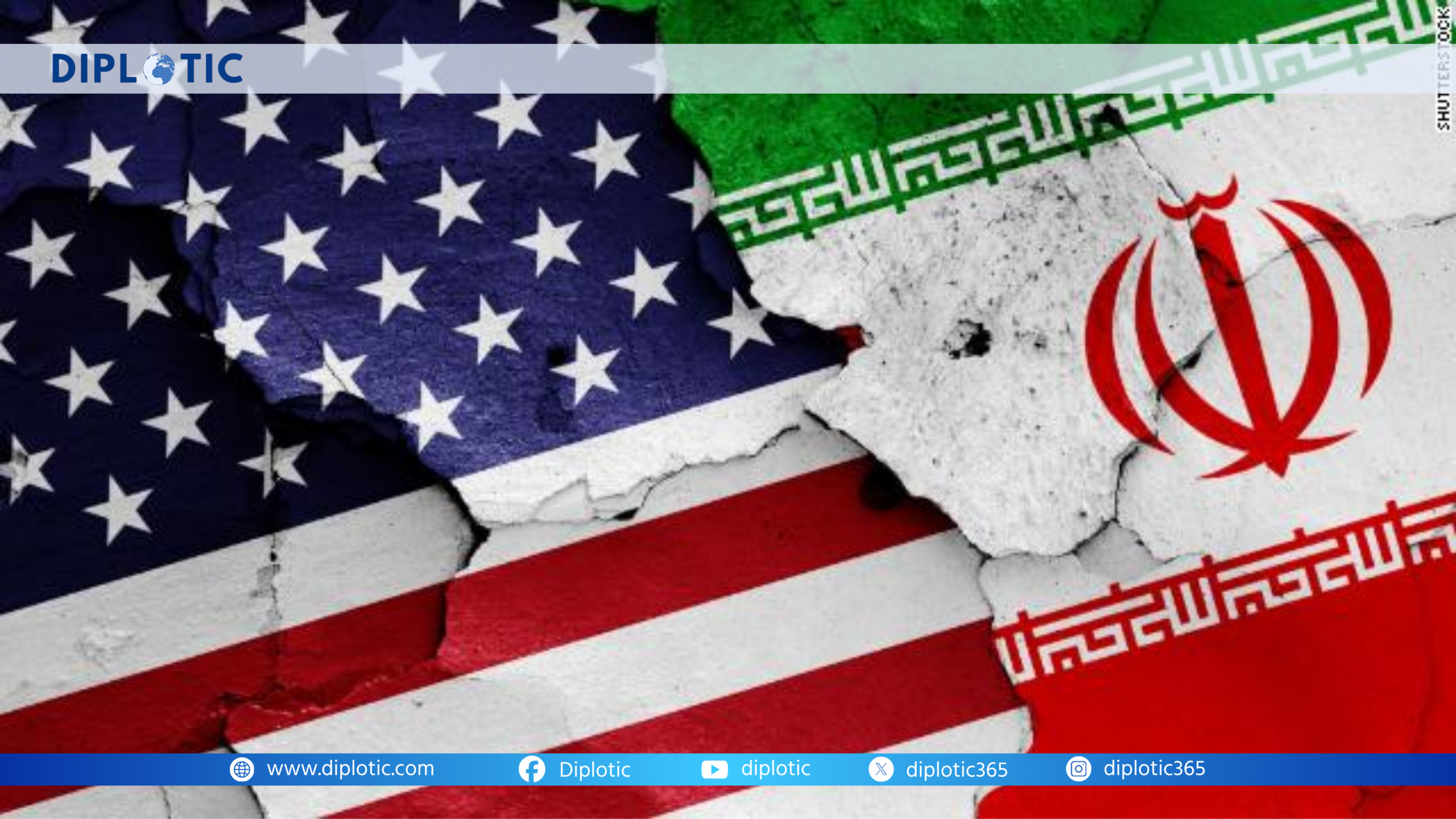
The ongoing war involving Iran has triggered not only military escalation but also a deeper debate about the global system that governs international relations. For decades, Western leaders have promoted what they call a “rules-based order,” built on international law, multilateral institutions, and shared norms. Yet recent developments raise a pressing question: is this system still functioning, or is it quietly being replaced by a more direct form of power politics? As statements from key figures and actions on the ground begin to diverge, the gap between declared principles and actual behavior is becoming harder to ignore.
Is the Rules-Based Order Still Real or Just a Narrative?
The idea of a rules-based international system emerged strongly after World War II, when institutions like the United Nations were established to prevent future conflicts. Over time, Western powers, particularly the United States and European allies, positioned themselves as defenders of this system. They emphasized international law, diplomacy, and collective decision-making as the foundation of global stability.
However, recent events linked to the war with Iran suggest a different reality. Critics argue that the application of international rules has become selective. Actions taken by Western powers are often justified as necessary or defensive, while similar actions by others are condemned. This uneven approach has led to growing skepticism, especially among countries outside the Western bloc.
Statements from political leaders have added to this perception. Remarks by Marco Rubio about Western expansion over centuries have been interpreted by some analysts as a reflection of older power dynamics rather than modern legal principles. At the same time, discussions at global forums such as the World Economic Forum have highlighted concerns that economic tools like sanctions, trade policies, and financial systems are increasingly being used as instruments of pressure rather than cooperation.
The contradiction is clear. On one hand, the rules-based order is still presented as the guiding framework. On the other, real-world actions often reflect strategic interests over shared rules. This raises an important question: if rules are applied differently depending on who is involved, can the system still claim legitimacy?
For many observers, the answer is uncertain. The current conflict has exposed the limits of global governance structures. It has also shown that when major powers act outside established norms, the system struggles to respond effectively. This does not necessarily mean the order has collapsed, but it does suggest that it is under significant strain.
How Has the Iran War Exposed Global Double Standards?
The war involving Iran has become a clear example of how different standards are applied in international politics. One of the most debated issues is how military actions are framed. Strikes carried out by some countries are described as preventive or stabilizing, while retaliatory actions by others are labeled as aggression. This difference in language shapes global perception and influences diplomatic responses.
At the level of the United Nations Security Council, this imbalance is also visible. Recent resolutions have focused on condemning certain actions while remaining silent on others. Such selective attention raises questions about whether international institutions are able to act independently or are influenced by the interests of powerful member states.
Another example lies in the treatment of nuclear issues. Iran’s nuclear program has long been under scrutiny, with inspections conducted by the International Atomic Energy Agency. The 2015 nuclear agreement, known as the Joint Comprehensive Plan of Action, had placed limits on Iran’s activities. However, the withdrawal of the United States from the agreement in 2018 changed the situation significantly.
This sequence of events has led to a complex narrative. On one side, concerns about nuclear development are emphasized. On the other, the breakdown of agreements and shifting commitments raise questions about consistency and trust. For many countries, this creates uncertainty about how international agreements are enforced and whether they can be relied upon.
The broader impact of these double standards is a decline in confidence. Countries that feel disadvantaged by the current system may begin to act more independently, reducing cooperation and increasing competition. This shift does not happen overnight, but the Iran conflict has accelerated the process.
In this context, the war is not just a regional issue. It is a case study in how global rules are interpreted and applied. The outcomes may influence future conflicts, as states reassess the value of following a system that appears uneven in practice.
Are We Entering a New Era of Great-Power Rivalry?
The current situation suggests that the global system may be moving toward a period defined less by shared rules and more by competition between major powers. This idea has been discussed openly by leaders such as Mark Carney, who has warned that the world could be entering a phase where stronger countries act more freely while weaker ones face greater pressure.
This shift is visible in several areas. Economic tools are being used strategically, with trade policies, tariffs, and financial systems becoming part of geopolitical competition. Supply chains, once seen as neutral networks of trade, are now viewed as points of vulnerability. Countries are working to secure critical resources and reduce dependence on others.
The war involving Iran has reinforced these trends. Disruptions to energy supplies, especially through key routes like the Strait of Hormuz, have shown how regional conflicts can have global consequences. As a result, countries are rethinking their strategies, focusing more on resilience and less on cooperation.
Middle powers, including those in Europe and Asia, face a particular challenge. They are not strong enough to shape the system alone but are deeply affected by its changes. This has led to calls for greater coordination among these countries to protect their interests. However, achieving such coordination is difficult, given differing priorities and alliances.
The concept of great-power rivalry is not new. It has shaped much of modern history, including periods before and after World War II. What is different today is the level of economic interdependence. Countries are more connected than ever, which makes conflicts more complex and their impacts more widespread.
If this trend continues, the global system may become less predictable. Agreements may be harder to reach, and existing institutions may struggle to adapt. The Iran war, in this sense, is not just a conflict but a signal of broader changes in how power is exercised.
What Comes Next for Global Stability and Governance?
The key question now is what kind of system will emerge from the current crisis. Will the rules-based order adapt and regain credibility, or will it gradually give way to a more fragmented and competitive environment?
One possibility is reform. International institutions like the United Nations could be strengthened to address current challenges more effectively. This would require agreement among major powers, which is difficult but not impossible. Rebuilding trust in global rules would also involve more consistent application and greater transparency.
Another possibility is continued fragmentation. Countries may focus more on regional alliances and bilateral agreements, reducing reliance on global frameworks. This could lead to a world where different regions operate under different rules, increasing complexity and uncertainty.
The role of public opinion should not be overlooked. As global awareness increases, citizens are paying closer attention to international events. This can influence government decisions and shape foreign policy. In democratic systems, public pressure can push leaders to act in ways that align more closely with stated principles.
At the same time, technological and economic changes are adding new dimensions to global governance. Issues such as cyber security, energy transition, and digital finance are becoming central to international relations. These areas require cooperation, even in a competitive environment.
The war involving Iran has exposed weaknesses in the current system, but it has also created an opportunity for reflection. It highlights the need to align actions with principles and to address the gaps between them.
In the end, global stability depends not only on power but also on trust. If countries believe that rules are fair and consistently applied, they are more likely to follow them. If not, the system risks becoming less effective over time.
The present moment stands at a crossroads. The choices made now will shape the future of international relations, determining whether the world moves toward renewed cooperation or deeper division.




