

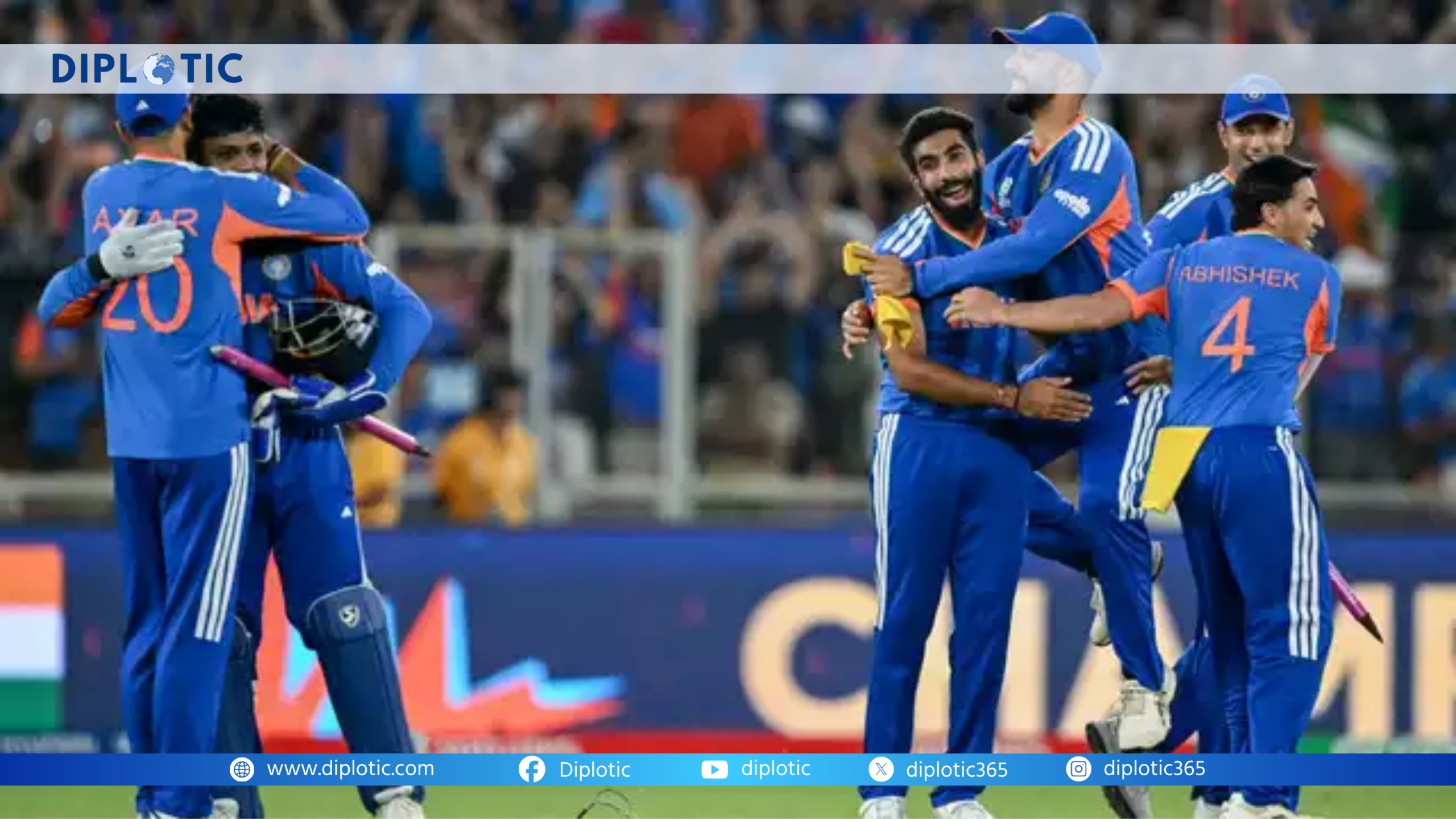
On a balmy evening at the Narendra Modi Stadium in Ahmedabad, before a crowd of 86,824 fans, the Indian cricket team produced what can only be described as a perfect performance. On March 8, 2026, India overwhelmed New Zealand by 96 runs to claim their third ICC Men’s T20 World Cup title, becoming the first nation to lift the trophy three times and the first to successfully defend it . The victory was comprehensive, emphatic, and entirely fitting for a team that had spent the tournament evolving into an unstoppable force. By the time the final ball was bowled, India had not only won a world title but had also exorcised the ghosts of a painful final at the same venue two years earlier . This is the story of that extraordinary night, the players who made it possible, and what it means for Indian cricket.
How Did India’s Innings Unfold in the Final?
The stage was set when New Zealand captain Mitchell Santner won the toss and elected to bowl first, a decision that would quickly unravel in the face of India’s relentless batting assault . Abhishek Sharma and Sanju Samson walked out to open, and what followed was a powerplay performance that consumed New Zealand whole.
The first two overs were cautious, yielding just 12 runs as Glenn Phillips bowled his off-spin to India’s left-hand dominant top order . But the introduction of Jacob Duffy changed everything. Abhishek, having shown early restraint, found Duffy’s pace and fuller lengths to his liking, clearing the infield straight down the ground twice. Samson added a six of his own. By the time the powerplay ended, India had raced to 92 runs in just 44 balls, with Abhishek reaching a 18-ball half-century—the fastest of the tournament—in a World Cup final . The opening partnership of 98 runs in 7.1 overs effectively put the game beyond New Zealand’s reach .
After Abhishek fell for 52 off 21, Ishan Kishan arrived at number three with no interest in slowing down. He announced himself with a flicked four through mid-wicket and a guided boundary past point. By the 10th over, India had 127. Samson, relatively subdued by his own lofty standards, still reached a 33-ball half-century, joining only Shahid Afridi and Virat Kohli in the history of batters who have scored fifties in both the semi-final and final of a T20 World Cup . He celebrated by launching Ferguson for two sixes and a four, then hitting Ravindra for three sixes in a row.
The middle overs brought temporary respite for New Zealand when James Neesham struck three times in the 16th over, removing the set Samson (89 off 46) and Kishan (54 off 25), and then having Suryakumar Yadav caught . India went 16 balls without a boundary, and the total seemed destined to settle somewhere under 240. But Shivam Dube had other ideas. Walking in with 18 balls remaining, he smashed three fours and two sixes off Neesham’s final over, powering India to a mammoth 255 for 5 . It was the highest total ever conceded by New Zealand in T20Is and the second-highest in a World Cup final .
How Did India’s Bowlers Defend the Total?
Chasing 256, New Zealand’s best hopes lay in their opening pair producing an encore of their semi-final performance. Finn Allen was dropped by Dube in the first over, and a 21-run second over from Hardik Pandya gave the Kiwis a strong start . But that was as good as it got.
Axar Patel, brought on to bowl the third over, won his match-up against Allen, having him caught at long-on . Then, for the second game in a row, Jasprit Bumrah struck with his first delivery—a slower ball that deceived Rachin Ravindra, who top-edged to Kishan at deep backward square leg . Before the powerplay ended, Axar had cleaned up Glenn Phillips to begin the procession.
Tim Seifert brought New Zealand some joy, taking down Varun Chakaravarthy for 16 to complete a 23-ball fifty . But Chakaravarthy had his man in the next over, with Kishan completing another fine catch in the deep. Before that dismissal, Pandya had Mark Chapman dragging on. At 72 for 5, the match was effectively done.
There was still time for Bumrah to conjure more magic. He finished with figures of 4 for 15, cleaning up Neesham and Henry off successive deliveries and then dislodging Santner’s stumps . It was a fitting end to another phenomenal tournament for Bumrah, who had been named Player of the Tournament 18 months earlier and was now cementing his legacy as one of the greatest limited-overs bowlers of all time . New Zealand were bowled out for 159, handing India a 96-run victory .
What Does This Victory Mean for Indian Cricket?
This triumph represents more than just another trophy in the cabinet. It marks the culmination of a remarkable transformation in Indian white-ball cricket. After going 11 years without an ICC title, India has now won three in three years: the T20 World Cup in Barbados in 2024, the Champions Trophy in 2025, and now this T20 World Cup in 2026 . The only blemishes in this period have been two losses—the 2023 World Cup final to Australia at this very venue, and a group stage loss to South Africa in this tournament . As one commentator noted, those remain “the only two losses over four ICC white-ball tournaments, the full extent of India’s fallibility in this period” .
The victory also validates the post-2024 transition. After the retirements of several big names following the Barbados triumph, a new generation has stepped up. The opening partnership of Abhishek Sharma and Sanju Samson, forged in that aftermath, was “the engine of this alpha version of India’s T20 side” . Their 98-run stand in the final was the foundation upon which victory was built.
For the players, individual accolades abound. Samson joined an elite group with his semi-final and final fifties. Abhishek’s 18-ball half-century was the fastest in a World Cup final. Bumrah’s 4 for 15 was a masterclass in death bowling. But perhaps most importantly, the team demonstrated a brand of cricket so complete and so suffocating that it “began to feel almost offensive to the format’s own sensibilities” .
What Did the Victory Mean for the Fans?
The setting added its own narrative weight. The Narendra Modi Stadium had been the site of India’s most painful defeat in recent memory—the 2023 World Cup final loss to Australia . That ghost was constantly invoked in the build-up, along with the group stage loss to South Africa two weeks earlier . For the 86,824 fans in attendance, almost every one of them unilaterally and deafeningly Indian, this final was a chance at redemption.
When Mitchell Santner won the toss and asked India to bat, there was another small nod to the past. But then Abhishek and Samson walked out, and the past became irrelevant . By the time the powerplay ended, the crowd knew they were witnessing something special. By the time Bumrah took his fourth wicket, the celebration had already begun.
For the millions watching around the world, this victory was a reminder of cricket’s power to unite and inspire. In a region often divided by politics and conflict, the sight of an Indian team lifting a trophy can transcend boundaries. Fans in Pakistan, Bangladesh, Sri Lanka, and Nepal, whatever their national loyalties, could appreciate the quality of cricket on display and the joy of a well-fought contest.
What Comes Next for India and New Zealand?
For India, the immediate future involves celebration, but the longer-term outlook is one of sustained dominance. This team has shown it can win from any position, with batters capable of posting 250-plus totals and bowlers capable of defending them. The transition to a new generation has been seamless, and the pipeline of talent shows no signs of drying up. With three ICC titles in three years, India has set a standard that other teams will struggle to match.
For New Zealand, the final was a disappointment but not a disaster. They were worthy finalists who played excellent cricket throughout the tournament. Tim Seifert’s fighting fifty, Glenn Phillips’ early bowling spell, and James Neesham’s three-wicket over were bright spots in an otherwise difficult night. The Kiwis have a habit of bouncing back from final defeats, and there is no reason to think this will be different.
Conclusion
India’s 96-run victory over New Zealand in the T20 World Cup final was more than just a cricket match. It was a statement of intent, a demonstration of dominance, and a moment of redemption. For a team that had suffered heartbreak at this very venue two years earlier, lifting the trophy in front of 86,824 home fans was the perfect ending to a perfect campaign.
As one writer put it, “There was only ever going to be one ending. Not because India were inevitable—T20 cricket is still a capricious and unsparing format and we are told it does not do inevitable. And yet here they were, having taken a few games to fully locate themselves again, and then producing three 250-plus scores in their last four, playing a brand of cricket so complete and so suffocating that it began to feel almost offensive to the format’s own sensibilities” .
That is the mark of a great team: not just winning, but winning in a way that redefines what is possible. India has done that. The trophy is theirs, and so is the future.




