

In the crowded, bustling cities and villages of South Asia, one sound unites more than 500 million people: the crack of a bat striking a ball. Cricket in this region is far more than a sport. It is a cultural phenomenon, a source of collective identity, and increasingly, a stage for diplomatic confrontation. From the narrow bylanes of Lahore to the sprawling maidans of Mumbai, from the hills of Kandahar to the beaches of Colombo, the game is woven into the fabric of daily life. But as the region’s politics have grown more complex, so too has the role of its beloved sport. Today, cricket serves simultaneously as a bridge and a battleground—a space where post-colonial identity is celebrated, where migrant communities maintain ties to their roots, where economic power is displayed, and where geopolitical rivalries play out in full view of hundreds of millions of fans .
How Did Cricket Become South Asia’s Game?
Cricket arrived in South Asia with British colonizers, but it was transformed by the people who adopted it. As one commentator noted, “Cricket is an Indian sport that the English discovered by accident” . This observation captures a profound truth: while England invented the game, South Asia perfected it as a cultural force. Today, approximately 90 percent of cricket’s one billion global fans live in South Asia . Five South Asian nations—India, Pakistan, Bangladesh, Sri Lanka, and Afghanistan—are among the twelve elite full members of the International Cricket Council . Together, they have won four of the thirteen men’s Cricket World Cups, with India, Pakistan, and Sri Lanka all claiming cricket’s ultimate prize .
The game’s deep roots in the region are visible at every level. At the recent Under-19 World Cup, an extraordinary statistic emerged: of the 240 young cricketers competing, 92 were either South Asians or had South Asian ancestors, constituting 26 percent of the tournament’s players . A Hindi speaker could be found in ten of the sixteen teams, a Punjabi speaker in seven, and speakers of Gujarati, Telugu, and Malayalam in four . Teams from England, Australia, and New Zealand now regularly feature players of Pakistani, Indian, and Sri Lankan descent. The United States fielded an entire side of second-generation Indians . This pattern reflects the shifting sands of world cricket—a game once segregated on racial lines in Africa and divided along social lines in England and Australia has become a truly global sport, embracing the post-colonial spirit of migration and integration .
For South Asians, cricket is inseparable from memory and identity. As one writer reflected, “So much about sports is about nostalgia for things done better in one’s youth than later in one’s life. If you played a sport as a young person, you developed a body memory of that sport and that memory bathes you with the eternity of youth through your life” . This emotional connection transforms watching cricket into its own kind of physical fanaticism. When India plays Pakistan, fans on both sides experience not just the thrill of competition but the weight of history, the pride of nationhood, and the joy of artistry recognized across borders. As the same observer noted, “Genuine fans love sport. They appreciate artistry. No amount of national pride can take away the excitement of the day when either Jasprit Bumrah or Mohammed Abbas starts their run up with a shining red ball in their hand” .
Why Is the India-Pakistan Rivalry Unlike Any Other in Sports?
The intensity of the India-Pakistan cricket rivalry is fundamentally tied to the history of the subcontinent. Following the Partition of British India in 1947, the two nations emerged with complex, often strained diplomatic relations . The cricket pitch frequently serves as a proxy theater where the broader historical and geopolitical realities are projected by fans and media, amplifying the emotional stakes of every delivery . The two sides played their first match against each other in 1952, and from that moment, the game was drawn fully into the geopolitical rivalry between the states .
What makes this rivalry unique in world sports is scarcity. Due to ongoing tensions, India and Pakistan have not engaged in a bilateral cricket series since the 2012-13 season . They currently face each other only in multilateral tournaments like the ICC World Cups or the Asia Cup. This scarcity transforms every encounter into a rare, high-stakes event, driving anticipation to levels unseen in regular international fixtures . When they do meet, viewership regularly crosses hundreds of millions globally, far exceeding the Super Bowl’s reach. The February 15, 2026 T20 World Cup clash was expected to draw around 325 million viewers, more than double the record for America’s biggest sporting event .
The economic stakes are equally staggering. Television networks charge astronomical premiums for advertising slots during these matches. Ten-second advertisements during Pakistan’s T20 matches can range between 2.5 to 4 million rupees . The revenue generated from a single India-Pakistan fixture heavily subsidizes the operations of the International Cricket Council and, by extension, the global development of the sport . As one analyst put it, “A World Cup without the blockbuster Pakistan-India clash is like a body without a heart—financially dead” .
How Has Cricket Functioned as a Diplomatic Tool?
For decades, there has been a long-standing theory in South Asian diplomacy that cricket functions as a safety valve. The pitch was viewed as a “demilitarized zone,” a rare space where India and Pakistan could engage without the immediate threat of escalation . This concept of “cricket diplomacy” assumes that cultural exchange can serve as a precursor to political dialogue. Heads of state have famously attended matches to ease tensions. In 1987, Pakistan’s President Zia-ul-Haq visited India for a test match to defuse border tensions . In 2005, Pakistan’s President Pervez Musharraf watched a match with Indian Prime Minister Manmohan Singh . In 2011, Prime Minister Yousaf Raza Gilani traveled to Mohali for the World Cup semi-final at the invitation of Prime Minister Manmohan Singh, an overture that came as the two countries sought to improve relations .
These gestures used the shared love of cricket to humanize the adversary and create openings for dialogue. From General Zia’s famous visit to Jaipur to the goodwill tours of the mid-2000s, the sport was employed to build bridges when official channels were frozen . As one scholar noted, even in childhood fantasies of united South Asian teams, there existed a recognition that cricket was something shared—and anything shared, while capable of dividing, also represented common culture worth cherishing .
Has the “Gentleman’s Game” Lost Its Diplomatic Utility?
Recent events suggest a troubling shift. The romantic ideal of cricket diplomacy may be giving way to a new reality in which sport is weaponized to reinforce hard borders rather than build bridges . The September 2025 Asia Cup in Dubai marked a significant escalation. Following the final, the victorious Indian team broke with decades of sporting tradition by refusing to shake hands with the Pakistani players . More strikingly, the Indian captain refused to accept the championship trophy from Asian Cricket Council President Mohsin Naqvi, who also serves as a minister in the Pakistani government .
To casual observers, this might appear as mere petulance. But from a diplomatic perspective, it was a calculated signal. By refusing the trophy from a Pakistani state representative, New Delhi was effectively rejecting the legitimacy of that representation . Prime Minister Narendra Modi’s subsequent characterization of the victory as “Operation Sindoor on the games field” explicitly linked a sporting triumph to a military operation, effectively conscripting athletes into the national security apparatus . This rhetorical move validates hardline stances by performing dominance on a global stage, demonstrating how soft power assets can be co-opted to serve hard power narratives .
Sri Lankan commentators expressed dismay at the breakdown of etiquette, asking whether the title “gentleman’s game” still applied to today’s wielders of the willow . The refusal to shake hands, the rejection of trophies, and the silence of governing bodies sent a message that even the most regulated and ritualized form of interaction between the two neighbors could no longer be maintained . As one analyst observed, “The pitch was one of the few remaining spaces for dialogue, however symbolic. By turning it into a proxy battlefield, both nations have reduced the space for de-escalation” .
What Does the T20 World Cup 2026 Crisis Reveal?
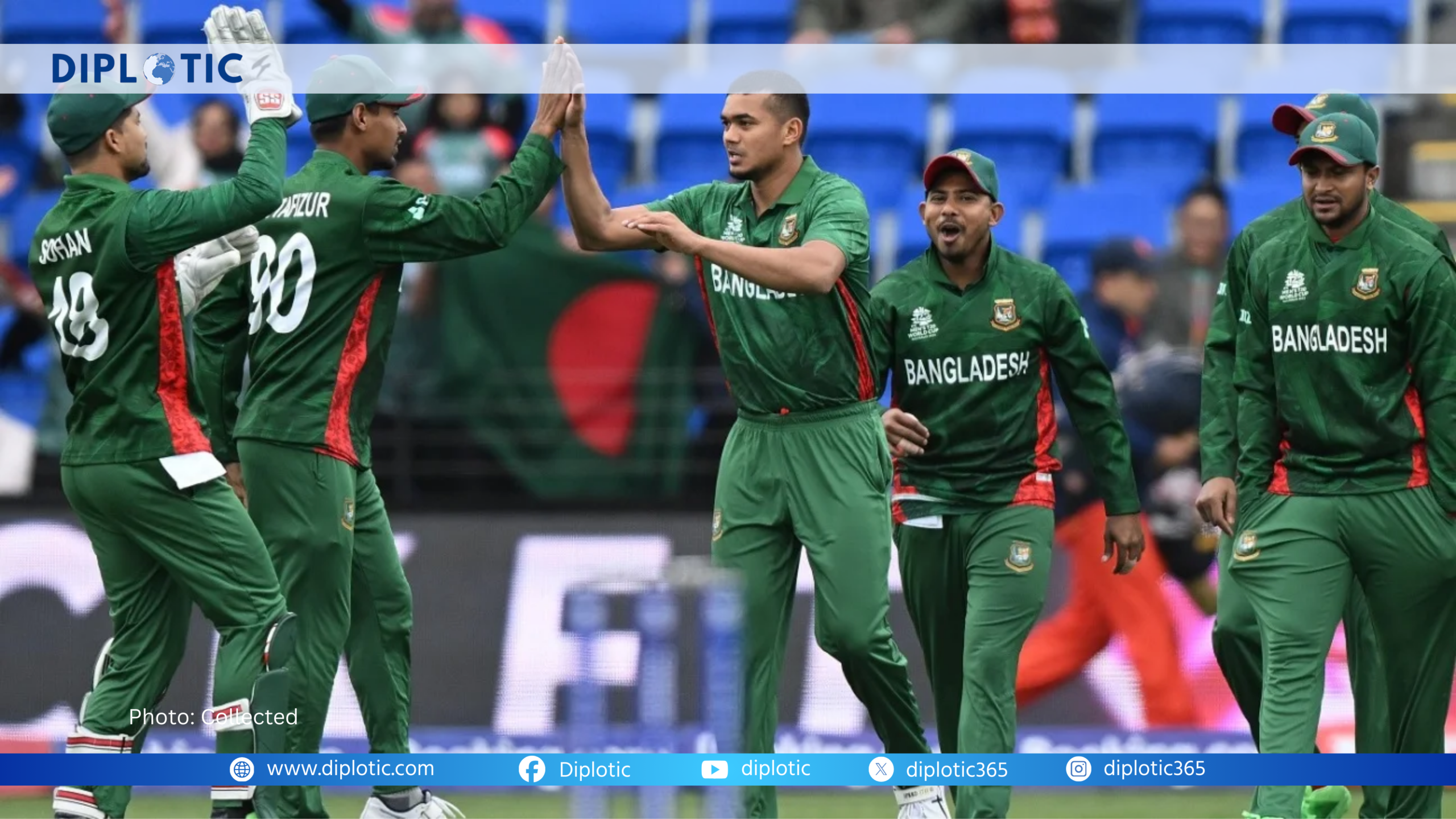
The just-concluded T20 World Cup provided another dramatic illustration of cricket’s entanglement with regional politics. Pakistan initially threatened to boycott its February 15 match against India in solidarity with Bangladesh, which had withdrawn from the tournament after the ICC refused to move its matches from India due to security concerns . The standoff threatened to cancel the most financially lucrative fixture in the tournament.
After intense negotiations involving the ICC, Pakistani and Bangladeshi officials, and even Sri Lankan President Anura Kumara Dissanayake’s outreach to Pakistan’s Prime Minister, a compromise was reached . Pakistan agreed to play, and the crisis was defused. But the sequence of events exposed recurring problems. As one editorial noted, “Cricket in the subcontinent continues to be vulnerable to political conflict, security fears and trust deficit. All is certainly not well—and it’s too optimistic to even talk about the resumption of India-Pak bilateral cricket” .
From Pakistan’s perspective, the outcome represented a diplomatic victory. The PCB entered negotiations with two conditions: that Bangladesh face no penalties for refusing to play in India, and that Dhaka receive guarantees of hosting a major global event before 2031 . Both were accepted. As Pakistani commentators framed it, “This wasn’t a capitulation; it was a diplomatic masterclass” . The crisis forged a bond between Islamabad and Dhaka, with the Bangladesh Cricket Board expressing itself “deeply moved by Pakistan’s efforts” . For some, this signaled a shift—a regional bloc suggesting to India that it cannot dictate terms unilaterally .
Yet the underlying vulnerabilities remain. The crisis demonstrated how quickly political tensions can spill onto the cricket field, and how much effort is required to contain them. The lesson for stakeholders, as one editorial put it, is clear: “Let cricket take centre stage; otherwise, the sport will keep falling prey to the games politicians play” .
How Does Cricket Reflect South Asia’s Global Diaspora?
Beyond the subcontinent, cricket serves as a vital link for South Asian diaspora communities. When India and Pakistan play at neutral venues like the Melbourne Cricket Ground or stadiums in New York or Dubai, expatriates turn the occasion into massive cultural festivals . These events sell out stadiums and dominate local economies, demonstrating that the rivalry is not confined to South Asia but is a global cultural phenomenon .
The composition of international teams reflects migration patterns. Two youngsters of Pakistani descent are pillars of the England team. Two Indians and two Sri Lankans are regulars in Australia’s side. New Zealand has four players of Indian origin . For these athletes, cricket bridges their heritage and their present homes. For their communities, watching them play creates moments of pride and connection that transcend borders.
This diaspora dimension adds another layer to cricket’s diplomatic role. When expatriate communities gather to watch matches, they engage in a form of cultural diplomacy themselves, showcasing their traditions and building bridges in their adopted countries. The image of thousands of South Asian fans waving flags in a foreign stadium is a powerful reminder of the region’s global reach and the unifying power of sport.
What Are the Security Challenges Facing Cricket in South Asia?
The sport’s evolution in contemporary South Asia has been profoundly affected by non-cricketing factors, particularly terrorism and security concerns . Since the 1980s, political violence has disrupted cricket in several countries—due to the civil war in Sri Lanka, the rise of the Taliban in Afghanistan, and the growth of terrorist camps in Pakistan . These threats have not only compromised, and sometimes halted, the organization of the game in certain nations but also transformed the nature of cricketing relations in the region .
Security fears have been repeatedly invoked as justification for refusing to play in certain countries. India has consistently cited security concerns for not touring Pakistan since 2008, when Pakistani militants launched the Mumbai attacks killing more than 160 people . Pakistan rejects this narrative, pointing out that major international teams have successfully toured the country, and arguing that “the security argument collapses when examined—especially when India itself has struggled at times to secure even individual foreign players” .
Bangladesh’s withdrawal from the T20 World Cup over security concerns in India added another dimension to this debate. Whether genuine or politically motivated, such decisions have real consequences for teams, fans, and the sport’s integrity. As the ICC discovered, managing these competing security narratives while maintaining a functional tournament requires diplomatic skills far beyond ordinary sports administration.
What Is the Future of Cricket in South Asian Diplomacy?
The path forward for cricket in South Asia is uncertain but consequential. On one hand, the sport’s economic power ensures that India-Pakistan matches will continue to be played in international tournaments. The financial stakes are simply too high for either side to permanently withdraw. On the other hand, the erosion of sporting etiquette and the increasing politicization of every interaction suggest that the old model of cricket as a neutral space for engagement may be unsustainable.
Some analysts argue that we have entered an era of “belligerent engagement”—not boycott, which would be disengagement, but using the platform of engagement to publicly display animosity . This strategy serves domestic political purposes by signaling resolve to support bases, but it also highlights the weaknesses of international sporting bodies like the ICC. These institutions function on the premise of cooperation; when member states use them as battlegrounds, governance structures collapse .
Pakistani Senator Sherry Rehman framed the challenge in stark terms: “Selective peace is not peace. Selective sportsmanship is not sportsmanship. If they want sanity in sports, they must first stop creating insanity in diplomacy” . Her words capture the fundamental truth that cricket cannot be insulated from politics when politics pervades every aspect of bilateral relations. Countries cannot demand normalcy in sports while manufacturing hostility in diplomacy .
And yet, hope persists. Genuine fans on both sides continue to appreciate artistry regardless of nationality. The roar that greeted Mohammad Rizwan’s century in Hyderabad a few years ago, the sadness shared when both Babar Azam and Virat Kohli slip into bad form—these moments suggest that beneath the political posturing, the love of the game endures . As one writer put it, “Cricket is a South Asian sport, and anything that is shared is also able to divide. But it is one of our great shared cultures and we should cherish that” .
Conclusion
Cricket in South Asia occupies a unique space—simultaneously a source of identity, a diplomatic tool, an economic powerhouse, and a battlefield for political conflict. Its evolution from colonial import to regional obsession mirrors the region’s own journey through partition, war, and development. Today, as the sport navigates the tensions between its unifying potential and its vulnerability to political manipulation, it faces questions that resonate far beyond the boundary rope.
Can cricket remain a space where shared passion transcends political divides, or will it become merely another arena for nationalist competition? The answer depends not on players or administrators alone, but on the societies that invest so much emotion in the game. For the hundreds of millions who watch, who remember childhood games in narrow streets, who feel pride when their team wins and despair when it loses, cricket will always be more than politics. Whether that sentiment can translate into a force for connection rather than division is one of the most significant questions facing South Asia today.
As the region looks ahead to future tournaments, future encounters, and future opportunities for cricket diplomacy, the lessons of recent crises should not be forgotten. The game’s power to bring people together is precious precisely because it is rare. Preserving that power requires conscious effort from all stakeholders—governments, boards, players, and fans alike. The alternative is a future where even the cricket pitch offers no refuge from the conflicts that divide us, and where the gentleman’s game finally loses its capacity to inspire. That would be a loss not just for South Asia, but for the world.




