
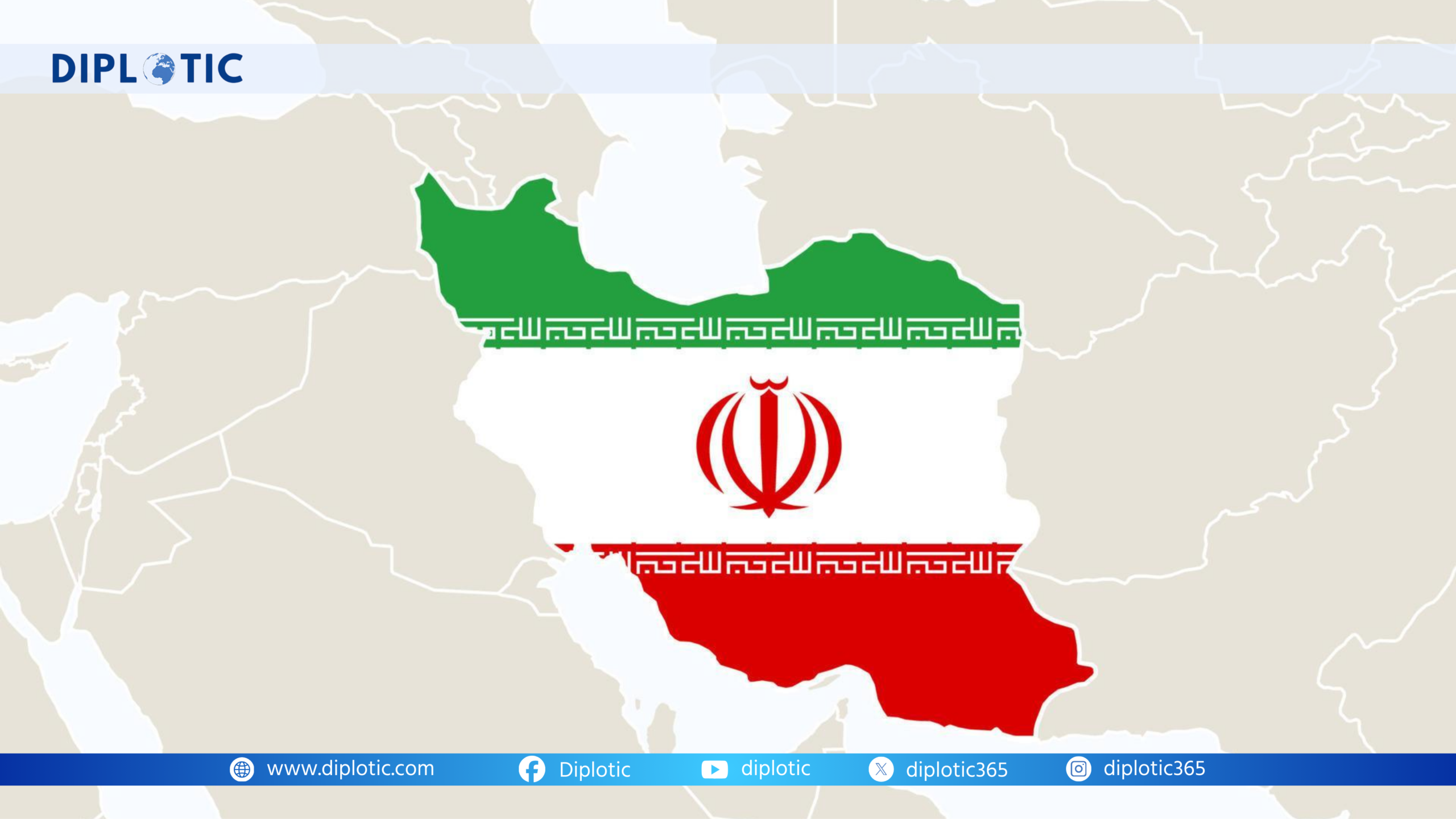
On February 28, 2026, the world changed. In a joint military operation, the United States and Israel launched strikes on Iranian strategic infrastructure, killing Ayatollah Ali Khamenei, Iran’s supreme leader since 1989, along with several senior military and political figures . For South Asians, this is not a distant conflict. It is a crisis with immediate implications for energy prices, trade routes, the safety of millions of citizens working in the Gulf, and the delicate diplomatic balance that countries like India and Pakistan have maintained for decades. When Pakistan’s President warned weeks ago that military action against Iran could destabilize the Persian Gulf, South Asia, and West Asia with “far-reaching global consequences,” he was not exaggerating . Now that the worst-case scenario has arrived, this breakdown explains what happened, why it matters, and what South Asians need to watch in the days ahead.
What Exactly Happened and Who Was Killed?
On Saturday, February 28, US and Israeli forces launched coordinated military strikes against Iranian strategic infrastructure . The operation, described by Washington as necessary to prevent a nuclear breakout and constrain Tehran’s regional influence, achieved what years of sanctions and pressure could not: the death of Ayatollah Ali Khamenei, the 86-year-old supreme leader who had dominated Iranian politics since 1989 . Iranian state television, with a tearful presenter, confirmed that Khamenei “achieved his long-cherished wish of martyrdom in the holy month of Ramadan” . His daughter, son-in-law, daughter-in-law, and granddaughter were also killed in the strikes.
The targeting extended far beyond Khamenei. Iran’s Defense Minister Aziz Nasirzadeh was killed in Tehran . Mohammad Pakpour, commander of the Islamic Revolutionary Guard Corps (IRGC), was also killed. Ali Shamkhani, the secretary of Iran’s defence council and a close adviser to Khamenei, who had narrowly survived an Israeli attack in June 2025, was not so fortunate this time. Abdolrahim Mousavi, chief of staff of the armed forces, was killed. According to reports, around 40 Iranian officials died in the strikes, with Israel announcing the deaths of several others, including Esmail Qaani, head of the IRGC’s elite Quds Force, though these remain unconfirmed by Iranian media . At least 148 civilians, mostly young girls, were killed in a separate strike on a school in the city of Minab .
President Masoud Pezeshkian and other top officials survived, with leadership temporarily transferred to a three-member council . But the Islamic Republic has been decapitated at its highest level, creating a power vacuum with unpredictable consequences.
How Has South Asia Reacted to the Crisis?
The responses from South Asian capitals have been carefully calibrated, reflecting the impossible position they find themselves in. India’s Prime Minister Narendra Modi spoke with Iranian President Pezeshkian, reiterating calls for immediate de-escalation, dialogue, and diplomacy . Modi also spoke with Israeli Prime Minister Benjamin Netanyahu, urging restraint. External Affairs Minister S. Jaishankar held talks with both his Israeli and Iranian counterparts. India launched Operation Sindhu, evacuating over 2,000 Indian nationals from Iran . But New Delhi has shown reluctance to categorically criticize Israel or the United States, abstaining from UN resolutions and Shanghai Cooperation Organization resolutions condemning Israeli actions . This reflects India’s deepening defense and counterterrorism ties with Israel, while maintaining strategic projects like Chabahar port with Iran.
Pakistan’s response has been more complex. Just days before the strikes, President Asif Ali Zardari had warned that military action against Iran would destabilize the region and undermine global peace . After the strikes, Prime Minister Shehbaz Sharif expressed strong solidarity with Iran during a call with President Pezeshkian and condemned the US strikes as violations of international law . But domestically, the government faces backlash for its recent decision to nominate Donald Trump for the Nobel Peace Prize . Meanwhile, on the streets of Karachi, at least nine people were killed in violent clashes with police after hundreds of protesters stormed the US Consulate . Peaceful protests were also held in Multan and Lahore .
In Indian-controlled Kashmir, tens of thousands of mostly Shiite Muslims staged massive demonstrations, chanting “Death to America” and “Death to Israel,” with some wailing in mourning while carrying Khamenei’s portrait . Prominent Kashmiri religious leader Mirwaiz Umar Farooq called the killing “brutal” and said it “has shaken the Muslim world,” calling for a protest strike on Monday . Bangladesh urged the UN and international community to promote peace through dialogue, warning of further regional destabilization . Sri Lanka called for de-escalation, though opposition parties criticized the response as weak . Afghanistan explicitly named the United States in its condemnation .
What Does This Mean for Energy Security and Trade?
For South Asian economies, the most immediate concern is energy. India imports the majority of its oil needs, and about 40% of its crude imports and 55% of its LNG supplies pass through the Strait of Hormuz . Already, oil markets have priced in geopolitical risk, with benchmark Brent futures settling near $73 a barrel, almost $6 higher than at the start of February . Industry executives warn that the scale of this conflict appears far broader than last year’s flare-ups, raising the risk of sustained tensions that could drive oil prices higher and keep them elevated . While Indian consumers may be shielded in the short term by frozen retail prices, higher crude prices squeeze refining margins and widen India’s import bill, putting pressure on the current account deficit and the rupee .
Trade disruptions are already unfolding. The Commerce Ministry has called an emergency meeting of exporters, shipping lines, and freight forwarders to assess the impact . Exporters have expressed serious concerns that the war will affect trade routes through the Strait of Hormuz and the Bab el-Mandeb Strait, both critical for ships connecting India to the Gulf, North America, and Europe . If diversions become prolonged, shipments may have to reroute via the Cape of Good Hope, adding an estimated 15-20 days to transit time . Freight rates and insurance premiums are expected to rise. An oil tanker in the Strait of Hormuz has already come under attack, injuring four Indian and Iranian crew members .
What Are the Security Risks Within South Asia?
The Indian Ministry of Home Affairs has issued a nationwide alert, cautioning States against “possible violence” and “sporadic protests” . Thousands have already taken to the streets across Uttar Pradesh, Jammu and Kashmir, Ladakh, Karnataka, and Delhi. The MHA has asked States to monitor protests by both pro- and anti-Iranian groups at embassies and consulates of Iran, the US, and Israel . They have been instructed to identify “pro-Iran radical preachers giving inflammatory sermons and provoking violent actions” and to monitor social media activities of “pro-Iran extremists and global terrorist group handles” .
The potential targets, according to the MHA, include US and Israeli embassies and consulates, their staff, delegations, business persons, resorts, business establishments, tourist sites frequented by Westerners, synagogues, Chabad Houses, kosher shops, and Jewish community centers . Similarly, Iranian diplomatic missions could also be at risk. States have been asked to enhance security arrangements at these locations and check for Improvised Explosive Devices (IEDs) .
In Pakistan, beyond the Karachi violence, the security situation remains volatile. Shia communities across the region are mourning, and the risk of sectarian polarization is real. Governments across South Asia are carefully calibrating their responses to avoid provoking internal divisions while managing the security threats .
What Strategic Calculations Are at Play?
For India, the crisis could not come at a worse time. The Chabahar Port project, developed to provide India direct access to the Iranian coast and onward connectivity to Central Asia, bypassing Pakistan, is now at risk . India has invested more than $1 billion in Chabahar and related projects. A power struggle in Tehran could make Chabahar “a hostage to instability rather than a strategic asset” . Moreover, Iran’s Shia leadership has traditionally acted as a counterweight to Pakistan’s influence, supporting India diplomatically and opposing anti-India extremist groups . A weakened or collapsing Iran could benefit Pakistan and China, which already has a 25-year strategic cooperation pact with Tehran and remains Iran’s largest trading partner .
For Pakistan, the crisis offers both risks and opportunities. Islamabad seeks to balance ties with Washington—critical for IMF support and military cooperation—while maintaining stable relations with neighboring Iran . US Central Command sees Pakistan as a significant partner, and this moment offers an opportunity for Pakistan to assert its geopolitical weight . But any miscalculation could destabilize its own restive provinces bordering Iran.
What Comes Next?
The key question is whether the Iranian system will collapse or consolidate. Regime change cannot happen through symbolic bombings alone; it requires ongoing pressure on the political, security, and economic foundations that uphold the system . Iran’s political system is complex, security-focused, and built to resist external threats. If Tehran sees the assassination as a fight for survival, it will prioritize mobilizing over negotiating. Reports that Iran is still launching coordinated missile attacks suggest its command and control systems are working . A country that can mount retaliatory strikes after losing its top leader is not disorganized.
But the escalation ladder has steepened dramatically. Hezbollah in Lebanon has vowed to “undertake our duty of confronting the aggression” . Iraqi Shia militias have launched drones at US bases. The Houthis in Yemen may yet respond. The Strait of Hormuz, already witnessing attacks on vessels, could become a full-blown war zone. Oil prices, already elevated, could spike further. Global supply chains, already fragile, could snap.
For South Asians, the message is clear: this is not a distant war. It is a crisis that will affect the price of cooking fuel, the cost of exports, the safety of family members working in Dubai or Riyadh, and the communal harmony of diverse societies. The coming days will test whether the region’s governments can navigate this storm with the caution and wisdom it demands. As one analyst put it, “The echo of a missile strike in Tehran will not remain confined to the Middle East; it will shape boardroom decisions in Mumbai, policy discussions in New Delhi, and diplomatic calculations in capitals across Asia and beyond” . The only certainty is uncertainty, and the only prudent response is vigilance.




