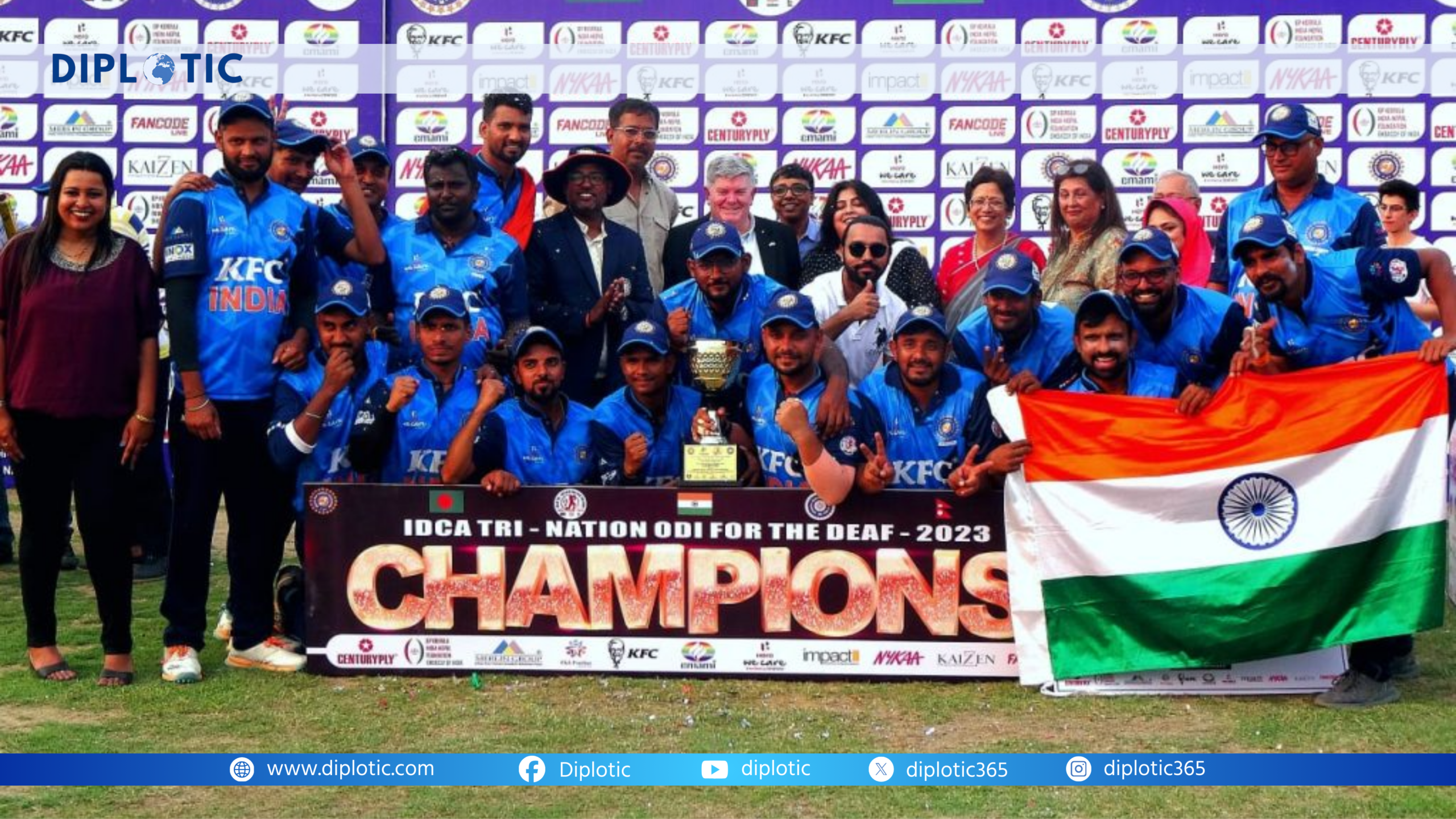
In a moment that will resonate far beyond the boundary ropes, the Indian deaf cricket team has etched its name in the history books by winning the inaugural ADCA T20I Asia Cup. On Wednesday, February 25, 2026, at the iconic Barabati Stadium in Cuttack, the hosts outclassed Sri Lanka by six wickets in a commanding final performance to claim the title . This victory is more than just a trophy. It represents a landmark moment for disability sport in South Asia, a testament to the resilience and skill of hearing-impaired athletes, and a powerful step toward greater inclusivity in a region where cricket is nothing short of a religion. The tournament, organized by the Asian Deaf Cricket Association (ADCA) in partnership with the Deaf Cricket Council of India (DCCI), brought together teams from across the continent, showcasing talent that has long deserved a platform of this magnitude .
How Did India’s Journey to the Title Unfold?
The path to the final was marked by dominance, resilience, and a single narrow setback that only steeled the team’s resolve. India began their campaign with a confident four-wicket victory over the same Sri Lankan side in the tournament opener, immediately establishing themselves as a force to be reckoned with . They followed this with a thumping 10-wicket win over Nepal, a result that underlined their all-round superiority .
The group stage also featured a tense reverse fixture. Sri Lanka, clearly learning from their opening loss, pushed India hard and secured a narrow one-run victory in a low-scoring thriller . This defeat, far from derailing the Indian team, became a turning point. They bounced back emphatically, crushing Nepal by nine wickets in their next match to seal their place in the final against Sri Lanka once again . The final, therefore, was a fitting culmination of the tournament’s narrative—a rematch between the two strongest sides, with India seeking redemption and Sri Lanka aiming to prove their earlier win was no fluke.
Who Were the Stars of the Final and the Tournament?
In the championship match, it was Sai Akash who rose to the occasion and was deservedly named Player of the Match. His explosive 14-ball 27 provided crucial impetus to the Indian innings, and he followed it up by claiming two important wickets, demonstrating his value as a genuine all-rounder . His performance under pressure epitomized the team’s balanced effort.
The tournament, however, also celebrated individual brilliance from the Sri Lankan camp. Gimadu L Malkam was a run-scoring machine throughout the competition, amassing 196 runs to be crowned the best batter and the Player of the Series . His consistency was a major factor in Sri Lanka’s journey to the final. His compatriot, Gihan Lasidu D’ Silva, showcased his bowling prowess by taking 10 wickets in the tournament, earning the well-deserved title of best bowler . These individual accolades highlighted the high quality of cricket on display, with talent flowing freely from both finalists.
What Does This Victory Mean for Disability Cricket in India?
The significance of this triumph extends far beyond the immediate joy of victory. Ravi Kant Chauhan, General Secretary of the Deaf Cricket Council of India (DCCI), captured the sentiment perfectly, calling it a “proud moment for disability cricket in the country.” He emphasized that the victory “reflects the players’ resilience, discipline, and unwavering commitment” . Crucially, he noted that “such milestones reinforce the importance of structured opportunities and continued support to ensure our differently abled athletes receive the recognition and platform they truly deserve” .
This win provides exactly that: a powerful, visible platform. For years, deaf cricketers have trained and competed with limited recognition, their achievements often overshadowed in the mainstream sporting consciousness. By winning an international tournament on home soil, at a historic venue like the Barabati Stadium, these athletes have sent an unmistakable message about their capabilities. It challenges long-held perceptions and forces a conversation about equality in sports infrastructure, funding, and media coverage. The victory proves that when given the opportunity, hearing-impaired athletes can excel at the highest level, and their success can inspire countless others with disabilities to pursue their sporting dreams.
How Was This Historic Tournament Made Possible?
The successful organization of the inaugural ADCA T20I Asia Cup was a collaborative effort involving multiple stakeholders committed to promoting cricket among hearing-impaired athletes. Sumit Jain, President of the Asian Deaf Cricket Association (ADCA) and Vice President of DCCI, spoke of the “privilege” of hosting the first edition at such a prestigious venue. He framed the event as a reflection of their “continued commitment towards promoting cricket among hearing-impaired athletes from across Asia” .
The tournament’s success in Cuttack was not just the work of the ADCA and DCCI. Jain extended his gratitude to all the dignitaries present and specifically thanked “all officials of ODCA and OCA for helping us organise this successful event here in Cuttack” . This collaboration between national and state cricket bodies (the Odisha Cricket Association and its district unit) is a crucial precedent. It demonstrates that mainstream cricket institutions can and should play an active role in supporting and nurturing disability cricket. By lending their expertise, infrastructure, and organizational capacity, they helped create a world-class stage for these athletes.
What Does the Future Hold for Deaf Cricket in Asia?
The success of this inaugural Asia Cup lays a strong foundation for the future. Sumit Jain’s hope to “continue hosting more of these international matches across Asia” signals an intent to build on this momentum . The tournament has proven that there is both the talent and the organizational will to sustain a competitive international calendar for deaf cricketers. For players like Sai Akash, Gimadu L Malkam, and Gihan Lasidu D’ Silva, this platform can be a springboard to greater recognition. For the boards involved, the challenge now is to ensure that this is not a one-off event but the beginning of a structured, ongoing program that includes bilateral series, more multi-nation tournaments, and perhaps one day, qualification for major multi-sport events. The ultimate goal is a world where the achievements of athletes like these are celebrated not as “disability cricket” stories, but simply as great sporting achievements. This victory in Cuttack is a giant stride toward that future.