

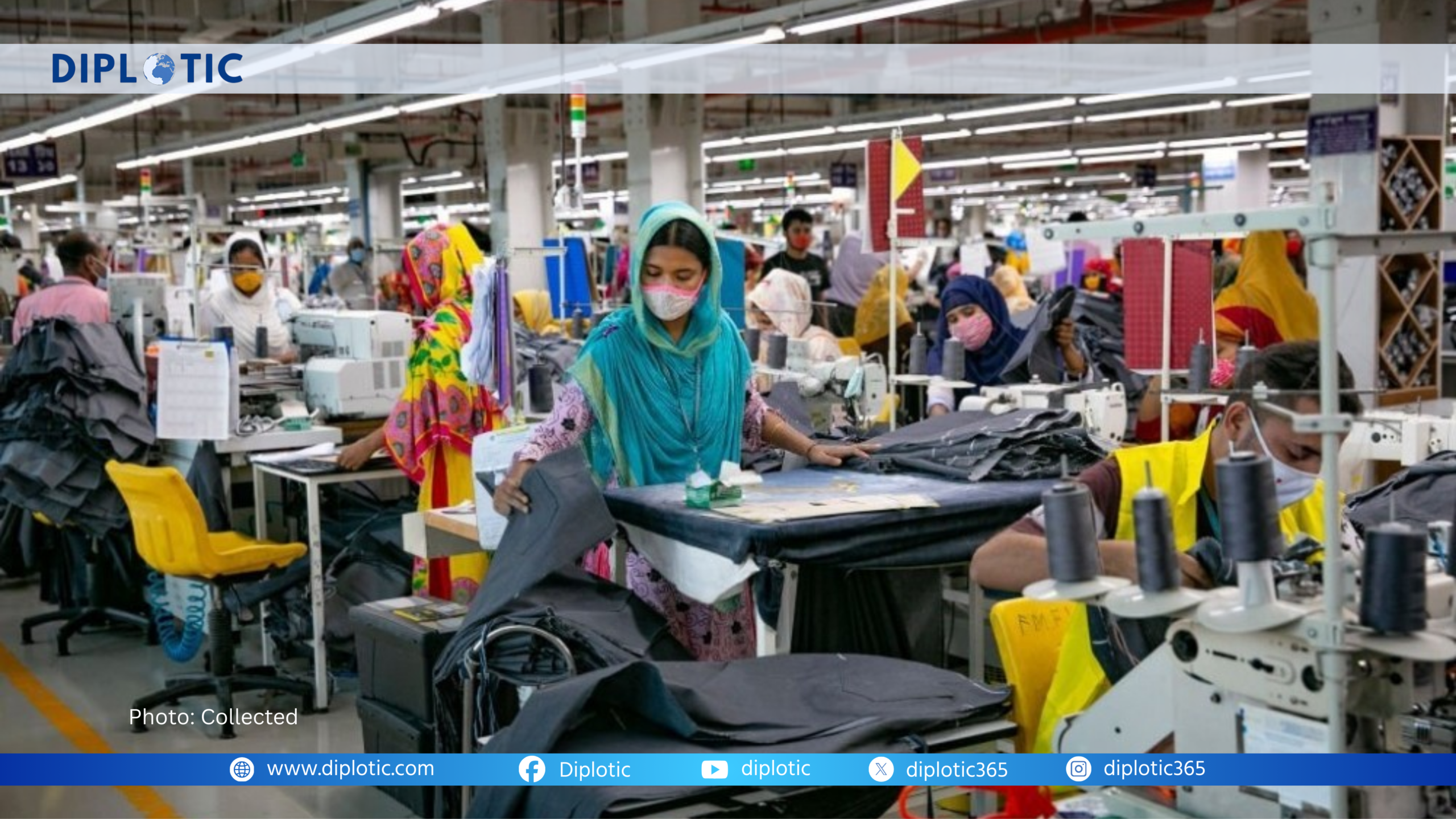
Nepal’s garment industry is facing a moment of quiet but serious pressure. For years, its exporters have relied on special trade access to Europe under least developed country rules to stay competitive in a crowded global market. Now, two major shifts are approaching at the same time. Nepal is preparing to graduate from LDC status later this year, and India has just concluded a sweeping free trade agreement with the European Union. Separately, each development would demand careful adjustment. Together, they raise a sharper question about whether Nepal’s garment sector is ready for a much tougher phase.
The India–EU free trade agreement, finalised in January 2026 after years of negotiation, promises to reshape trade flows between South Asia and Europe. For India, the deal opens the door to deeper market access across a wide range of products, including textiles and garments. For Nepal, which exports far smaller volumes and already struggles with scale and cost, the agreement could tighten competition just as its own trade preferences begin to fade. Industry leaders in Kathmandu are warning that the impact may not be sudden, but it could be steady and difficult to reverse.
At its core, the concern is simple. When a much larger neighbour gains easier access to the same market, smaller exporters must fight harder to hold their ground. Nepal’s garment exports to Europe have already been declining, and the new trade landscape threatens to accelerate that trend unless policy responses come quickly.
Why the India–EU Deal Matters for Nepal’s Garment Sector
Free trade agreements often sound distant from factory floors, but their effects travel quickly through supply chains. Under the India–EU pact, New Delhi will receive preferential access for nearly all of its exports to the EU. Textiles, garments, leather goods, and handicrafts are among the sectors expected to benefit from reduced or eliminated tariffs. Brussels has said the deal will support investment, improve access to European markets, and deepen supply-chain integration.
Even before this agreement, trade between India and the EU was already large and well established. With tariffs coming down further, that trade is expected to grow sharply. For European buyers, this means more choice, more volume, and stronger bargaining power. For Nepal, it means entering a more crowded market where price, speed, and reliability matter even more.
Nepal’s ready-made garment exports to Europe currently stand at around Rs6 billion a year, according to industry estimates, though official figures suggest higher totals in some years. These numbers are modest compared to India’s export scale. Nepali producers often focus on niche orders and smaller volumes, relying on preferential access rather than cost leadership. As that preference weakens, the limits of this model become clearer.
The timing is especially sensitive because Nepal’s LDC graduation is scheduled for November this year. Graduation is a milestone that reflects social and economic progress, but it also comes with trade consequences. Once LDC benefits are phased out, Nepal will face higher duties in markets like the EU unless new arrangements are secured. If India enters the same market with lower or zero duties at that moment, Nepal’s relative position worsens.
Industry representatives argue that this challenge is not theoretical. Buyers respond quickly to cost changes. Even a small tariff difference can shift orders, especially in basic apparel where margins are thin. Over time, this can reduce factory utilisation, limit investment, and threaten jobs.
LDC Graduation and the Risk of Losing Trade Comfort
Nepal’s garment sector has long depended on external support to remain viable. Preferential market access helped offset structural weaknesses such as high transport costs, limited raw material supply, and small production runs. LDC graduation changes this equation by gradually removing that support.
According to labour and trade experts, garments and textiles are among the sectors most exposed to graduation risks. The concern is not only about exports, but also about employment. The garment industry provides jobs to thousands of workers, many of them women. A sustained decline in orders could lead to factory closures or job losses, with social consequences beyond trade statistics.
United Nations assessments of Nepal’s graduation readiness have already noted private sector anxiety. Some policymakers have discussed the option of deferring graduation to buy more time. But deferral itself is not a solution unless Nepal uses the extra period to prepare. Experts point out that Nepal lacks a clear strategy on how it would use such a delay, if granted, to secure future market access.
In this context, the India–EU deal acts as a stress test. It exposes how dependent Nepal remains on temporary trade arrangements and how little progress has been made in negotiating long-term solutions. While India spent years building capacity to negotiate a complex FTA, Nepal does not yet have a standard process for such negotiations, according to trade policy observers.
This gap matters. Trade agreements are not signed quickly, and they require technical skill, data, and political focus. Without early preparation, Nepal risks entering the post-LDC period without meaningful protection for key export sectors.
Can Nepal Adapt Through Strategy and Regional Cooperation?
Despite these challenges, analysts argue that Nepal is not without options. One immediate step could be to request extended trade facilities from the EU even after graduation, similar to transition support offered to other graduating countries. Such arrangements are not automatic, but they can be negotiated if supported by credible reform plans.
Another option lies closer to home. With India’s trade with the EU expected to expand, Nepal could explore ways to link into regional supply chains rather than compete head-on. Industry voices have suggested cooperation in areas such as plant-based fibres, including allo, banana, and bamboo. Nepal has experience with these materials but lacks scale and processing capacity. Partnering with Indian firms could help Nepal move into specialised or sustainable product niches that appeal to European buyers.
However, cooperation requires policy coordination and trust. It also requires the government to prioritise the garment and apparel sector in national planning. Industry groups have called for closer coordination among labour organisations, producers, and policymakers to improve productivity and compliance. Without internal alignment, external strategies are unlikely to succeed.
Trade experts also stress the importance of market diversification. Europe has been a key destination, but relying too heavily on one region increases vulnerability. Better use of existing trade agreements, exploration of new markets, and stronger economic diplomacy could reduce pressure over time. These steps demand active engagement rather than reactive measures.
What the India–EU Pact Signals for Nepal’s Trade Future
The India–EU free trade agreement is not designed to harm Nepal, but it highlights the reality of global trade. Larger economies move faster, negotiate harder, and secure advantages that smaller countries must adjust to. For Nepal, the agreement is a warning that the comfort of preferential access is ending.
Whether this moment becomes a turning point or a setback depends on choices made now. If Nepal strengthens trade diplomacy, prepares for post-LDC rules, and supports its garment sector with clear policy direction, it can soften the impact. If not, the combination of LDC graduation and tougher competition may steadily shrink an industry that still holds social and economic value.
Trade negotiations are continuous, not one-time events. Nepal’s challenge is to enter this process with purpose and preparation. The India–EU pact has changed the landscape. How Nepal responds will shape not only the future of its garment exports, but also its ability to compete as a graduating economy in a region where trade rules are moving fast.




