

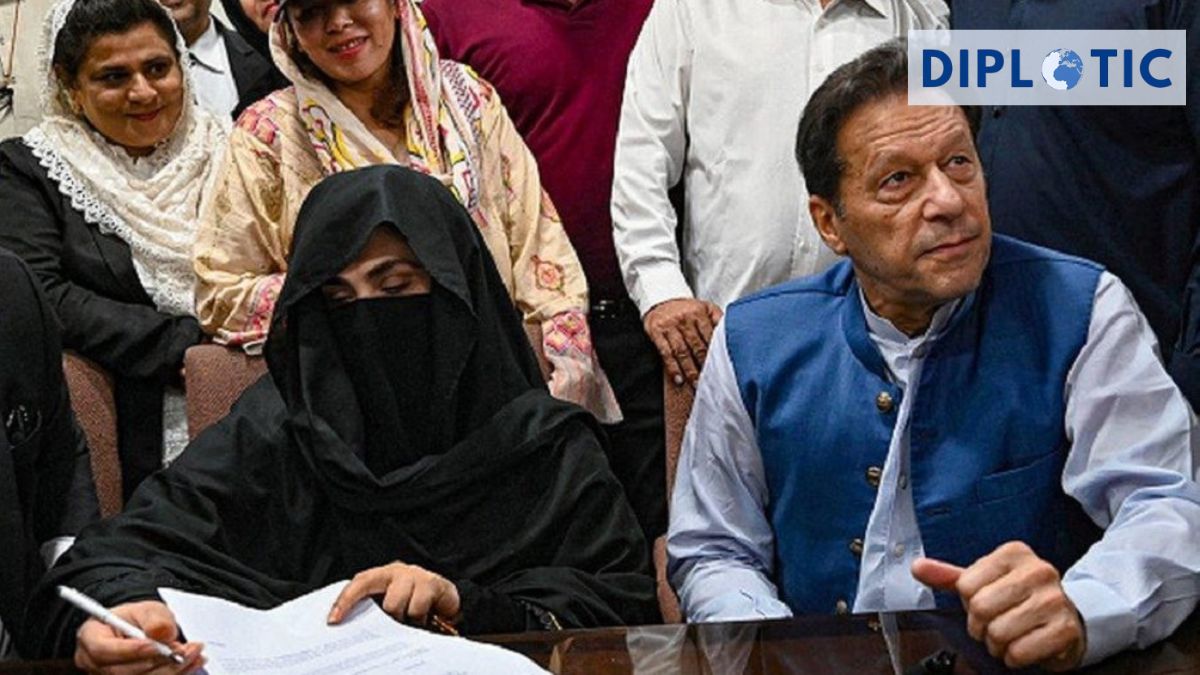
Pakistan’s former Prime Minister Imran Khan and his wife Bushra Bibi have been sentenced to 17 years in a major corruption case over alleged misuse of state gifts. The ruling deepens Pakistan’s political crisis and raises serious questions about accountability and justice.
In a ruling that has sent political shockwaves across Pakistan and beyond, former Prime Minister Imran Khan and his wife have been sentenced to 17 years in prison in a high-profile corruption case involving the alleged misrepresentation and illegal sale of state gifts. The verdict marks one of the most significant legal setbacks for the former cricket star turned politician and further intensifies Pakistan’s already volatile political climate.
The court found that Khan and his wife had failed to declare the true value of expensive gifts, reportedly including luxury jewelry, received during Khan’s tenure as prime minister, and that they unlawfully profited from their sale. Both have categorically denied the allegations, maintaining that all gifts were declared in accordance with the law.
Understanding the State Gifts Corruption Case
At the heart of the case is Pakistan’s long-standing legal framework governing state gifts, which requires public officeholders to disclose and, in some cases, deposit high-value gifts received from foreign dignitaries or officials. Prosecutors argued that Imran Khan and his wife deliberately underreported the value of these gifts, enabling them to retain and sell items that should have been surrendered to the state treasury.
The prosecution maintained that the misrepresentation resulted in significant personal financial gain, violating anti-corruption laws designed to prevent abuse of public office. The court agreed with this assessment, handing down a sentence that includes imprisonment and financial penalties.
Legal experts say the ruling sets a powerful precedent, reinforcing the principle that even the highest political offices are subject to scrutiny under Pakistan’s accountability laws.
Imran Khan’s Defense and Denial of Wrongdoing
Throughout the proceedings, Imran Khan and his wife consistently denied any wrongdoing, insisting that the gifts were handled transparently and within legal limits. Khan’s legal team argued that the valuation methods used by the prosecution were flawed and that similar practices by previous leaders had gone unpunished.
Supporters of Khan have echoed these claims, alleging that the case is politically motivated and part of a broader campaign to sideline the former prime minister from Pakistan’s political arena. They point to the timing of the verdict and Khan’s continued popularity as evidence of selective accountability.
Despite these arguments, the court ruled that the evidence supported the prosecution’s claims, leading to the 17-year sentence.
Political Fallout and National Reaction
The verdict has deepened political polarization across Pakistan. Supporters of Imran Khan, particularly members and backers of his Pakistan Tehreek-e-Insaf (PTI) party, have condemned the ruling as unjust and warned of further unrest.
Opposition figures, however, have welcomed the decision, framing it as a victory for accountability and the rule of law. They argue that holding a former prime minister accountable sends a strong message against corruption at the highest levels of government.
Political analysts note that the ruling could significantly reshape Pakistan’s political landscape, weakening Khan’s ability to influence future elections and policy debates.
Implications for Pakistan’s Justice System
The sentencing of a former prime minister and his spouse represents a critical test for Pakistan’s judicial system. On one hand, it demonstrates a willingness to pursue corruption cases against powerful figures. On the other, it raises concerns about judicial independence and the perception of politicized justice.
International observers are closely monitoring the case, as Pakistan’s commitment to transparency and anti-corruption reforms remains under global scrutiny. The outcome may affect investor confidence, diplomatic relations, and Pakistan’s standing in international governance and accountability rankings.
State Gifts and Accountability: A Broader Debate
The case has reignited debate over how state gifts are managed in Pakistan. Critics argue that existing regulations lack clarity and are applied inconsistently, creating opportunities for misuse. Others contend that stricter enforcement is long overdue to curb elite privilege.
Governance experts suggest that clearer disclosure rules, independent valuation mechanisms, and greater public transparency are essential to prevent similar controversies in the future.
What Comes Next for Imran Khan?
With the 17-year sentence now handed down, Imran Khan’s legal team is expected to pursue appeals, a process that could take months or even years. During this period, the former prime minister’s political future remains uncertain, though his influence over public opinion remains significant.
For many Pakistanis, the case represents more than the fate of one political leader; it symbolizes the ongoing struggle between power, accountability, and democratic governance.
A Defining Moment in Pakistan’s Political History
The conviction and sentencing of Imran Khan and his wife stand as one of the most consequential legal decisions in Pakistan’s recent history. Whether viewed as a triumph of accountability or a controversial political maneuver, the verdict underscores the high stakes of governance in a deeply divided nation.
As Pakistan navigates economic challenges, political instability, and public distrust, the long-term impact of this ruling will likely shape the country’s democratic trajectory for years to come.




