The political landscape of Pakistan has rarely witnessed a moment as turbulent and emotionally charged as the current controversy surrounding the imprisonment of former Prime Minister Imran Khan. Once the face of reformist hope and anti-corruption zeal, Khan has spent more than two years behind the walls of Adiala Jail in Rawalpindi following a series of convictions that he and his supporters consistently denounce as politically engineered. While the legal battles alone were enough to keep the nation on edge, the situation took a far more unsettling turn when rumors erupted claiming that Imran Khan had died in custody, or worse, had been secretly removed from the prison under circumstances too suspicious to ignore. These rumors, spreading across social media and foreign news platforms, did not emerge in a vacuum; rather, they were born from a complicated mixture of political tensions, restricted access, institutional silence, and a public environment already primed by years of mistrust.
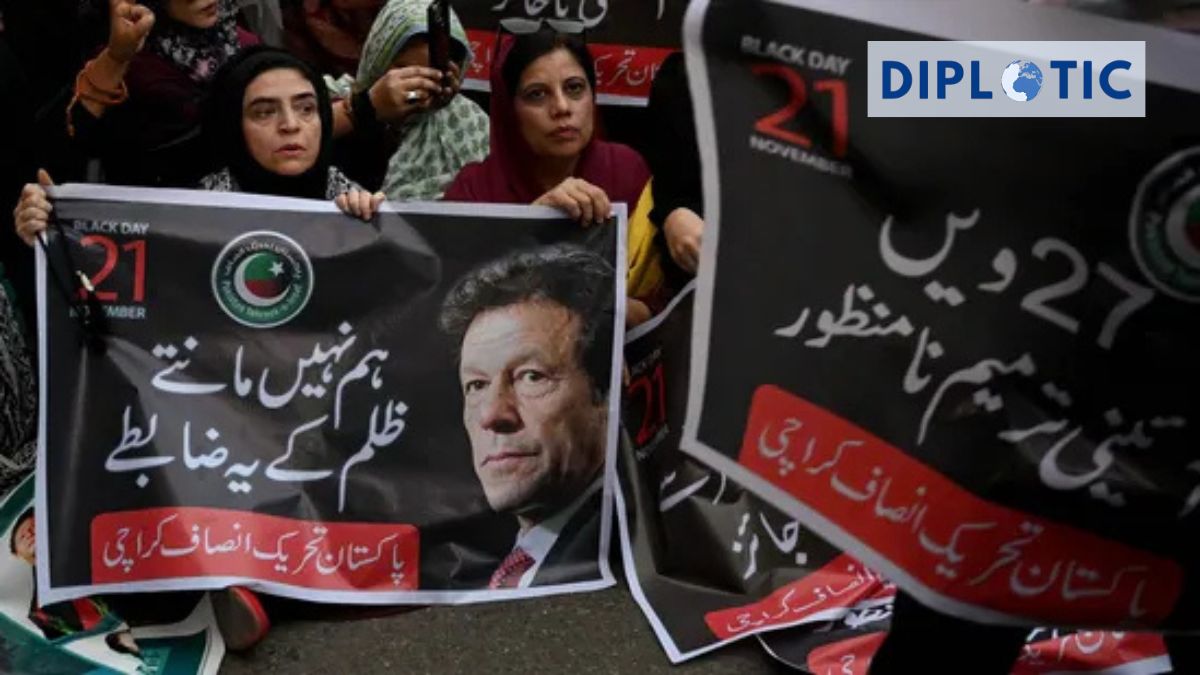
The allegations of Khan’s possible death or disappearance gained traction rapidly, largely because they were not immediately countered by transparent evidence from state authorities. Several online reports—many originating from Afghan, Indian, or obscure international portals—alleged that the former prime minister had suffered a fatal medical emergency inside the jail. Others claimed that Pakistani intelligence agencies had transferred him secretly to an unknown facility. The circulation of such sensational claims, despite lacking verifiable sources, was met with a surprisingly receptive audience, especially among followers of Khan’s political party and human-rights advocates. Their readiness to believe these reports reflected more than blind loyalty; it indicated a profound lack of trust in state institutions. This distrust was further intensified by the fact that Khan’s family, particularly his sisters, had been denied permission to visit him for an extended period. According to international media outlets such as Pakistan Today and India Today, the sisters even alleged physical assault by police officers when they attempted a peaceful protest outside the prison gates. For many, the denial of access was not only cruel it was incriminating.
Official statements attempted to counter the growing storm, but their effectiveness was limited. Adiala Jail authorities issued multiple clarifications asserting that Imran Khan remained inside the facility and that he was “healthy,” “stable,” and under regular medical supervision. Reports published by reputable outlets such as Dawn, Reuters, and NDTV cited government officials claiming that Khan continued to enjoy privileges inside the prison, even receiving better food, bedding, and health support than ordinary inmates. Yet none of these statements were accompanied by concrete proof—no photographs, no verified medical reports, no independent testimony. In an era where transparency is essential and distrust is rampant, verbal assurances alone struggle to carry weight.
Meanwhile, the political opposition and human-rights organizations began drawing attention to the troubling pattern of secrecy. Khan’s son, Kasim, publicly demanded a clear “proof of life,” insisting that the government provide verifiable evidence that his father was indeed alive and well. His demand was echoed in international circulars, where commentators warned that withholding access to family and legal representatives was a serious violation of global human rights norms. Publications such as The Wall, Business Standard, and Livemint underscored this concern, pointing out that the combination of secrecy and political rivalry creates a climate ripe for disinformation. Without independent verification, even the most confident claims by the government could not fully erase public doubt.
The deeper significance of this crisis lies not merely in whether Imran Khan is alive, healthy, or being mistreated. Instead, it illuminates the fragile relationship between transparency and authority in Pakistan’s governance. When institutions deny access and restrict information, they unwittingly nurture the very rumors they later scramble to deny. Such opacity undermines the credibility of the justice system and raises questions about whether political prisoners—or indeed any detainees—are treated with fairness and dignity. The episode also exposes the intense polarization in Pakistani society, where information becomes a battleground, rumors become political weapons, and silence becomes an accomplice to fear.
Equally important is the broader international perspective. At a time when Pakistan faces economic instability, diplomatic pressure, and internal fragmentation, handling the imprisonment of a former prime minister demands a level of transparency capable of sustaining global trust. Reports from Reuters and other global agencies reveal that foreign observers are monitoring the situation closely, particularly as it relates to human rights standards. The international community is aware that political suppression, whether real or perceived, can destabilize an already fragile state and erode its diplomatic standing.
It is crucial to recognize that the simple act of allowing family visits, releasing a verified medical report, or permitting an independent human rights team inside the facility could dispel much of the current speculation. Instead, the hesitancy or refusal to permit such actions has fueled concerns that go beyond the fate of a single individual. It challenges the moral and political integrity of state institutions and tests Pakistan’s commitment to justice. Even if the rumors are entirely unfounded, the government’s approach has inadvertently rendered them believable.
Ultimately, the controversy surrounding Imran Khan’s alleged death in custody highlights the dangerous intersection between secrecy, political rivalry, and public mistrust. Whether Imran Khan is truly safe inside Adiala Jail becomes secondary to the larger question of why his safety cannot be independently verified. This is not a matter confined to PTI supporters or political circles it is a national concern tied to human rights, rule of law, and democratic accountability. A state cannot demand trust from its citizens while withholding the truth. Nor can it silence doubts with words alone. In the absence of transparency, rumors grow stronger than facts, uncertainty becomes a political force, and silence begins to resemble complicity.
Until clear evidence is provided evidence grounded in transparency and verified by neutral observers—the questions surrounding Imran Khan’s fate will continue to echo through Pakistan’s political consciousness. The situation calls for honesty, openness, and integrity. Anything less will only push the nation further into a climate of suspicion where truth becomes elusive and rumors become the only narrative citizens have left.