
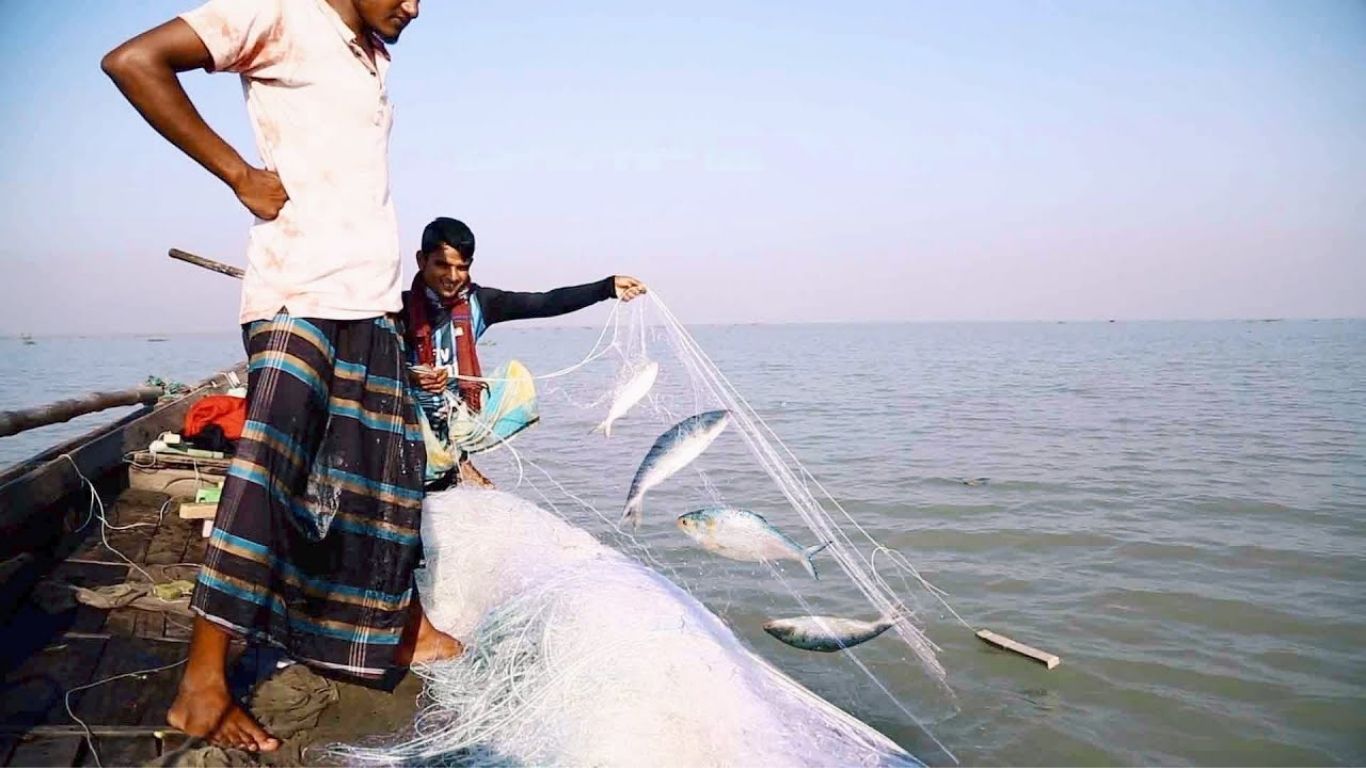
As the full moon tide begins to rise in Chattogram’s North Kattoli, battling rough Bay of Bengal waves in search of Hilsa, the prized “queen of fish” and lifeline of coastal communities. Despite the hostile weather and unpredictable waves, determined fishermen are setting sail in search of the season’s most prized catch the silver-scaled Hilsa.
A Seasonal Treasure of the Sea
Hilsa, often called the “queen of fish” in Bangladesh, is more than just a delicacy; it’s a symbol of heritage and livelihood. Each year, the full moon period triggers a natural movement of Hilsa toward coastal waters and rivers for spawning. This short but precious window draws fishermen from across the coast into the deep waters, hoping for a bountiful harvest.
In North Kattoli, the fishing season is now in full swing. Dozens of small, bright red boats — iconic in the region — are slicing through the waves at dawn, carrying crews armed with nets, fuel, and sheer determination. For them, every trip into the open sea is a gamble between risk and reward.
Braving the Elements
The Bay of Bengal can be unforgiving, especially during the monsoon period when strong currents, heavy rains, and sudden storms are frequent. Weather forecasts have warned of turbulent seas, but that hasn’t stopped local fishermen.
“Hilsa don’t wait for calm seas,” says Abdul Karim, a 42-year-old fisherman who has spent two decades at sea. “We risk the waves because this is our livelihood. One successful trip can feed our families for weeks.”
These fishermen rely on their years of experience, reading the wind, the water’s color, and the patterns of the waves. Their boats, though small, are built to withstand the choppy waters for short fishing expeditions.
The Cultural and Economic Pulse
The Hilsa trade is one of the most significant contributors to Bangladesh’s fishing economy, generating millions in revenue each year. Chattogram’s fish markets come alive during this season, with wholesalers and buyers crowding in to bid for the freshest catch.
For many coastal families, this is the most lucrative time of year. A single large Hilsa can fetch a high price in both local and export markets. Demand spikes during festivals and family gatherings, as Hilsa is often featured in celebratory dishes like “ilish bhuna” and “ilish pulao”.
A Race Against Time
The Hilsa migration is a fleeting phenomenon. As the moonlight fades and tides shift, the fish move further upstream into the rivers or return to deeper waters. Fishermen have only a few weeks to maximize their catch before the season tapers off.
This urgency drives many to work long hours at sea, often returning to shore only when their nets are full or their fuel runs low. Some crews operate in shifts, ensuring their boats are almost always on the water during peak Hilsa movement hours.
The Beauty of the Hunt
For locals and visitors alike, the sight of red-painted fishing boats racing across the horizon under a full moon is nothing short of magical. The silver glint of freshly caught Hilsa against the backdrop of the rolling waves tells a story of resilience, tradition, and survival.
Photographers often flock to North Kattoli’s shoreline during this season to capture the energy and beauty of the hunt the rhythmic pulling of nets, the shouts of teamwork, and the joyous moments when the first Hilsa is hauled aboard.
Sustainability Challenges
While the Hilsa hunt brings economic joy, it also raises concerns about overfishing and environmental sustainability. The government has implemented seasonal bans to allow Hilsa populations to recover, and awareness campaigns encourage fishermen to avoid catching juvenile fish.
“Protecting the Hilsa means protecting our future,” says a fisheries officer in Chattogram. “We must balance our immediate needs with long-term sustainability.”
A Season of Courage and Hope
For the fishermen of North Kattoli, the Hilsa season is more than just work it’s a test of courage, skill, and hope. Each journey into the Bay of Bengal carries uncertainty, but also the possibility of a life-changing catch.
As the full moon casts its silver glow over the restless sea, these fishermen continue their timeless pursuit, honoring a tradition that has fed generations and shaped the coastal identity of Bangladesh.