
India’s air pollution often exceeds the official AQI limit of 500, yet government apps never show higher numbers. Why does India cap its air-quality readings, how do global trackers differ, and what does this mean for public health and policy?
The Hidden Crisis Behind India’s AQI Ceiling
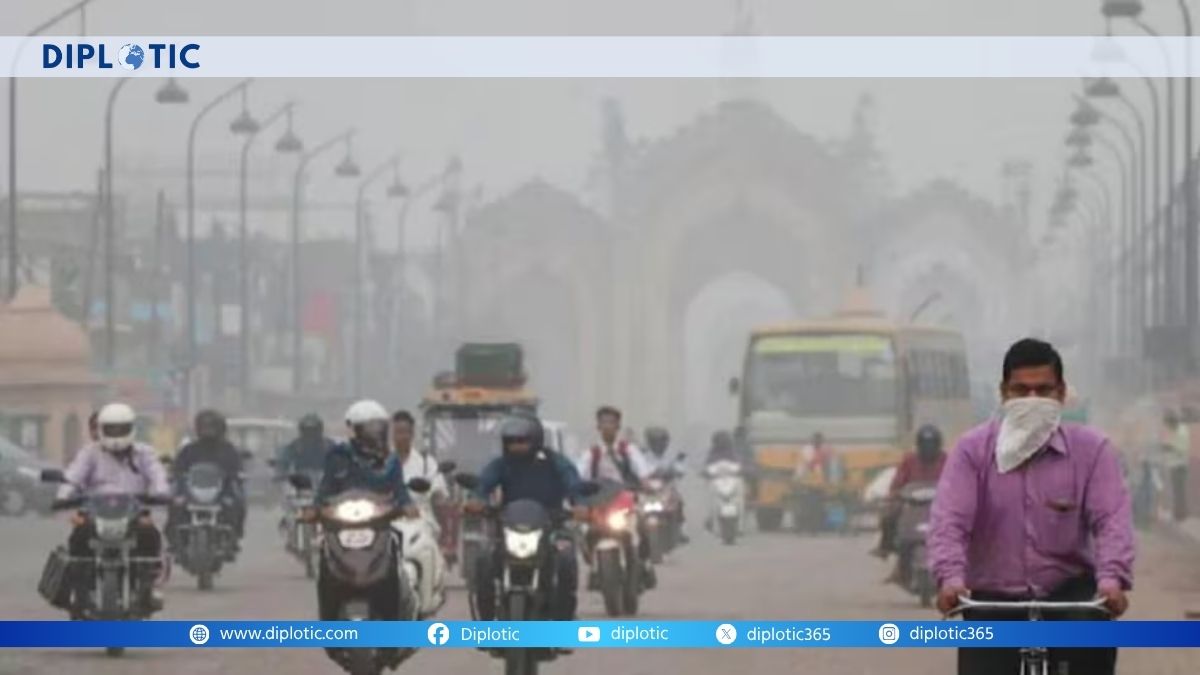
Every winter, the thick grey smog covering northern India becomes impossible to ignore. It fills the sky, settles in the lungs, and forces millions to start their mornings by checking the air quality before leaving home. But the numbers they see vary sharply depending on the source. Government-backed AQI platforms such as SAFAR and SAMEER stop at a reading of 500, while global trackers like IQAir often show numbers soaring above 600, 800, or even 1,000.
This mismatch leaves many confused: Is the air really as bad as these international trackers claim, or are government readings simply failing to show the true scale of the crisis? The truth is far more complex, and it reveals a deeper issue at the heart of India’s air-quality reporting system.
India’s AQI scale, designed more than a decade ago, converts data from multiple pollutants — PM2.5, PM10, nitrogen dioxide, sulphur dioxide, carbon monoxide and ozone — into a single number. According to the national scale, readings above 400 fall into the “severe” category, meaning healthy people may experience respiratory impact while those with existing conditions could suffer dangerous consequences. But the system stops at 500, creating a hard ceiling that does not reflect actual toxicity levels during extreme smog events.
While this limit was created with specific intentions, it now masks the real severity of air pollution episodes, especially in the Delhi-NCR region where winter pollution regularly reaches catastrophic levels.
Why India’s AQI Stops at 500
The official 500 cap was set when the National Air Quality Index was launched in 2014. At the time, policymakers believed that anything above 500 would represent the worst possible public-health outcome. Gufran Beig, founding director of SAFAR, explains that the cap was designed to avoid public panic by signaling that a reading of 500 already indicated an emergency requiring immediate action.
But this logic has not aged well. When pollution frequently climbs far beyond 500, hiding real-time values behind a cap fails to communicate the actual risk to people. Instead of showing whether PM2.5 levels are at 510 or 1,000, the AQI simply flatlines at its upper limit.
This creates a flawed perception: people see “500” and assume the air cannot get worse, even when the true concentration might be double or triple that figure. Environmental scientists argue that this approach no longer makes sense in a world where research clearly shows that health impacts worsen continuously as pollution rises, with no saturation point where harm stops increasing.
International platforms do not share this ceiling and report actual values, which is why their numbers often appear dramatically higher during severe smog episodes.
The discrepancy reinforces public distrust. Residents feel caught between two realities — a capped official reading and a frightening uncapped global reading — unsure which reflects the truth.
Different Standards, Different Tools: Why Readings Don’t Match
India’s AQI differences go beyond the 500 ceiling. There are gaps in definitions, thresholds, and even the instruments used for measurement. For example, the WHO’s recommended safe limit for PM2.5 is 15 micrograms per cubic metre over 24 hours. India’s limit is 60 micrograms — four times higher.
These differences are not errors but reflect varying national policies, environmental conditions and levels of tolerance built into each country’s air-quality guidelines. The US, China, and the EU all use different AQI formulas, thresholds, and classifications. Comparing India’s AQI directly to WHO or US scales can be misleading without context.
There is also a technological divide. India’s pollution control board uses Beta Attenuation Monitors (BAMs), which physically weigh particulate matter and are calibrated with strict protocols. These machines are highly accurate but slower and more expensive to deploy.
Global trackers such as IQAir rely largely on sensor-based monitors using laser scattering technology. These sensors are more affordable and widely available but less precise and harder to calibrate. They can overestimate or underestimate pollution under certain conditions, especially during extreme smog.
The Indian government does not officially approve sensor-based air-quality reporting, arguing that only reference-grade equipment should guide public policy. But sensor networks provide broader coverage, real-time availability, and the ability to detect rapid changes in pollution — benefits that India’s official system lacks.
Environmental experts say India’s air-quality framework, last updated in 2009, urgently needs revision to reflect technological advancements and modern health research.
Why Updating the AQI Matters
The debate over AQI numbers is not simply technical; it affects millions of lives. Air pollution contributes to more than one million premature deaths in India every year, according to multiple global studies. When official numbers mask the real severity of exposure, policymakers may underreact, and citizens may underestimate the danger.
Experts agree that India must update its AQI to remove the upper limit, incorporate new research and possibly integrate calibrated sensor networks. Without change, the AQI fails in its primary mission: to give people an accurate and actionable understanding of the air they breathe.
As Gufran Beig puts it, “The AQI doesn’t stop at 500 because the pollution stops there. It stops at 500 because the system was built with a ceiling.”
India’s air pollution crisis is worsening with each passing winter. Whether the official AQI changes or not will determine how effectively the country responds to one of its most urgent public-health challenges.