Germany’s energy policy is once again at the center of political tension, exposing deep divisions within the government over the future of nuclear power, renewables, and the country’s climate ambitions. The latest dispute between Economy Minister Katherina Reiche (Christian Democratic Union, CDU) and Environment Minister Carsten Schneider (Social Democratic Party, SPD) comes at a critical moment: as Germany accelerates its coal phase-out and expands gas-fired power, doubts are growing about the nation’s ability to achieve climate neutrality by 2045.
A Symbolic Dispute Reveals Deeper Divisions
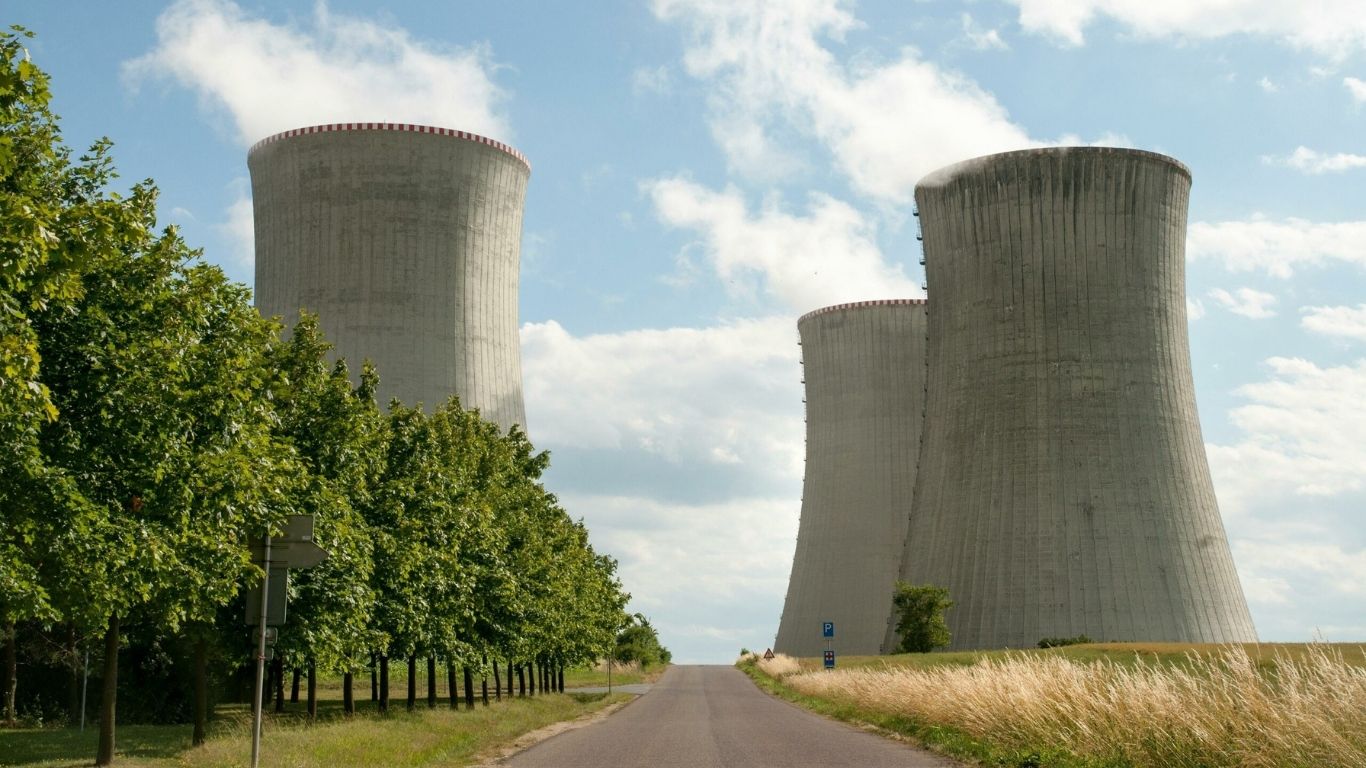
The latest rift emerged in mid-June during an EU event in Brussels. Economy Minister Katherina Reiche, of the conservative Christian Democratic Union (CDU), chose to attend a meeting with pro-nuclear EU states even though Germany shut down its last nuclear reactor in 2023, completing a phaseout that began after the 2011 Fukushima disaster. Her decision angered Environment Minister Carsten Schneider of the center-left Social Democratic Party (SPD), who is officially responsible for nuclear safety and waste management.
Schneider quickly reaffirmed Germany’s commitment to its nuclear phaseout, insisting, “We have resolved to phase out nuclear power, and this has gained societal acceptance.” He emphasized that there will be no further commitments to the nuclear industry, and that Germany’s focus remains on expanding wind and solar energy.
Renewables, Nuclear, and the EU Energy Mix
Germany’s official energy policy prioritizes the transition to renewables, with a growing share of electricity coming from wind and solar. However, the country’s energy transition has recently hit headwinds. In early 2025, clean energy sources generated their smallest share of Germany’s electricity in over a decade, with output from renewables dropping 17% year-on-year due to weak wind conditions. As a result, fossil fuels made up more than half the power mix for the first time in two years, and natural gas use climbed sharply.
This setback has intensified debate over how to balance the grid as coal and nuclear exit the system. While France and other EU nations continue to rely on nuclear power, which emits little or no greenhouse gases during operation, Germany remains committed to its phaseout, even as some CDU leaders signal openness to “all technologies” for energy production.
A recent joint paper from Paris and Berlin called for EU energy policy to be based on climate neutrality, competitiveness, and sovereignty, promoting all low-emission sources. In France, this means a strong role for nuclear, but in Germany, the technology remains politically and socially contentious.
Gas-Fired Power Plants: The Next Battleground
The energy debate is further complicated by plans to build 20 new gas-fired power plants. Reiche’s announcement of this expansion far larger than previously proposed, has sparked more concern from Schneider and climate experts. While gas plants emit less CO₂ than coal, critics warn that such a large buildout could jeopardize Germany’s climate targets, especially if the transition to hydrogen or carbon capture is delayed.
The government’s strategy is to subsidize these new plants, which are intended to be converted to run on hydrogen in the future. However, this approach requires massive investment and EU approval, and there are doubts about whether hydrogen will be available at scale in time to meet climate goals.
Climate Targets Under Pressure
Germany’s climate law requires a 65% reduction in greenhouse gas emissions by 2030 (from 1990 levels) and full climate neutrality by 2045. Yet, recent surveys show that most Germans doubt the country will meet its 2045 target, with only 29% expressing confidence in success. The government’s expert council on climate issues has warned that the current trajectory is insufficient, and that new gas plants could make the path to net-zero even harder.
The recent drop in renewable output, combined with increased fossil fuel use and power imports, has further complicated the outlook. While the weak economy and lower industrial production have temporarily helped reduce emissions, these are not sustainable solutions for long-term climate policy.
Conclusion: Policy Uncertainty and the Path Forward
The clash between Economy Minister Reiche and Environment Minister Schneider is more than a personal disagreement it reflects a broader uncertainty about how Germany will deliver on its climate promises while ensuring energy security and affordability. As the nation navigates away from coal and nuclear, the debate over gas, renewables, and the role of new technologies is likely to intensify.
Ultimately, Germany’s energy transition will require not just ambitious targets, but clear, coordinated action and a willingness to adapt as conditions change. The world is watching to see whether Germany can overcome its internal divisions and remain a leader in the global fight against climate change.