Friedrich Merz’s failure to secure a majority in the first vote for chancellor has shaken Germany’s political foundations. As the Bundestag prepares for a second round, uncertainty looms over Europe’s economic and political powerhouse.
A Shocking Defeat: Merz Fails First Ballot to Become Chancellor
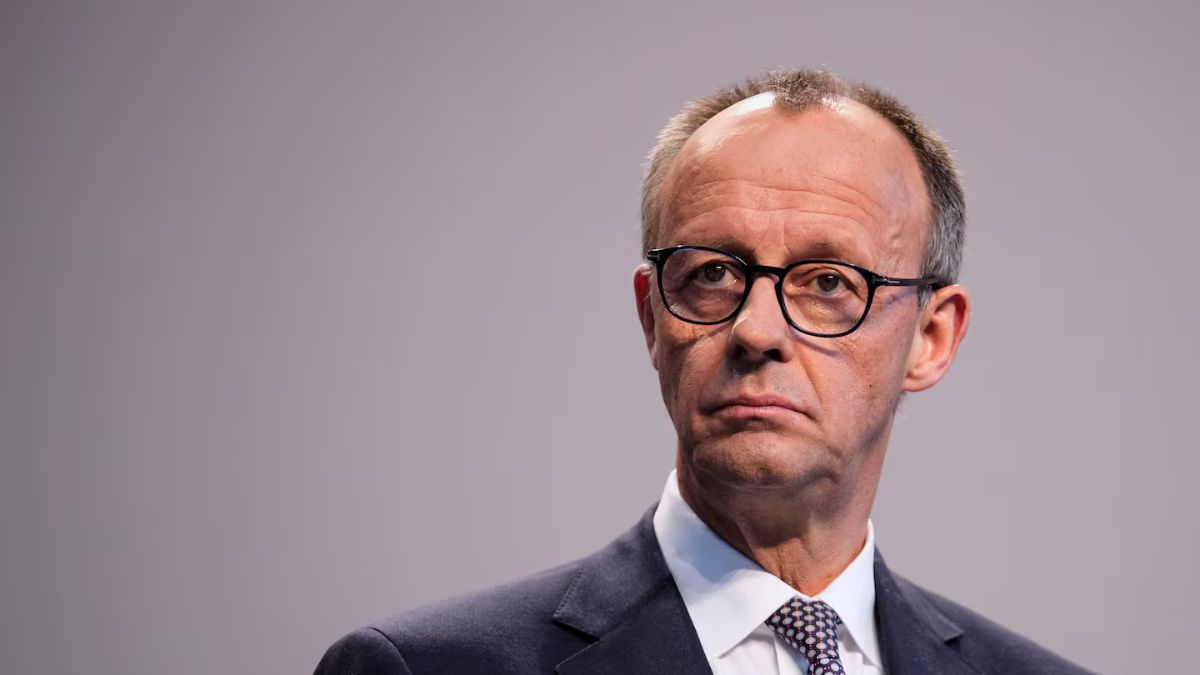
In a stunning and unprecedented moment for modern German politics, Friedrich Merz, the leader of the conservative Christian Democratic Union (CDU), failed to win enough votes in his first attempt to become Germany’s next chancellor. Despite widespread expectations of an easy victory, Merz fell short by just six votes — receiving 310 of the required 316 in the Bundestag. This marks the first time since World War II that a chancellor candidate has failed to secure a majority on the first ballot.
The vote, held in secret, has cast a shadow over Merz’s perceived authority and shaken confidence in his coalition, a fragile alliance that includes his CDU, the Christian Social Union (CSU), and the center-left Social Democrats (SPD) — the very party of outgoing Chancellor Olaf Scholz.
Behind the Numbers: A Coalition in Trouble
While Merz’s coalition technically holds a majority in the 630-seat parliament, the anonymous nature of the vote means it’s unclear which members defected or why. What is clear, however, is that internal cracks are widening within the alliance. Scholz’s SPD, though officially part of the coalition, has long had ideological differences with Merz’s economic conservatism and tougher stance on immigration.
This fragile cooperation was born out of necessity, not ideological alignment, after February’s national election produced a fragmented parliament. Now, with the coalition’s unity called into question, the spotlight has turned to whether Merz can recover and rally enough support for the second round of voting scheduled for later Tuesday.
What Happens if Merz Fails Again?
Germany’s constitution outlines a strict, multi-stage process for electing a chancellor. If Merz fails to secure an absolute majority in the second vote, the Bundestag has 14 days to elect a chancellor by absolute majority. During this time, Merz can continue to present himself as a candidate, but other MPs are also allowed to step forward.
If, after two weeks, no candidate secures the necessary votes, the Federal President faces a critical decision: either appoint the candidate with the most votes or dissolve the Bundestag entirely and call for fresh elections. Either outcome would signal a deep political crisis, potentially delaying key legislation and weakening Germany’s influence at a time of global instability.
AfD Surges in Influence and Controversy
Seizing the moment is the far-right Alternative for Germany (AfD), now the largest opposition party after finishing second in the February elections. Though excluded from coalition talks due to the long-standing political “firewall” against the far right, the AfD is gaining visibility and momentum. Co-leader Alice Weidel called Merz’s failed vote “a clear sign of weakness,” accusing his coalition of lacking a mandate and demanding immediate new elections.
The AfD’s rise continues to unsettle Germany’s political establishment. Just last week, the Federal Office for the Protection of the Constitution — Germany’s domestic intelligence agency — officially labeled the party as a “right-wing extremist” organization, opening it up to expanded surveillance. Although this is not a ban, the designation significantly raises the stakes for AfD’s involvement in German politics.
Global Pressure Mounts: The Trump Effect and U.S. Tensions
International politics have become increasingly entangled in Germany’s internal affairs. Allies of former U.S. President Donald Trump, such as billionaire Elon Musk and current Vice President JD Vance, have thrown their support behind the AfD. Musk notably hosted a live conversation with Weidel on X (formerly Twitter), helping to amplify her party’s message to a global audience.
Meanwhile, Vance caused a diplomatic stir earlier this year by meeting with Weidel during the Munich Security Conference and later criticizing Germany’s firewall policy. His remarks were met with fierce backlash from German officials, particularly after U.S. Senator Marco Rubio also weighed in, urging Berlin to reconsider the AfD’s extremist classification.
Germany’s Foreign Ministry firmly rejected these interventions, underscoring the country’s sovereign right to protect its democratic order. Yet the controversy highlights growing transatlantic tensions, particularly over the future of far-right populism and the role of U.S. influence in European politics.
A Country at a Crossroads on a Historic Anniversary
The political uncertainty is unfolding on a particularly symbolic date: the eve of the 80th anniversary of Nazi Germany’s surrender in World War II. The Bundestag’s votes are taking place in the historic Reichstag building, where Soviet troops carved graffiti into the walls — a permanent reminder of the perils of authoritarianism and the cost of war.
This moment serves as a potent backdrop to today’s events, reminding both lawmakers and citizens of the importance of democratic stability and accountability. Many Germans now see this crisis not only as a test of leadership, but as a test of the country’s postwar democratic legacy.
Germany’s Economic Struggles Add to the Pressure
Adding to the weight of the political turmoil is Germany’s economic situation. The country has posted negative growth for the past two years, and the outgoing government expects zero growth in 2025. Germany’s once-mighty economy — the largest in Europe — is now grappling with high energy costs, labor shortages, and a slowdown in key sectors like manufacturing and exports.
Following the failed vote, the DAX, Germany’s primary stock index, tumbled by nearly 2% as investors reacted nervously to the growing instability. Business leaders are urging swift action to restore confidence and avoid a prolonged leadership vacuum that could stall vital reforms.
Defense and Global Security Commitments in the Balance
Germany is also a crucial player on the international stage, especially in defense. Since Russia’s invasion of Ukraine, Berlin has committed over €100 billion to modernizing its military — a historic shift from its previous postwar pacifism. Germany is now the fourth-largest defense spender in the world, trailing only the United States, China, and Russia.
A prolonged leadership crisis could delay further military initiatives, reduce support for Ukraine, and undermine Germany’s influence within NATO and the EU. With U.S. leadership under Trump showing signs of withdrawing security guarantees, Europe is watching closely to see if Germany can step up as a reliable power in a rapidly changing world.
Merz’s Silence on AfD Classification: Strategic or Risky?
While many lawmakers have weighed in on the AfD controversy, Friedrich Merz has remained publicly silent. Observers suggest this may be a calculated move to avoid further inflaming divisions within his coalition or alienating centrist voters. However, others argue that his silence could be seen as weakness or indecision at a moment that demands clarity and leadership.
Merz’s future now hangs in the balance. If he can secure a majority in the second vote, he may still emerge as a strong chancellor, with the first-round hiccup quickly fading from public memory. But another failure would likely spark calls for a new coalition or fresh elections — scenarios that could throw Germany into months of political paralysis.
The World Watches: Germany’s Next Move is Critical
All eyes are now on Berlin. The outcome of the second vote will shape not just Germany’s immediate political future, but also its broader role in Europe, its economic trajectory, and its ability to lead in times of global uncertainty.
If Merz can pull together enough support, he will face the monumental task of restoring trust in government, jumpstarting economic growth, and navigating increasingly hostile domestic and international political landscapes. If he fails, Germany could be entering one of the most turbulent chapters of its postwar history.