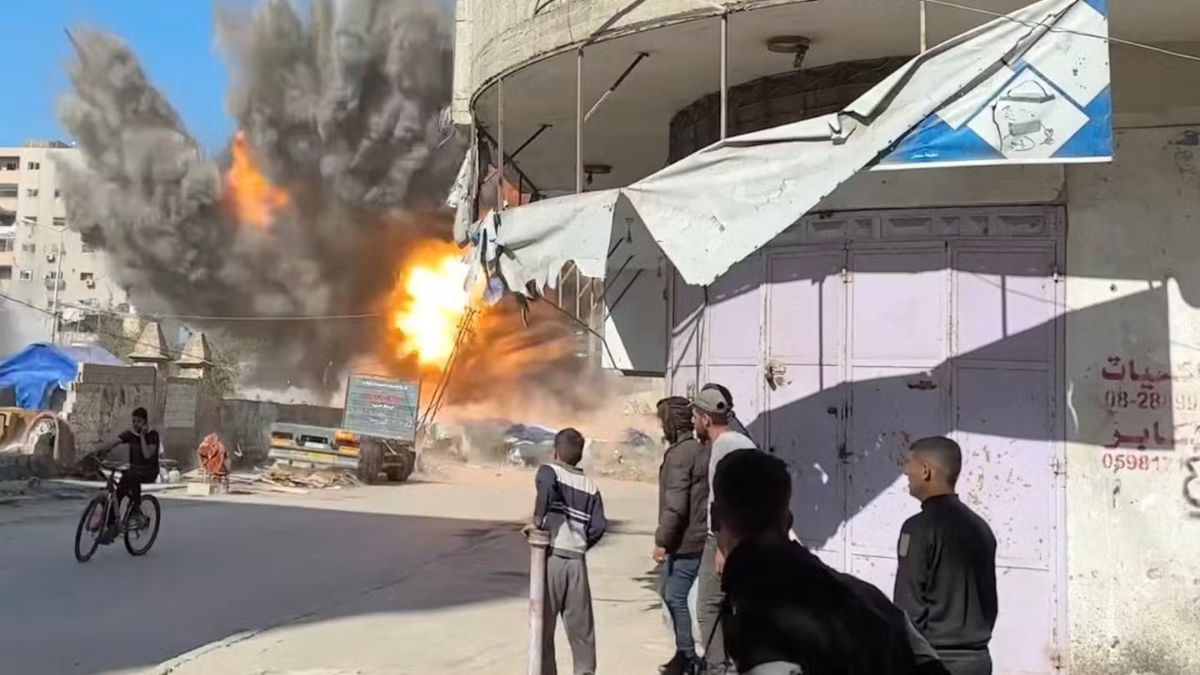
In a significant escalation of the ongoing Gaza conflict, the Israeli government has approved a sweeping military expansion plan that includes the occupation of parts of the Gaza Strip. This marks a strategic shift from previous raid-based operations to sustained control of territory, signaling a potential turning point in the war against Hamas.
Israel’s Security Cabinet Backs Long-Term Ground Operations
The plan, unanimously approved by Israel’s security cabinet on Sunday night, was confirmed by David Mencer, spokesman for Prime Minister Benjamin Netanyahu. According to an Israeli official familiar with the classified discussions, the updated war strategy emphasizes “the holding of territory” as a key objective, diverging from Israel’s prior limited incursions.
Prime Minister Netanyahu underscored the strategic change during the cabinet meeting, stating that the aim is to apply continuous pressure on Hamas while facilitating efforts to retrieve Israeli hostages still held in Gaza.
Ground Troop Mobilization and Territorial Control
Israel Defense Forces (IDF) Chief of Staff Lt. Gen. Eyal Zamir presented the operational framework, which involves deploying tens of thousands of reservists and expanding ground operations into areas of Gaza currently controlled by Hamas. According to Zamir, this new phase will include destroying Hamas’s above- and below-ground infrastructure and expanding into additional areas.
The military is expected to seize and maintain control over key zones, although Israeli officials insist the plan falls short of a full-scale military occupation of the Gaza Strip. A former senior IDF officer, speaking anonymously, noted that while a total occupation remains logistically challenging, the expanded military footprint will resemble a de facto occupation in some regions.
Humanitarian Concerns and Aid Control
In parallel with its military escalation, Israel has approved a controversial plan to control the distribution of humanitarian aid within Gaza. The plan includes the establishment of six aid hubs, operated by international humanitarian workers under U.S.-contracted private security, with strict vetting of aid recipients to prevent Hamas from accessing supplies.
Humanitarian organizations have condemned the move, stating it violates the principle of impartiality and could provoke violence at distribution sites. Nevertheless, the Israeli government maintains that the controlled system is necessary to ensure that aid reaches civilians and not militant groups.
Civilian Displacement and International Law Warnings
As military pressure intensifies, approximately 70% of Gaza has been designated as a military “red zone” or placed under evacuation orders, according to U.N. assessments. Israeli officials have suggested that the civilian population may be moved further south “for their own safety,” a move critics argue could amount to forced displacement — a potential violation of international law.
Israeli Defense Minister Israel Katz stated that further territorial seizures will continue unless Hamas agrees to release the remaining hostages. “The more Hamas refuses to release the hostages, the more territory it will lose,” Katz warned, hinting at long-term annexation plans.
Rising Death Toll and Regional Tensions
Since the end of a brief ceasefire on March 18, Israeli operations have killed more than 2,400 Palestinians and wounded over 6,400, according to Gaza’s Health Ministry. The broader conflict, triggered by Hamas’s October 7, 2023, cross-border assault—which killed 1,200 Israelis and led to the abduction of 250 others—has now claimed over 52,000 Palestinian lives, with most reported casualties being women and children.
Houthi Missile Strike Adds to Regional Escalation
Adding another layer to the crisis, Yemen’s Iran-backed Houthi rebels launched a missile Sunday that landed near Israel’s Ben Gurion Airport, injuring six and briefly disrupting air traffic. The Houthis have threatened further attacks, targeting Israel’s aviation infrastructure as part of a declared “comprehensive air blockade.”
Netanyahu responded to the strike in a social media video, assuring the public that both Israeli and U.S. forces were coordinating actions against Houthi aggression. “It’s not ‘boom and we’re done’ — but there will be ‘booms,’” he stated.