

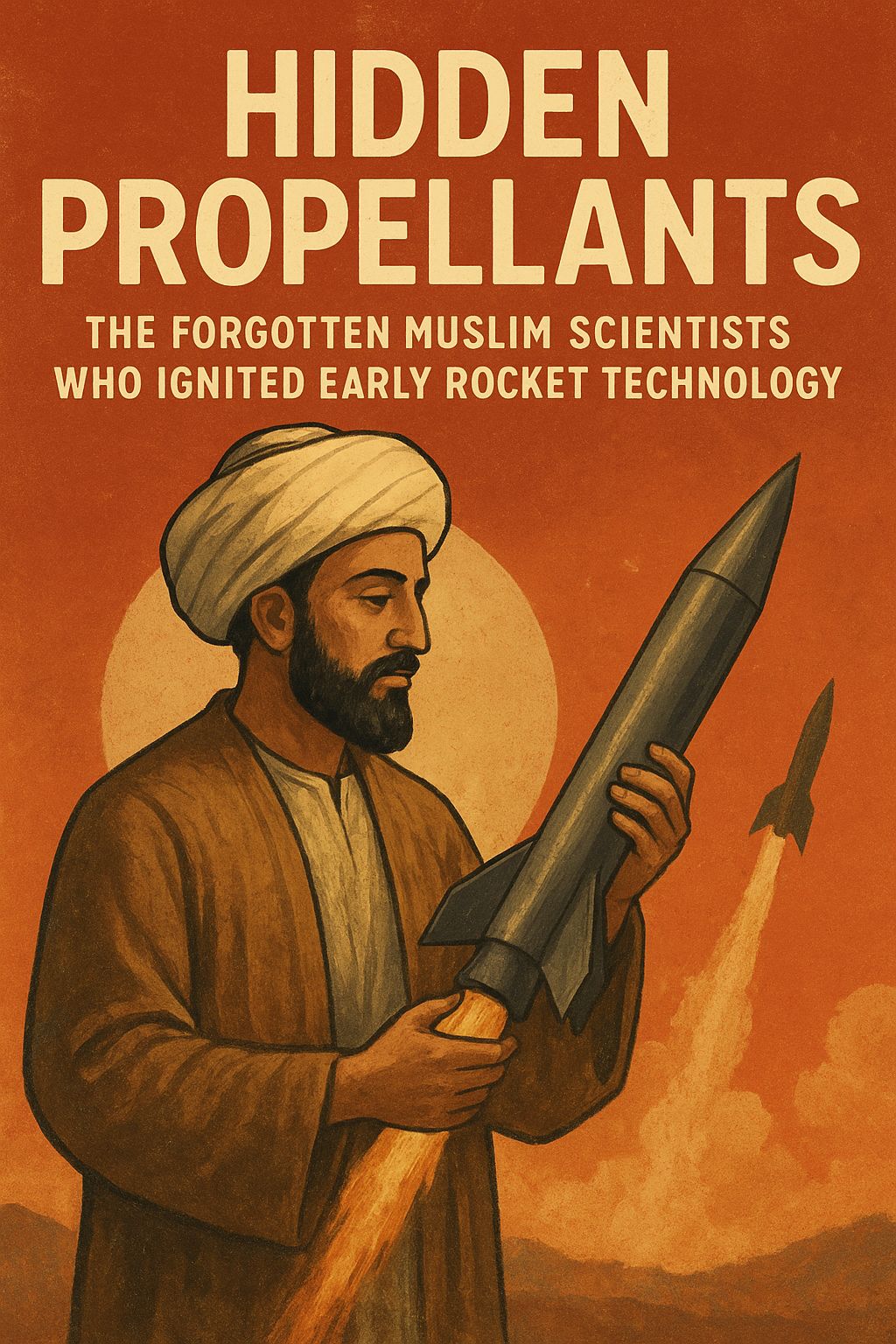
Long before NASA launched its first rocket, and centuries before Wernher von Braun dreamed of reaching the stars, a Syrian engineer lit a fuse that would echo through history. His invention wasn’t born in a gleaming laboratory — it was crafted amid the dust, courage, and curiosity of the medieval Islamic world. This is the forgotten story of Muslim scientists who designed early rocket technology — the visionaries whose fire-powered dreams helped humanity take its first steps toward the sky.
A Forgotten Chapter in Rocket History
When people think of rockets, they often picture the Space Age — sleek machines piercing the heavens, astronauts waving from capsules, or countdowns ending with a thunderous roar. But the true story of rocket technology began not in modern America or Europe, but in the Muslim world — in the bustling cities of 13th-century Syria, Egypt, and later the Ottoman Empire.
Here, among libraries, battlefields, and royal courts, a group of Muslim scientists and engineers laid the chemical and mechanical foundations of propulsion. Their discoveries in gunpowder chemistry, aerodynamics, and design paved the way for future rocketry — centuries before the idea of space exploration even existed.
Hasan al-Rammah: The First Rocket Engineer
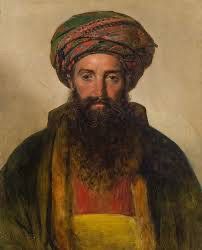
At the center of this story stands Najm al-Dīn Hasan al-Rammah, a Syrian inventor, engineer, and writer born in the 1200s. He wasn’t just a scientist — he was a craftsman, soldier, and visionary who saw potential in the explosive power of chemistry.
In his remarkable book Kitāb al-Furūsiyya wa al-Manāsib al-Ḥarbiyya (“The Book of Military Horsemanship and Ingenious War Devices”), al-Rammah documented 107 formulas for gunpowder and described 22 types of rocket-propelled weapons, which he called tayyarat — literally, “things that fly.”
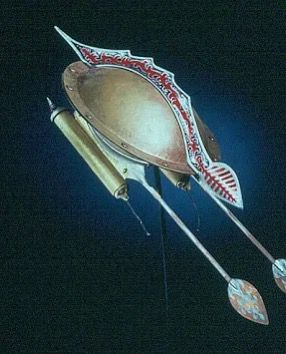
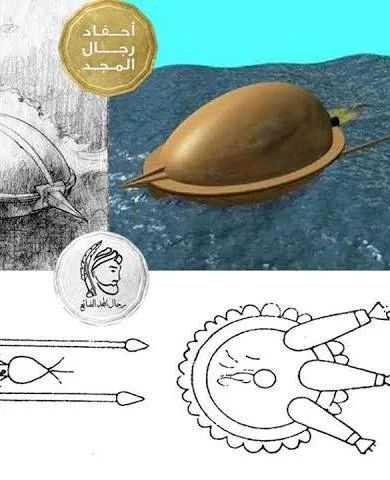
Among his designs was one that sounds like it leapt out of a science-fiction story. He called it “the egg which moves itself and burns.”It was, in essence, a rocket-powered torpedo, designed to skim across the surface of water using propulsion — centuries before modern naval engineers conceived similar devices.
His writings also include detailed instructions for purifying saltpeter (potassium nitrate) — a crucial ingredient for high-quality gunpowder. This chemical precision allowed his rockets to fly farther and burn brighter than anything his contemporaries had seen.
It’s no exaggeration to say that Hasan al-Rammah was one of the world’s first rocket scientists.
How the Islamic World Fueled Early Rocket Technology
During the Islamic Golden Age (8th–15th centuries), Muslim scientists were inquisitive about motion, pressure, and chemical reactions. They inherited knowledge from Greek, Indian, and Chinese civilizations — and then expanded it through experimentation and documentation.
This culture of learning gave rise to remarkable innovations. Muslim chemists developed new methods of distilling, refining, and purifying elements, while engineers like al-Rammah applied those discoveries to practical inventions — from flamethrowers and grenades to early rocket propulsion systems.
Unlike the secretive approach of many medieval militaries, Muslim scholars often wrote openly about their devices, blending art, science, and mathematics. In their manuscripts, rockets were drawn beside geometric diagrams, not merely as weapons, but as expressions of physics and imagination.
These texts later traveled through Spain and Sicily into Europe, where translated versions inspired new generations of engineers. In this way, the Muslim contribution to early rocketry quietly shaped the later European and eventually global scientific revolutions.
From Damascus to Istanbul: The Legacy Spreads

The story of Muslim rocket pioneers didn’t end with al-Rammah. Over the centuries, his ideas found new homes — particularly in the Ottoman Empire, where imagination and experimentation continued to burn.
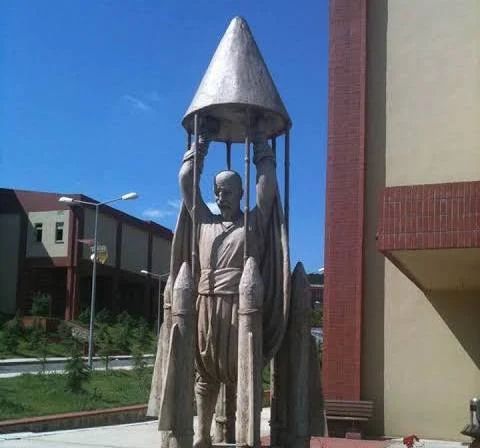
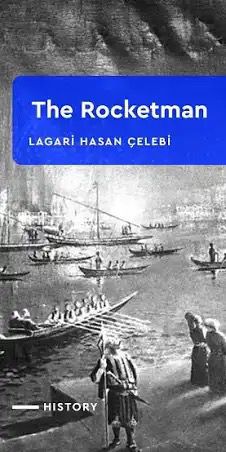
One of the most legendary figures from this era is Lagâri Hasan Çelebi, an Ottoman inventor and aviator who, according to 17th-century chronicler Evliya Çelebi, built a rocket-powered flying device. In 1633, Lagâri reportedly launched himself into the sky over Istanbul using a cone-shaped rocket filled with gunpowder — a feat that captured the public’s imagination.
While historians debate the full accuracy of the account, the story reflects a cultural fascination with flight and propulsion that persisted for centuries across the Muslim world. It reveals a civilization where curiosity and daring innovation thrived — where science was not just studied but lived.
South Asia’s Iron Rockets: Tipu Sultan’s Legacy
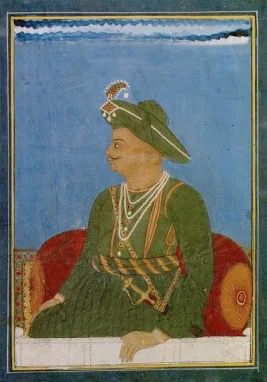
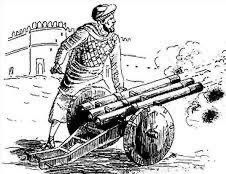
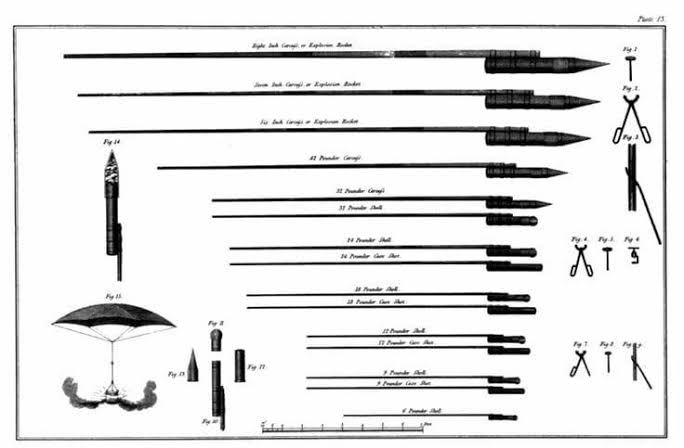
Fast forward to the 18th century, and another Muslim innovator takes center stage — Tipu Sultan of Mysore, in southern India. Tipu’s army developed iron-cased rockets that were far more advanced than anything used in Europe at the time. These rockets could travel over two kilometers and were used effectively against British forces.
The British later reverse-engineered Tipu’s designs, creating the “Congreve Rockets” that would inspire the line “the rockets’ red glare” in the U.S. national anthem. Yet few remember that these iron rockets were born in a Muslim kingdom, perfected by Muslim engineers — and became the blueprint for modern artillery.
Why These Scientists Were Forgotten
So how did such remarkable pioneers disappear from mainstream history? The answer partly stems from how history is written. During the colonial era, European scholars often depicted scientific progress as a Western achievement. They traced a direct line from Greece to the Renaissance, ignoring centuries of Muslim innovation along the way. Wars, lost manuscripts, and language barriers also contributed to this erasure.
Many Arabic, Persian, and Ottoman texts remained untranslated or hidden in archives for centuries. As a result, names like Hasan al-Rammah and Lagâri Hasan Çelebi faded into obscurity, while Western scientists received credit as the sole founders of modern rocketry. Today, historians are revisiting those manuscripts, re-examining the data, and discovering evidence that these Muslim scientists were true pioneers of rocket technology.
Human Ingenuity and the Spirit of Curiosity
These overlooked Muslim scientists are incredibly inspiring not only for their technical prowess but also for their attitude. They saw potential in fire, chemistry, and motion despite living through a time of war, change, and uncertainty. They experimented out of wonder and necessity rather than luxury. Imagine Hasan al-Rammah in his workshop — carefully mixing powders, sketching designs by lamplight, testing a small rocket by hand. He didn’t have modern materials, safety labs, or satellites. What he had was imagination, and the courage to ignite it.
These innovators remind us that scientific progress isn’t owned by one culture or century. It is a shared human journey, passed like a flame from one hand to another — from the deserts of Syria to the labs of NASA.
Why Their Legacy Matters Today
It’s easy to overlook rocketry’s modest origins in our world of space travel, Mars missions, and interplanetary aspirations. However, by rediscovering individuals such as Hasan al-Rammah, we are able to re-establish a connection with the more profound, multicultural foundations of science. Three timeless lessons can be learnt from their work: Innovation knows no bounds.
Muslim scientists were just as inquisitive and creative as their European counterparts. History must be balanced. A more complete and accurate account of human progress can be obtained by acknowledging non-Western pioneers. Curiosity never goes away. The same fire, both real and metaphorical, propels us to explore the unknown, whether we are in SpaceX labs in the twenty-first century or Damascus in the thirteenth.
Conclusion: Lighting the Fuse of Memory
The forgotten Muslim scientists who designed early rocket technology were more than inventors — they were dreamers. Their experiments lit the first sparks of a global quest that still burns today. From Hasan al-Rammah’s fiery “moving egg” to Tipu Sultan’s iron rockets, their contributions form an unbroken chain of innovation that stretches to the stars.
It’s time we remember their names, tell their stories, and give them their rightful place in history — not as footnotes, but as the true rocket pioneers of the Islamic world. Because before rockets reached space, they were born in the hearts and hands of those who dared to dream beyond their time.




