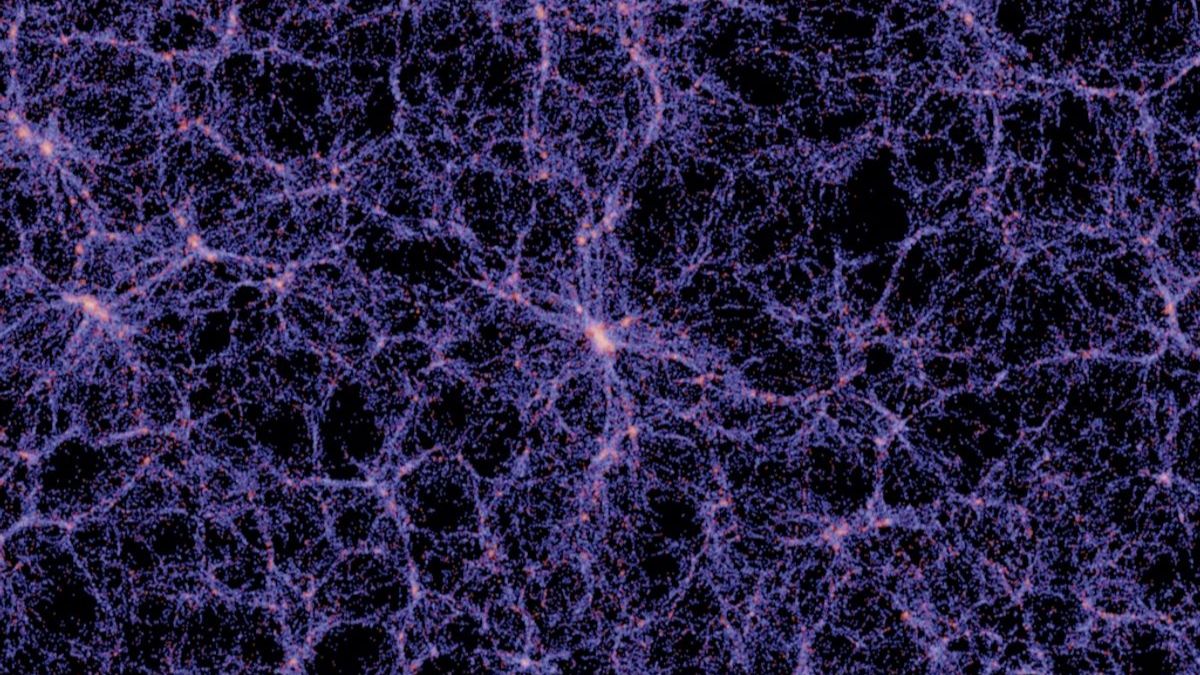
For centuries, scientists have theorized about the vast, invisible structures underpinning the cosmic web. Now, an unprecedented discovery has provided the sharpest picture yet of the cosmic web a galaxy-wide network of filaments connecting galaxies across intergalactic space. This breakthrough not only deepens our understanding of cosmological evolution but also confirms long-standing predictions about the large-scale structure of the universe.
Unveiling the Cosmic Web
Approximately 85% of the matter in the universe is composed of dark matter an unseen, invisible substance that exerts its presence through gravitational effects on galaxies and cosmic structures. This enigmatic force shapes the universe, creating a web of vast, interconnected filaments that serve as the skeleton of the cosmos. Galaxies are formed where these filaments intersect, fueled by reservoirs of gas that drive star formation and galactic evolution.
Despite its foundational role in shaping the cosmos, direct observation of these filaments has been a longstanding challenge. The gas flowing through these cosmic streams emits faintly, making it almost impossible to detect with traditional telescopes. Until now, astronomers have largely relied on indirect methods, such as studying how quasars absorb radiation, to infer the existence of these intergalactic bridges.
A Technological Feat: Capturing the First Direct Image
In a landmark achievement, an international team of researchers from the Max Planck Institute for Astrophysics and the University of Milano-Bicocca has captured a high-resolution image of a cosmic filament stretching an astonishing 3 million light-years across space. This feat was accomplished using the Multi-Unit Spectroscopic Explorer (MUSE) instrument on the Very Large Telescope (VLT) in Chile, during a record-breaking observation campaign.
By meticulously analyzing data collected over hundreds of observation hours, researchers detected the faint glow of hydrogen gas in the filament. The light that reached Earth from this structure took nearly 12 billion years to travel across space, providing a direct window into the early universe. The technological advancements employed in this study allowed scientists to distinguish between intergalactic gas and gas from galaxies, revealing the filamentary structure with unprecedented precision.
Validating Theories About the Universe
To further validate their findings, scientists compared their observations with supercomputer simulations that model the formation of the universe. The results were striking what they observed closely matched theoretical predictions, providing strong evidence that our understanding of the cosmic web and galaxy evolution is on the right track.
Fabrizio Arrigoni Battaia, a researcher with the Max Planck Institute, expressed his excitement about the discovery but emphasized the need for further exploration. “One filament is not sufficient,” he stated. “We need to discover and observe more structures to fully understand how gas moves and fuels galaxy formation.”
Implications for the Future of Astronomy
This breakthrough represents a major step toward unraveling the mysteries of the universe. The ability to directly image cosmic filaments opens up new avenues for astrophysical research, including:
Understanding gas dynamics in the universe: Observing how gas moves through these filaments can provide insights into the fueling of galaxies and the birth of stars.
Exploring the role of dark matter: Mapping out cosmic filaments can shed light on how dark matter shapes the large-scale structure of the universe.
Refining cosmological models: Comparing direct observations with simulations can help improve our models of cosmic evolution and predict future changes in the universe.
With the development of even more advanced telescopes, such as the upcoming James Webb Space Telescope (JWST) and the Extremely Large Telescope (ELT), scientists hope to uncover even finer details of these hidden cosmic highways. As technology continues to advance, we are moving closer to understanding the fundamental forces that have shaped the universe for billions of years.
This discovery is not just a significant milestone in space exploration it represents a profound step in our quest to unveil the unseen forces that govern the cosmos. With each new piece of knowledge, the cosmic web becomes clearer, allowing us to assemble a more complete picture of the intricate and vast universe we call home.