

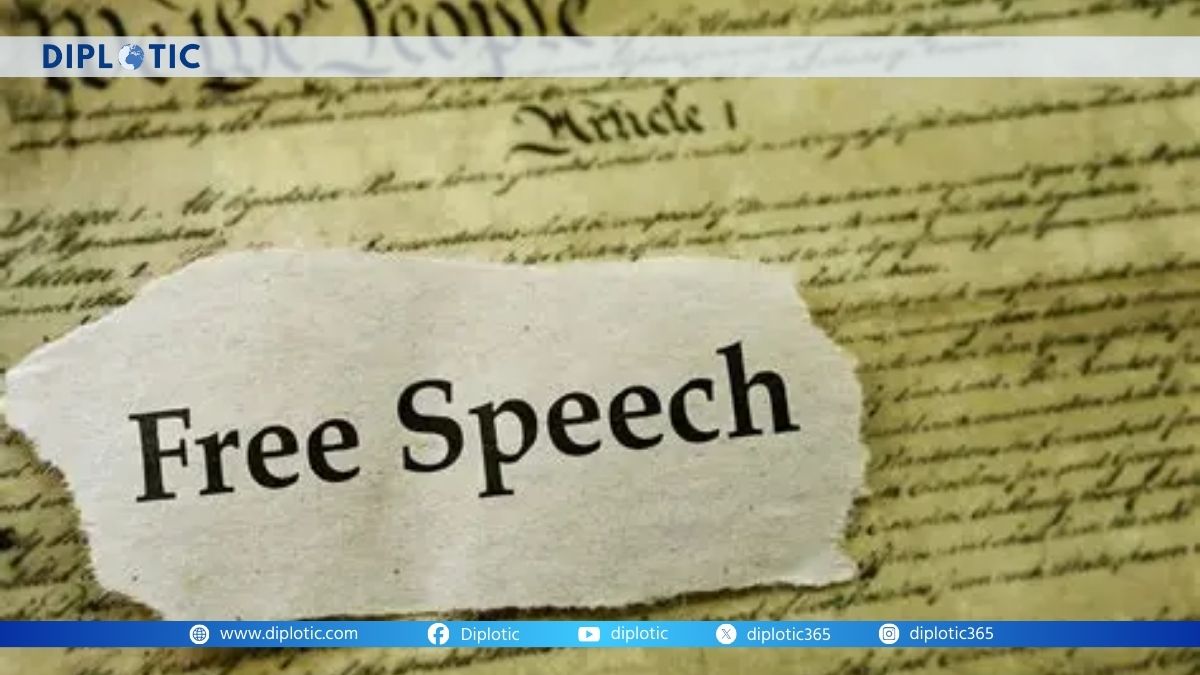
In late 2025, a sharp and unusual clash emerged between the United States and Europe, not over trade, war, or climate policy, but over speech itself. When senior European figures reacted with outrage to new U.S. travel restrictions imposed on officials linked to digital censorship, the language quickly escalated. A French member of the European Parliament declared, “We are the free world now.” The statement was striking, not only for its confidence, but for what it revealed about a growing divide over who defines freedom of expression in the digital age. This dispute is not a passing diplomatic quarrel. It reflects a deeper struggle between two different political cultures, two legal traditions, and two competing ideas of how open societies should function in an online world shaped by global platforms and powerful governments.
How did Europe become a global rule-maker on online speech?
Over the past decade, Europe has steadily positioned itself as the world’s most active regulator of digital space. Driven by concerns over hate speech, election interference, and online harm, the European Union has built a wide legal structure to govern what can be said, shared, or amplified on large platforms. The centerpiece of this effort is the Digital Services Act, which gives European authorities strong powers to demand content removal, impose fines, and monitor platform behavior across borders.
Supporters of this system argue that it protects democracy. They say online lies, extremist views, and targeted harassment weaken trust and social peace. From this view, regulation is not censorship, but responsibility. European officials often repeat the idea that speech which is illegal offline should also be illegal online. To them, this is common sense and a modern update to old laws.
However, the reach of these rules has gone far beyond Europe’s borders. American companies operate globally, and European regulators have made clear that access to the EU market requires compliance with EU speech standards. This has led to warnings, investigations, and threats of large fines against platforms based in the United States. When these rules touch American political debate, the issue becomes sensitive. The United States has a long tradition of broad speech protection under its Constitution, even for speech many find offensive or wrong.
The tension became clearer when European officials warned an American platform owner ahead of a planned political interview involving a U.S. presidential candidate. To critics in Washington, this looked like foreign pressure on American political speech. From their perspective, Europe was no longer regulating its own space, but attempting to shape debate inside the United States. This sense of overreach laid the ground for the strong response that followed.
Why did the United States respond with travel restrictions?
The decision by the U.S. administration to bar certain European figures from entering the country marked a clear shift in tone. For years, American leaders had raised concerns quietly, through speeches and diplomatic channels. This time, the response was direct and public. U.S. officials said the move was meant to defend Americans from what they described as foreign censorship efforts that reached beyond Europe’s borders.
Travel restrictions are a serious step in diplomacy. They are usually reserved for human rights abusers, security threats, or major corruption cases. Applying them in a dispute over speech shows how high the stakes have become. The U.S. position rests on a simple claim: no foreign authority should decide what Americans can say or hear, even indirectly, through pressure on platforms.
This response also reflects frustration built up over time. During earlier administrations, cooperation with European regulators was often encouraged. Some American political figures even urged Europe to use its laws to influence U.S.-based platforms. Critics argue that this opened the door to the current situation, where European standards risk becoming global defaults.
The travel restrictions sent a signal not only to Europe, but also to domestic audiences. They framed the issue as a defense of national values rather than a policy disagreement. At the same time, the move has raised concerns among civil liberties advocates who worry about normalizing bans as a political tool. Even those who support free speech protections question whether excluding officials is the best way to defend open debate.
Still, the message was clear. The United States was no longer willing to treat the issue as technical or administrative. It was now a political conflict about sovereignty, rights, and the future of democratic speech.
Are Europe and the United States drifting toward different ideas of freedom?
At the heart of this dispute lies a basic difference in how freedom of speech is understood. In the United States, speech is often treated as a core right that should be limited only in extreme cases. The belief is that open debate, even when messy, is safer than giving authorities power to decide what is true or acceptable. Courts, not regulators, are usually the final judges.
In much of Europe, the approach is different. Historical experience with extremism and propaganda has shaped a stronger role for the state in guarding public order. Speech is balanced more openly against other values, such as dignity, equality, and social harmony. From this view, freedom does not mean saying anything at any time, but speaking within agreed limits.
Neither model is new, but the internet has forced them into direct contact. Global platforms do not fit neatly into national systems. A rule written in Brussels can affect a user in Texas. A speech norm protected in America can clash with laws in Germany or France. As a result, the question is no longer which model is right in theory, but which one will shape global practice.
This is why rhetoric has grown sharper. When European voices claim to represent the “free world,” Americans hear a challenge to their constitutional identity. When U.S. officials push back, Europeans see an attack on their laws and democratic choices. Each side frames the issue as a defense of freedom, but they mean different things by that word.
The danger is that this conflict becomes less about protecting citizens and more about asserting power. If free speech is reduced to a tool of influence, trust in democratic values may weaken on both sides.
What does this fight mean for the future of global speech?
The current standoff is unlikely to end quickly. Digital speech will remain a central issue in politics, elections, and social life. As artificial intelligence, automated moderation, and cross-border platforms expand, the pressure to regulate will only grow. The key question is whether shared rules can emerge without forcing one system on everyone else.
For now, the divide is clear. Europe is moving toward stronger central control, guided by expert bodies and regulators. The United States, at least in its current posture, is reasserting a constitutional boundary around speech, even if that leads to conflict with allies. Both sides claim to protect democracy, yet they risk undermining it if debate turns into coercion.
History shows that freedom of expression has never been easy or comfortable. It has always involved tension, disagreement, and risk. The lesson from past struggles is that once power over speech expands, it rarely contracts on its own. This is why the present moment matters. Decisions made now will shape how future generations speak, argue, and govern themselves.
The claim that one region alone represents the “free world” misses the point. Freedom is not a title to be claimed, but a practice to be defended carefully. As the United States and Europe face each other across this divide, the real test will be whether they can protect open societies without silencing the very debates that make them free.




