For decades, Bangladesh’s garment industry has grown on the strength of one major advantage: duty-free access to the European Union. This benefit helped the country rise from a small supplier to one of the world’s largest apparel exporters. Today, European consumers wear Bangladeshi-made jeans, T-shirts, and shirts without realizing how deeply trade policy shapes those labels. But a new trade agreement between the European Union and India is now forcing Bangladesh to rethink its future in its most important export market. While the deal does not target Bangladesh directly, its effects could quietly reshape competition in Europe and place Dhaka under serious pressure in the coming years.
The EU–India free trade agreement, announced in January 2026 and expected to take effect in 2027, will remove tariffs on nearly all goods traded between the two sides. For apparel, this means Indian clothing exports to Europe will enjoy zero-duty access, down from the current tariff of around 12 percent. This change matters because Bangladesh’s duty-free access is temporary. After its graduation from the least developed country category in November this year, Bangladesh will retain EU preferences for only three more years. After that, unless a new arrangement is secured, Bangladeshi garments could face duties of about 12.5 percent, exactly when India enters the EU market duty-free. This overlap raises a critical question: can Bangladesh protect its position before the rules change?
How Bangladesh Built Its Edge in the EU Market
Bangladesh’s rise in the European garment market did not happen overnight. Since 1975, the country has benefited from the EU’s trade preferences for least developed countries. These rules allowed Bangladeshi garments to enter Europe without tariffs, giving exporters a clear price edge over many competitors. Over time, factories expanded, supply chains improved, and buyers grew comfortable sourcing from Bangladesh at scale.
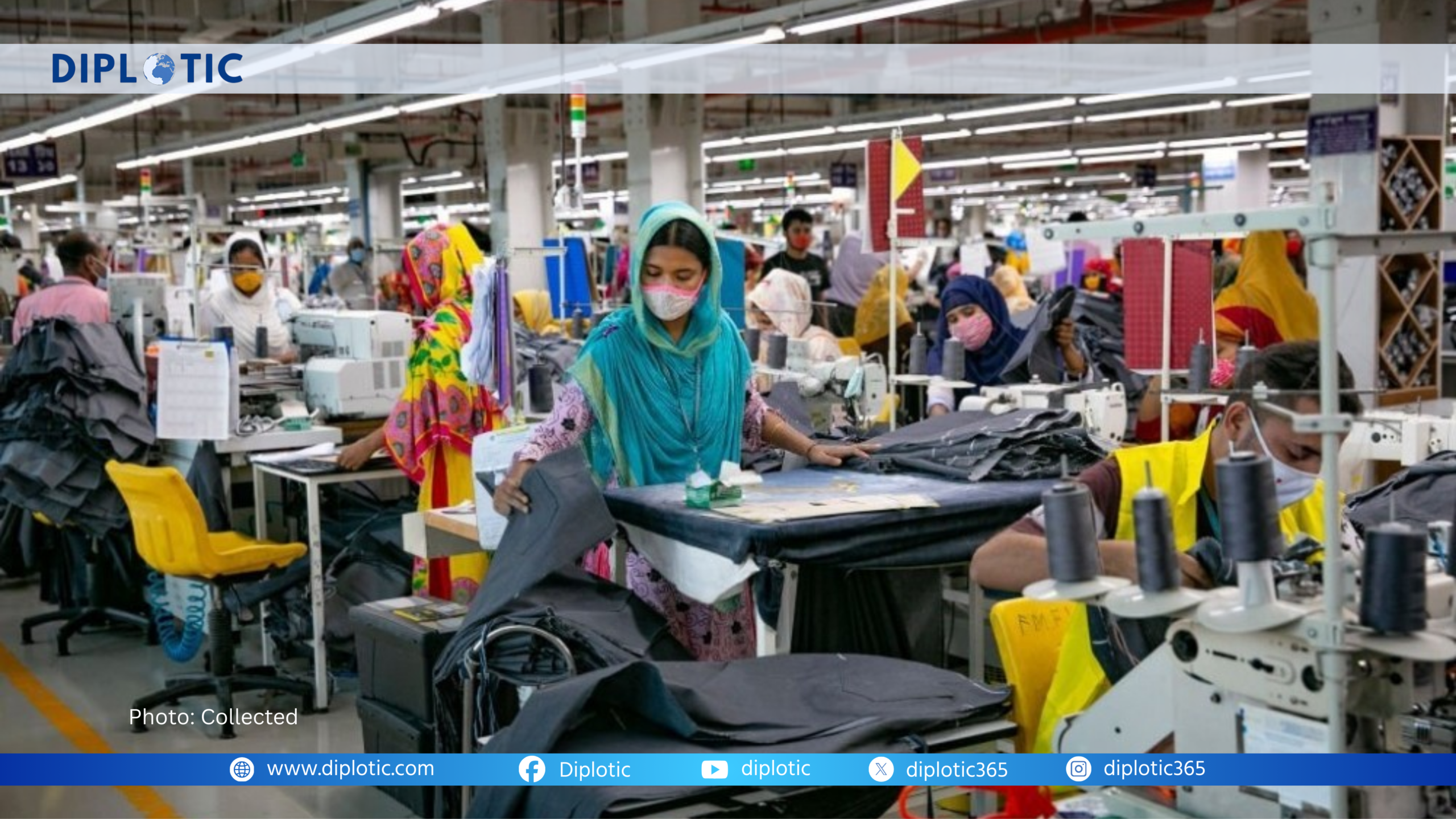
This long period of preferential access helped Bangladesh become the EU’s second-largest garment supplier after China. In some product categories, such as denim trousers, T-shirts, and casual wear, Bangladesh even overtook China. Industry leaders often point out that in Europe, one in every three people wears a pair of Bangladeshi-made denim trousers. Behind this statistic lies a system built on large factories, competitive labor costs, and the certainty that duty-free access would continue.
In the 2024–25 fiscal year, more than half of Bangladesh’s garment exports went to EU countries, totaling about $19.7 billion. For many factories, Europe is not just a market; it is the market. Orders from EU buyers shape production planning, investment decisions, and employment across the sector. This concentration, once seen as a strength, is now becoming a risk.
The problem is not that Bangladesh will lose duty-free access immediately. The transition period after LDC graduation provides a short window. But trade policy moves slowly, and negotiating new agreements takes time. If Bangladesh does not secure a replacement arrangement, such as GSP Plus or a bilateral free trade agreement, it will enter a more competitive EU market with a clear cost disadvantage.
Why the EU–India Deal Changes the Competitive Balance
The EU–India agreement alters the playing field in a way that favors India at a critical moment. Once the deal is implemented, Indian apparel exporters will ship to Europe without paying duties. At the same time, Bangladesh may be preparing to face new tariffs after 2029. This creates a narrow but important gap that buyers are likely to exploit.
India brings several strengths to this competition. It has a large domestic cotton base, which reduces dependence on imported raw materials. It also has a vast labor force and strong government support through policy incentives and financing. These factors allow Indian manufacturers to adjust prices and scale production quickly. With tariffs removed, Indian garments become more attractive to European buyers who are already under pressure to cut costs.
The broader global context makes this shift even more significant. After recent changes in U.S. trade policy, many exporters have turned to Europe as the main growth market. This has led to oversupply, giving EU buyers more bargaining power. According to market analysts, buyers are now pushing for lower prices, faster delivery, and shorter lead times. In such an environment, even a small tariff difference can decide where orders go.
For Bangladesh, the risk is not an immediate collapse in exports but a gradual erosion of margins. If buyers know that Bangladeshi suppliers will soon face duties while Indian and Vietnamese suppliers will not, they may demand price cuts or shift part of their orders. Over time, this can weaken factory profitability, reduce investment capacity, and put pressure on jobs.
Economists warn that the impact will be structural rather than sudden. Bangladesh’s long-standing advantage in the EU was built on policy, not just productivity. When that policy edge fades, competition will depend more on efficiency, product mix, and trade diplomacy.
Can Bangladesh Protect Its Position Before the Window Closes?
Despite the risks, Bangladesh is not without options. Industry leaders argue that the country still has strong fundamentals. It has large-scale production capacity, deep experience in mass-market apparel, and proven strength in products such as denim, knitwear, sweaters, lingerie, and basic woven items. These strengths do not disappear overnight.
Some exporters are already moving toward higher-value and more complex products, aiming to reduce reliance on price competition alone. This shift, however, takes time and requires investment in skills, technology, and compliance. It also depends on buyer willingness to place higher-end orders in Bangladesh rather than in countries with longer experience in that segment.
Trade diplomacy remains the most urgent task. Analysts stress that Bangladesh must prepare seriously for GSP Plus eligibility, which would allow continued preferential access to the EU in exchange for meeting governance and labor standards. At the same time, the government is exploring the possibility of a bilateral free trade agreement with the EU. Both paths are complex and politically sensitive, but delay could be costly.
Industry leaders describe the EU–India deal as a wake-up call. They argue that Bangladesh has relied too long on automatic preferences without securing a durable arrangement. Some also point to missed opportunities, such as failing to pursue trade deals with other major markets or to seek a deferment of LDC graduation. These debates reflect growing anxiety within the sector.
If Bangladesh ends up paying duties while competitors enjoy zero tariffs, buyers will have stronger leverage. Factory owners warn that this could lead to tougher negotiations and reduced order volumes. The risk is not only lower exports, but a loss of confidence among investors who see trade policy uncertainty as a long-term threat.
What the EU–India Deal Means for Bangladesh’s Export Future
The EU–India trade agreement does not signal the end of Bangladesh’s garment success story. But it does mark the end of a long period of comfort. The rules that helped Bangladesh grow are changing, and competitors are moving faster to secure their positions. In this new phase, past achievements will matter less than future preparation.
Bangladesh’s garment sector has shown resilience before, surviving global financial crises, factory safety reforms, and pandemic disruptions. This challenge is different because it comes from policy shifts rather than demand shocks. Responding to it requires strategic planning, strong diplomacy, and coordination between government and industry.
The coming years will test whether Bangladesh can move from dependence on special treatment to competitiveness based on strength. If trade talks succeed and exporters upgrade their product mix, the country can retain a strong presence in Europe. If not, the EU–India deal may slowly redraw the map of apparel sourcing.
What is clear is that time is limited. The transition period after LDC graduation offers a narrow window to act. How Bangladesh uses this window will decide whether Europe remains its strongest market or becomes its toughest challenge.