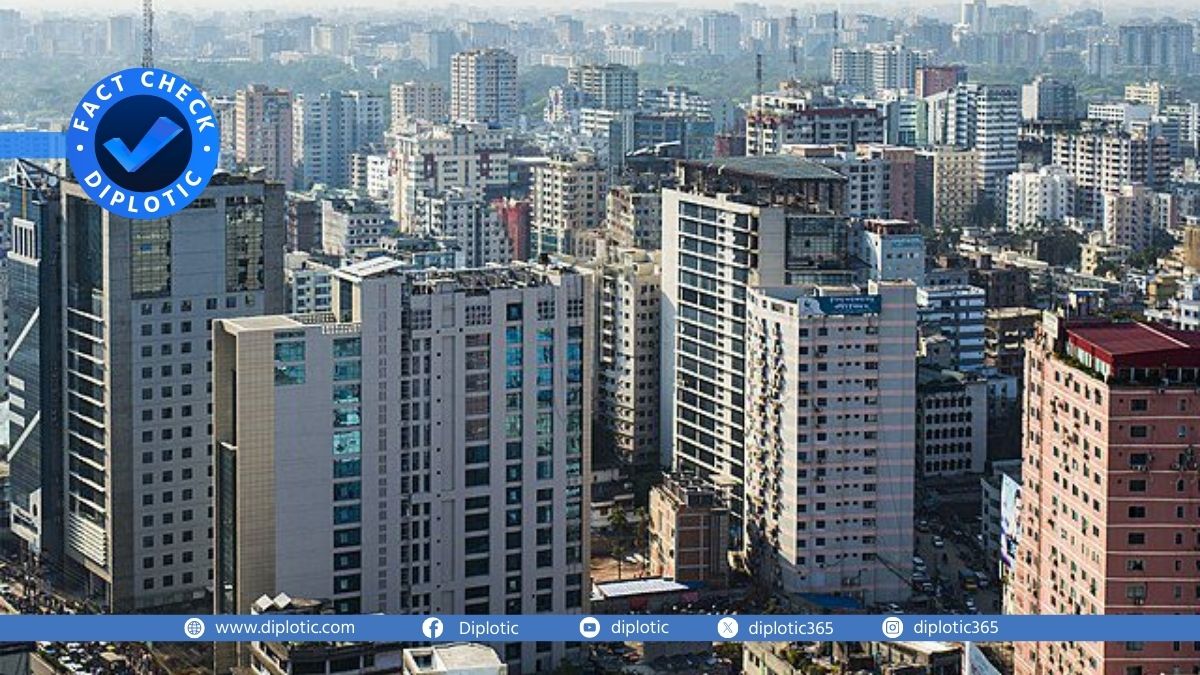
On March 6, 2026, IQAir reported that Dhaka’s real-time Air Quality Index (AQI) exceeded 200 at 9:00 PM PT, placing the city in the “very unhealthy to hazardous” range due to elevated PM2.5 levels. Subsequent coverage, including a March 14 article in a Bangladeshi outlet, declared Dhaka the “most polluted city in the world” with an AQI over 200, citing brick kilns, vehicle emissions, construction dust, and waste burning as primary drivers. Social media and news shares quickly amplified claims that Dhaka ranks among the top 10 (or even #1) most polluted cities globally in early 2026, often linking the situation to long-term structural sources and public health risks.
This narrative is significant because Dhaka has frequently appeared in global pollution rankings, and persistent hazardous air quality affects millions of residents, particularly children, the elderly, and those with respiratory conditions. Accurate assessment matters for residents deciding on precautions (masks, indoor time) and for policymakers addressing root causes. This investigation verifies the current ranking, real-time vs. annual data, and the causes cited against IQAir, WHO, and other monitoring sources.
Claim 1: Dhaka is currently among the top 10 most polluted cities in the world.
Evaluation: As of March 6–14, 2026, IQAir’s real-time global rankings show Dhaka frequently in the top 10–20 most polluted cities on an hourly/daily basis, with AQI values often exceeding 200 (very unhealthy) and occasionally reaching 300+ (hazardous). On March 5 at 9:00 PM PT, Dhaka’s AQI was reported over 200, driven by PM2.5 concentrations far above WHO guidelines. However, daily rankings fluctuate based on weather, wind, and emissions; Dhaka does not hold a consistent #1 spot globally in early March 2026. Cities in India (e.g., Delhi, Kanpur), Pakistan (Lahore), and parts of China sometimes record comparable or higher spikes during the same period. Annual 2024 data ranked Dhaka 26th globally (average PM2.5 78 µg/m³), while Bangladesh ranked second as the most polluted country.
Verdict: Partially True. Dhaka frequently ranks in the top 10–20 on real-time daily lists in early March 2026, but it is not consistently #1 or locked in the top 10 globally.
Claim 2: Dhaka is the most polluted city in the world right now.
Evaluation: Specific headlines and social posts in mid-March 2026 claimed Dhaka topped the global list with AQI over 200 or 300+. IQAir’s live map and historical snapshots confirm periods where Dhaka reached #1 on certain days or hours in early March, particularly during stagnant weather and high local emissions. However, this is episodic, not sustained. Other cities (e.g., Lahore, Delhi, or Chinese industrial hubs) often share or overtake the top spot depending on the exact time and conditions. No authoritative source (IQAir, WHO, or regional monitors) declares Dhaka the undisputed most polluted city continuously in 2026.
Verdict: Misleading. Dhaka has reached #1 on specific days/hours in early March 2026, but this is not a fixed or permanent position.
Claim 3: Brick kilns, vehicle emissions, and construction dust are the main causes of Dhaka’s air pollution.
Evaluation: Multiple studies and reports (IQAir, World Bank, Bangladesh Department of Environment) consistently identify these as the dominant PM2.5 sources. Brick kilns (over 7,000 nationwide, many using outdated technology) contribute heavily year-round, especially in winter. Vehicle exhaust and road dust are major urban contributors, while construction projects generate resuspended dust. Household combustion and waste burning add significant shares. Transboundary pollution accounts for ~25% of fine particulates. Weak enforcement of emission standards and dust controls sustains the problem beyond winter months.
Verdict: True. These sources are well-documented as the primary drivers of Dhaka’s persistent air pollution crisis.
Claim 4: Air quality in Dhaka will remain hazardous until the monsoon season arrives.
Evaluation: IQAir and local forecasts note that meaningful, sustained improvement typically arrives with the monsoon (June onward), when rainfall and winds disperse pollutants. In the dry season (November–May), isolated rain or wind events provide temporary relief, but high PM2.5 persists due to ongoing emissions and stagnant conditions. The 30-day trend in early 2026 shows repeated hazardous levels (AQI 200–400+), supporting the view that significant relief is unlikely before monsoon onset.
Verdict: True. Seasonal patterns and current forecasts align with hazardous conditions persisting until monsoon rains begin.
Claim 5: Regardless of exact ranking, Dhaka’s air pollution crisis reflects a genuine public health emergency.
Evaluation: Long-term PM2.5 averages (78 µg/m³ in 2024, 15.6× WHO guideline) and frequent hazardous episodes (AQI >200–300+) are linked to increased risks of respiratory diseases, heart conditions, lung cancer, and premature death. WHO estimates air pollution contributes to ~7 million global deaths annually, with disproportionate impact in low- and middle-income countries like Bangladesh. Dhaka’s structural sources—uncontrolled brick kilns, weak vehicle standards, rampant construction dust—create a year-round crisis, worsened by transboundary flows and population density.
Verdict: True. The scale and persistence of pollution constitute a serious public health issue, independent of daily global rankings.
Conclusion: Frequently in the Top Tier, but Not Always #1
Dhaka has recorded very poor to hazardous air quality in early March 2026, with AQI often exceeding 200 and occasionally reaching the top 10–20 most polluted cities globally on real-time lists (IQAir). On certain days it has briefly ranked #1, but this is episodic, not sustained or undisputed. Brick kilns, vehicle emissions, construction dust, waste burning, and household combustion remain the dominant causes, with weak enforcement and transboundary pollution aggravating the situation.
Claims of Dhaka as the “most polluted city in the world” are overstated when presented as a fixed status; rankings fluctuate daily and seasonally. The underlying crisis, however, is undeniable—long-term PM2.5 levels far exceed safe thresholds, and hazardous conditions are likely to persist until monsoon rains arrive.
For residents, the practical takeaway is clear: monitor real-time AQI (via IQAir or local apps), use masks outdoors during peaks, limit exposure for vulnerable groups, and advocate for enforcement on emissions and dust control. The health and economic toll is real and ongoing; addressing structural sources remains the path to meaningful change. In the global pollution landscape, Dhaka is consistently among the worst-affected major cities—ranking tells only part of the story, but the danger is unmistakable.