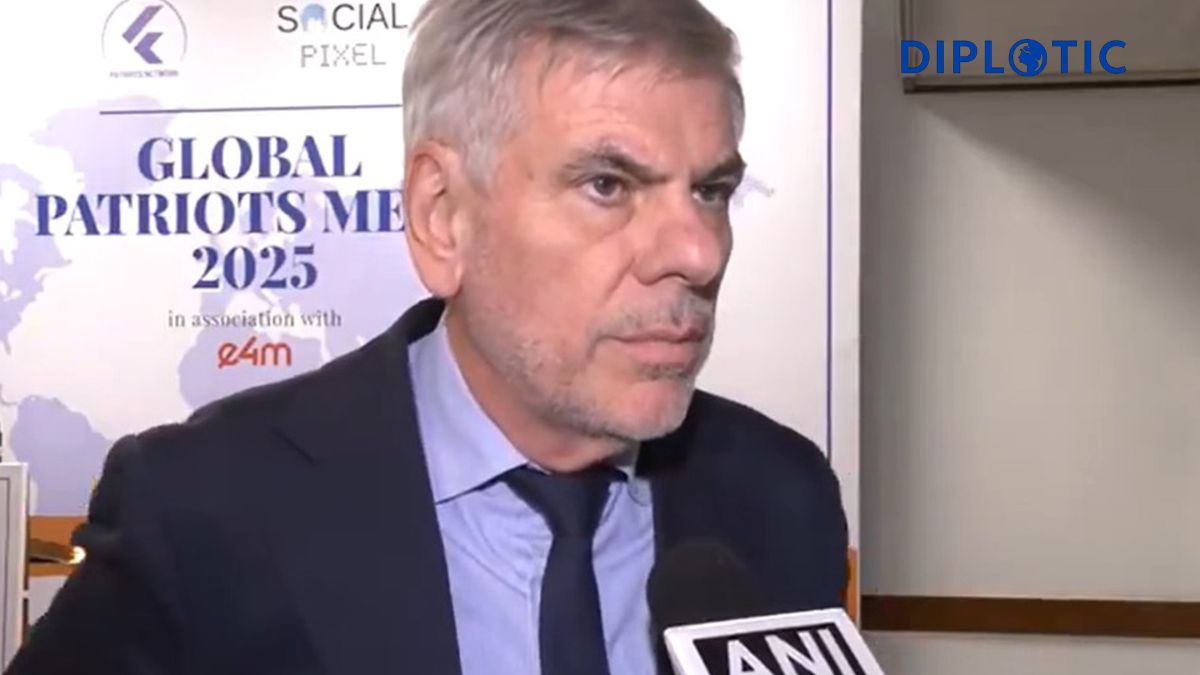
At the 2025 Global Patriots Meet, Flemish MP Filip Dewinter slammed Pakistan as a “terror state,” calling on Europe to ban it and deepen strategic cooperation with India. His remarks signal a potential shift in EU-Asia security dynamics and diplomacy.
A Stark Warning from Brussels: Dewinter’s Bold Accusation
At the 2025 Global Patriots Meet, held at the India International Centre, Belgian‐Flemish parliamentarian Filip Dewinter delivered remarks that reverberated far beyond the halls of the conference. Dewinter, a member of the Flemish nationalist party Vlaams Belang, declared in unambiguous terms that Pakistan should be designated a “terror state.” He urged European nations to effectively ban Pakistan and to recalibrate their security and trade relationships, aligning instead with India. Dewinter accused Pakistan of providing financial, logistical, and operational support to radical jihadist groups, allegations he described as a shared threat to both Western democracies and India. In his view, recent terror incidents, such as the Delhi blast, are symptomatic of Islamabad-backed extremism.
From Diplomacy to Alarm: What This Means for Europe
For decades, the European Union (EU) has engaged with Pakistan through frameworks like the counter-terrorism dialogue, seeking collaboration on security matters while acknowledging Islamabad’s strategic importance.
But Dewinter’s provocative call marks a dramatic shift away from cautious diplomatic engagement. Instead, it frames Pakistan not as a troubled partner needing oversight but as an outright security hazard, a stance that could reshape how EU member states view trade, migration, and security cooperation with Islamabad.
Given that Pakistan counts on the EU as a major export destination and benefits from conditional trade privileges tied to governance and human rights benchmarks, Dewinter’s comments could stir debates inside Brussels about whether economic incentives remain appropriate or whether geopolitical liability outweighs them.
Strategic Realignment: Europe–India Ties Under Scrutiny
Dewinter didn’t stop at condemnation. He called for a stronger European alignment with India not only in trade but also in “security and cooperation.” He positioned the Indian government and fellow “patriotic parties” in Europe as natural partners in an emerging global campaign against radical Islamist terrorism.
This rhetoric echoes comments by Indian political leaders who have openly described the India–Pakistan conflict not merely as a bilateral rivalry but as a broader “India vs. Terrorism” confrontation.
The proposed shift would entail more than symbolic alignment: it could reorient European foreign policy, particularly in areas of intelligence sharing, counter-terrorism financing restrictions, and perhaps even trade and investment policy towards South Asia.
Implications and Reactions: What’s Next?
Dewinter’s remarks, as forceful as they are, have already stirred controversy. For some in Europe, labeling a sovereign state a “terror state” risks destabilizing diplomatic channels and escalating tensions. Others may view it as a candid acknowledgment of the dangers posed by extremist networks allegedly embedded and supported within Pakistan.
It remains to be seen whether Dewinter’s call will gain traction among EU policymakers. Historically, the EU has condemned specific terror attacks, called for dialogue, and underscored the need for lawful counter-terrorism measures.
Yet the public pressure mounting through voices like Dewinter’s, especially in the context of repeated attacks blamed on groups alleged to have cross-border support may compel EU institutions to reevaluate the balance between strategic partnership and security risk.
For India and its allies, Dewinter’s words offer a potential validation of long-standing grievances: if adopted, this new European posture could bolster arguments for international isolation of terror-supporting regimes and lend legitimacy to tougher counter-terrorism diplomacy.
A Turning Point or Just Provocation?
Filip Dewinter’s declaration is undoubtedly a dramatic intervention: bold, confrontational, and loaded with diplomatic consequences. Whether it becomes a turning point in Europe–South Asia relations or is dismissed as fringe rhetoric remains uncertain.
What is clear, however, is that this moment underscores a growing impatience with traditional diplomacy in a world increasingly shaped by asymmetric threats terrorism, hybrid warfare, and ideological conflict.
If European capitals take Dewinter’s words seriously, we may be witnessing the early stages of a strategic realignment: one that brings European and Indian interests closer, but at the cost of a formerly pragmatic relationship with Pakistan.
The question now is whether Brussels will heed the alarm or label it political noise.