

The Crash That Shocked Ahmedabad
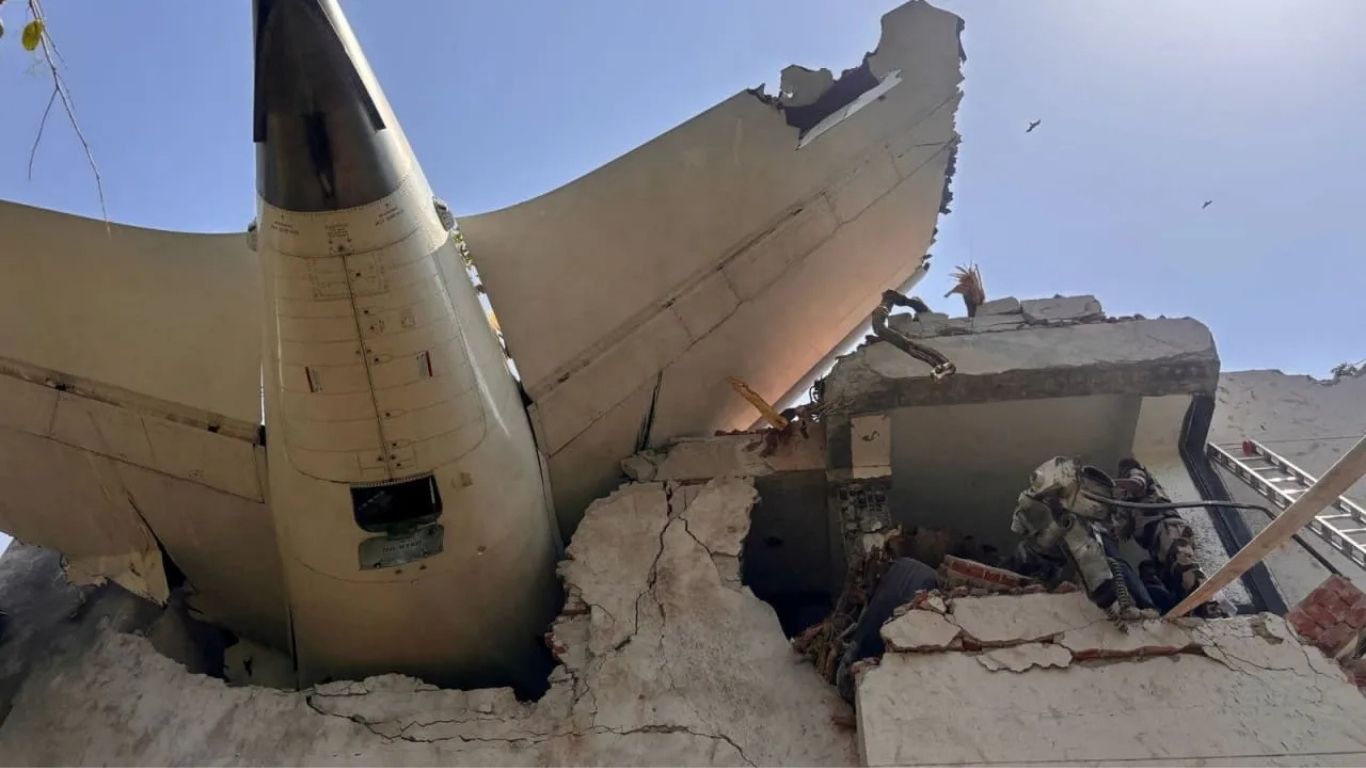
On June 12, 2025, Air India Flight 171, a Boeing 787-8 Dreamliner bound for London Gatwick, took off from Ahmedabad’s Sardar Vallabhbhai Patel International Airport at 1:38 p.m. (08:08 GMT). Barely 40 seconds later, it plummeted into the BJ Medical College hostel, 1.85 km from the runway, killing 241 of 242 aboard and 19 on the ground. The sole survivor, Vishwash Kumar Ramesh, a 40-year-old British national, escaped through a fuselage opening, per Al Jazeera. The crash, India’s deadliest aviation disaster in decades, left five buildings in flames and 67 injured on the ground, per The Guardian.
A preliminary report by India’s Aircraft Accident Investigation Bureau (AAIB), released July 12, zeros in on a chilling detail: three seconds after takeoff, both fuel-control switches moved from “run” to “cutoff,” starving the engines and causing a catastrophic loss of thrust. The switches flipped back to “run” within 10-12 seconds, triggering an automatic relight, but only one engine partially regained power before the plane hit the ground at 1:39 p.m. A “Mayday” call was issued, but air traffic control got no response, per The Hindu.
The Cockpit Conundrum
The black box audio, recovered from the wreckage, deepens the mystery. One pilot is heard asking, “Why did you cut off?” with the other replying, “I didn’t,” per BBC. The report doesn’t identify who said what, but a Wall Street Journal report on July 17, citing U.S. officials, points the finger at Captain Sumeet Sabharwal, the pilot monitoring, suggesting he may have flipped the switches. First Officer Clive Kunder, the pilot flying, was likely too busy with the climb-out to touch them, per unnamed U.S. pilots quoted by the WSJ.
Sabharwal, 56, was a veteran with 15,638 flight hours, including 8,596 on the 787, and a reputation as a meticulous instructor, per Reuters. Kunder, 32, had 3,403 hours, 1,128 on the Dreamliner, and was described as a passionate aviator inspired by his mother’s career at Air India, per Al Jazeera. Both passed preflight breathalyzer tests and were rested, ruling out fatigue or intoxication, per Airways Magazine.
The cockpit voice recorder captures confusion, not clarity. “The switches flipped a second apart—deliberate, not accidental,” says U.S. aviation expert John Nance, noting the spring-loaded design requires pulling and moving with intent, per Reuters. Yet, no emergency—like an engine fire—warranted cutting fuel, and the plane was airworthy with no hazardous cargo, per the AAIB.
The Fuel-Switch Enigma
The fuel-control switches, located behind the throttle levers, manage fuel flow to the 787’s two GE engines. They’re spring-loaded, requiring a pilot to pull upward before shifting from “run” to “cutoff,” a safeguard against accidental movement, per Reuters. Typically used to start or stop engines on the ground, they’re only toggled in-flight for emergencies like engine failure. The AAIB report notes the switches moved to “cutoff” at 1:38:42 p.m., three seconds after liftoff, and back to “run” by 1:38:54, but the low altitude left no time for recovery.
A 2018 FAA advisory flagged a potential issue with Boeing 737 fuel switches, where disengaged locking mechanisms could allow unintended movement. The same design is used in the 787, but Air India didn’t inspect theirs, as the advisory wasn’t mandatory, per BBC. Could a glitch have caused the switches to flip? Former AAIB investigator Capt. Kishore Chinta suggests a possible electronic control unit issue, while U.S. expert Mary Schiavo cites a 2019 All Nippon Airways 787 incident where software misread the plane’s status, cutting fuel midflight, per Al Jazeera.
Human Error or Mechanical Ghost?
The WSJ’s claim that Sabharwal flipped the switches has sparked outrage. India’s Federation of Indian Pilots called it “premature and irresponsible” to assign blame without full data, per Al Jazeera. “There’s no evidence of suicide or malice,” says Schiavo, urging release of the full cockpit voice recorder transcript to avoid misinterpretation. Two pilot groups reject human error outright, arguing the switches’ design makes accidental flips unlikely.
Yet, the alternative—a mechanical or software glitch—remains unproven. The AAIB found no major technical defects, and fuel samples were satisfactory, per The Hindu. The Ram Air Turbine (RAT), a backup power system, deployed automatically, indicating dual engine failure, but it couldn’t save the plane, per The Air Current. Peter Goelz, former NTSB managing director, calls the switch movement “disturbing” but doubts a design flaw, noting no prior pilot complaints about 787 switches, per BBC.
The Fallout and Frustration
The crash’s toll is staggering: 260 dead, including former Gujarat Chief Minister Vijay Rupani, identified via DNA, per Wikipedia. Grieving families, like Badasab Syed, who lost four relatives, demand answers. “Was it avoidable?” Syed asked, per BBC. The AAIB, joined by Boeing, the NTSB, and UK experts, is under pressure to deliver, with a full report due in 12 months, per BBC. India’s aviation regulator has ordered Boeing fuel-switch inspections, and South Korea may follow, per The Guardian.
Air India, reeling from scrutiny over its budget arm Air India Express, insists it’s cooperating fully, per CNN. CEO Campbell Wilson urged staff not to jump to conclusions, per Al Jazeera. Posts on X, like one from @WSJ, fuel speculation, but experts warn against rushing to judgment.
The Skeptic’s Take
Let’s not buy the narrative just yet. The WSJ’s claim that Sabharwal flipped the switches feels like a plot twist from a bad thriller. A veteran pilot with 15,600 hours doesn’t just “accidentally” cut fuel during takeoff—it defies reason. The cockpit audio hints at confusion, not intent, and the lack of a full transcript leaves us guessing. A software glitch, like the 2019 ANA incident, or an electronic fault seems plausible, but the AAIB’s vague report offers no smoking gun. “The truth’s still buried in the wreckage,” says an aviation analyst who’s seen too many probes drag on.
The crash’s horror—260 lives lost, a medical college in flames—demands answers, not scapegoats. Blaming Sabharwal without hard evidence smells like a rush to close the case, especially with Boeing’s 787 under scrutiny. The FAA’s 2018 advisory raises questions, but if the switches were fine for years, why now? As I sit here, grinning at the absurdity of a cockpit mystery this baffling, I can’t shake the feeling we’re missing the real story. Was it human error, a ghost in the machine, or something darker? Until the full report drops, it’s all smoke and debris. Keep watching—and don’t trust the headlines.




