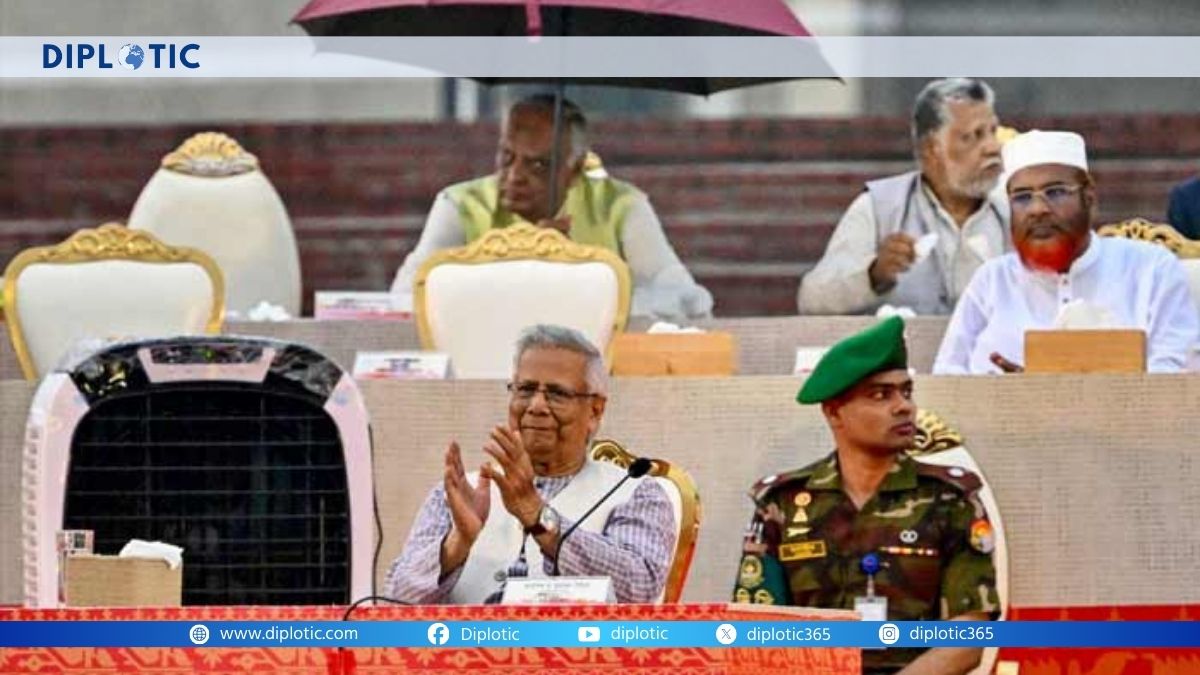
Bangladesh is at a historic crossroads. Can a 2026 Referendum Build a New Bangladesh From a Broken System? After a year marked by upheaval, the country’s interim leader, Nobel laureate Muhammad Yunus, is calling for a national referendum on a sweeping reform proposal named the July National Charter. The plan, he argues, is necessary to repair what he has called a “completely broken” political system, one marked by deep divisions, authoritarian legacies, and institutional fragility.
Scheduled for February 2026, the referendum is set to coincide with parliamentary elections, a dual exercise in democracy that could define Bangladesh’s future. The proposal has stirred both hope and skepticism: while its supporters view it as a foundational reset, critics warn the roadmap risks becoming symbolic without legal teeth.
This referendum is more than a political maneuver; it is, in effect, a plea for national healing. The charter aims to embed major checks and balances into the constitution, reshape power dynamics, and enshrine the changes born out of the July 2024 uprising. But amid agreement, there is also polarization. Some see a chance for a “New Bangladesh.” Others fear the process could deepen political fault lines.
What Is the July Charter Trying to Fix?
At the heart of this referendum push is the July National Charter, a 28-page reform blueprint drafted by Bangladesh’s National Consensus Commission, a body formed in 2025 to negotiate institutional change.
Key proposals within the Charter include:
Term limits for the prime minister, designed to curb authoritarian tendencies that have long plagued Bangladeshi politics.
Stronger presidential powers, to introduce checks and balances and reduce the concentration of authority in one office.
A renewed commitment to a multi-ethnic, multi-religious national identity, underscoring pluralism.
Expanded fundamental rights and a more independent judiciary, reinforcing democratic institutions and rule of law.
Yunus has emphasized that these reforms are not just technical fixes but a moral reset. He argues that without them, Bangladesh risks cycling back into authoritarianism after years of political turmoil.
Why a Referendum and Not Just Parliamentary Reform?
Rather than relying solely on parliamentary debate, Yunus and his supporters believe a referendum is the best way to give the charter popular legitimacy. By letting citizens directly endorse or reject the reforms, the government aims to soothe fears that the charter is being imposed from above.
Proponents argue that tying the referendum to the February 2026 election makes practical sense: it is symbolically powerful, cost-efficient, and logistically efficient. A public vote could also create a clear mandate for reform, one that the next parliament elected on the same day would be politically bound to honor.
For Yunus, the referendum is his legacy. At 85, he frames this as his moment to lay a foundation for a “New Bangladesh” that will not revert to old patterns of patronage and authoritarianism.
Divisions Over Timing, Legitimacy, and Consequences
The idea of the referendum, however, is not universally accepted. Critics point to deep political divides that could undermine its effectiveness or legitimacy.
Some, like Bangladesh Jamaat-e-Islami, support the referendum but insist that it precede the national election, arguing that reforms must come first. They demand that the charter be legally binding, turning its proposals into enforceable constitutional changes.
Others are more cautious. Salahuddin Ahmed, a senior leader in the Bangladesh Nationalist Party (BNP), argues that pushing for a referendum now risks polarizing an already fragile political environment. He and some other dissenting voices worry that key reforms, such as a shift to proportional representation (PR) in elections, could deepen instability if not handled inclusively.
Meanwhile, JaSaD (Jatiya Samajtantrik Dal) has rejected the referendum as “incoherent,” warning that it could become a political theater without legal safeguards. They argue that constitutional reform should be left to the parliament, not a temporary vote.
Critics also raise procedural concerns. BNP’s Mirza Fakhrul Islam Alamgir recently accused the interim government of secretly altering key reform points in the charter. He disagrees with how the referendum is being structured, warning of hasty decisions without full public debate.
A High-Stakes Gamble for Democracy
If successful, the referendum could reset Bangladesh’s political system and offer a path out of its toxic winner-takes-all competition. It could help institutionalize accountability, reinforce the rule of law, and reduce the risk of future autocracy.
But the gamble is significant. There is skepticism over whether the vote can deliver real, binding change. The Charter remains nonbinding without parliamentary ratification, and political opponents fear that without legal guarantees, the reforms may never fully materialize.
Moreover, holding a referendum in a deeply divided climate poses risks. The process could inflame political tensions rather than ease them. Even among parties that broadly support reform, timing and trust remain big obstacles.
For the international community, the referendum is being watched closely. Observers see it as a test of Bangladesh’s ability to balance popular sovereignty with institutional stability. If managed well, it may become a model of democratic renewal. If mismanaged, it could deepen fractures and undermine faith in democratic transition.
What Will Define Its Success
Three factors, in particular, will determine whether this referendum delivers meaningful reform:
Transparency and legitimacy: A fair, transparent referendum process backed by independent observers will be critical. Citizens need to believe that their votes will translate into genuine institutional change.
Legal follow-through: Even if the referendum passes, the next parliament will have to enact its outcomes. Without constitutional amendment, the Charter’s reforms may remain symbolic.
Political inclusion: For the vote to heal a “completely broken” system, broad-based buy-in is necessary. Parties wary of the process, including Islamists, former rivals, and dissenting factions, must feel their voices are heard.
A Referendum as Redemption or Risk?
Bangladesh’s referendum on the July Charter is not just a political event; it is an audacious attempt at redemption. After years of corruption, centralized power, and democratic erosion, the country is betting on its citizens to map a new future.
Whether this gamble succeeds will depend not just on whether the vote passes, but on whether its spirit is honored through legal action and inclusive politics. If it works, it could usher in a more stable, accountable, and democratic Bangladesh. If it fails, the risk is that disillusionment deepens, leaving the nation divided at a critical moment in its history.
In a land where political trust has frayed, a referendum may be the bridge or the bet that defines a new Bangladesh.