President Trump’s abrupt pause on sweeping tariffs reveals a dramatic White House about-face driven by economic alarm and bond market chaos. Dive into the high-stakes behind-the-scenes drama that reshaped U.S. trade policy.
A Sudden Turn in the Trade War Saga
In a stunning reversal that underscores the volatile nature of the Trump administration’s economic strategy, President Donald Trump announced a three-month pause on his widely touted reciprocal tariffs, a move that shocked even his closest advisors and signaled a seismic shift in his approach to global trade.
The decision came not after careful deliberation or international diplomacy, but in response to a growing economic storm, centered on a rapidly unraveling bond market. What was supposed to be a bold offensive in Trump’s trade war quickly became a scramble to avert financial catastrophe.
Bond Market in Crisis: The Silent Alarm
The turning point came as the U.S. Treasury market, a traditional safe haven for global investors, began showing signs of deep distress. Normally, Treasury bonds rally during periods of stock market volatility. But over several nerve-racking days, investors did the unthinkable: they sold off Treasurys, spiking yields and triggering a wave of alarm inside the Treasury Department.
It was a high-voltage warning that something was dangerously off course.
What made the moment even more precarious was the lackluster demand at the first Treasury auction since Trump’s tariff announcement. The tepid response from foreign buyers, many of whom are major holders of U.S. debt, sparked fears that Washington’s financial lifeline was atrisk. As Treasury Secretary Scott Bessent bluntly put it behind closed doors, the U.S. government could face a funding squeeze if confidence continued to crumble.
Behind the Scenes: Internal Fractures and Sudden Shifts
The chaos culminated in a series of dramatic conversations on Wednesday morning. Senior Treasury officials briefed the president on the accelerating deterioration of the bond market, while business leaders flooded the phones of top White House aides, including Chief of Staff Susie Wiles and Vice President JD Vance.
Bessent whose deep roots in the financial world gave him both credibility and clout met privately with Trump and delivered a sobering analysis. The president listened, absorbed the political and economic stakes, and made an astonishing pivot.
“I was watching the bond market,” Trump admitted later that afternoon. “It was getting queasy. People were getting nervous.”
Hours later, Trump posted on Truth Social: The tariffs were on pause. The announcement blindsided many inside the administration, including U.S. Trade Representative Jamieson Greer, who was in the middle of defending the policy on Capitol Hill.
Markets Stabilize, But Questions Multiply
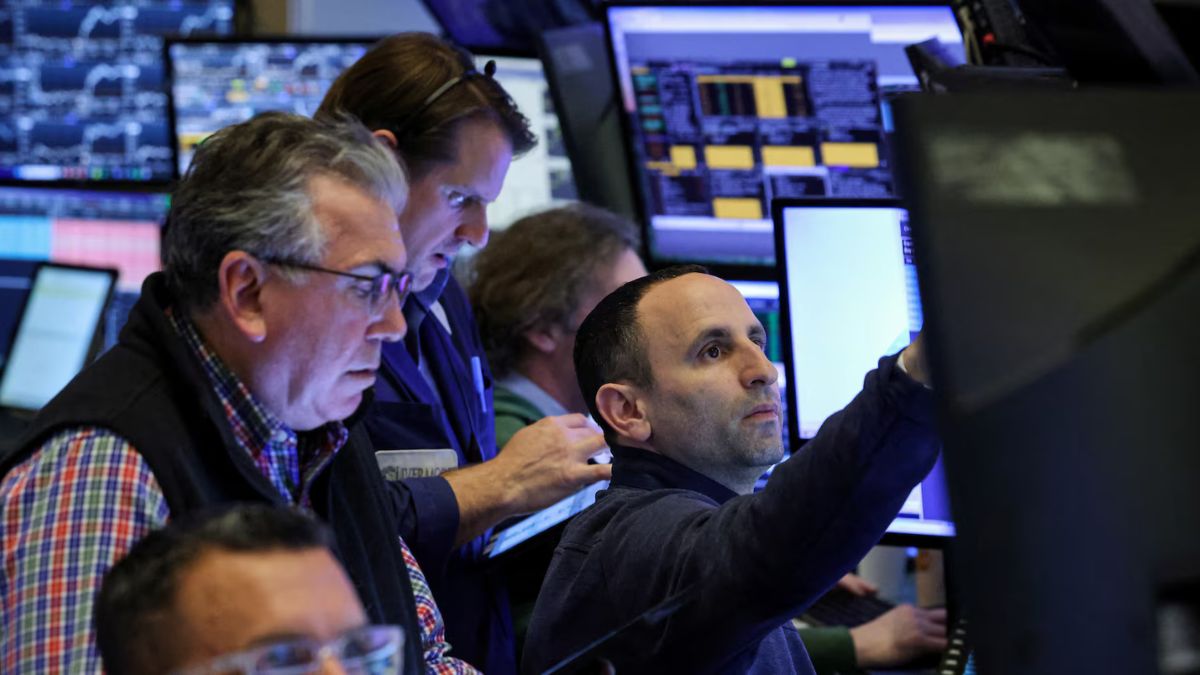
The immediate market reaction was euphoric. Stocks surged as Wall Street breathed a collective sigh of relief. Trump, ever eager to take credit, hailed the rebound as the “biggest increase in the history of the stock market,” conveniently glossing over the trillion-dollar losses of the prior week.
But financial experts and political analysts saw something deeper: a vulnerable presidency reacting to economic panic rather than leading through vision or foresight. Trump’s improvisational style, often celebrated by his base as instinctive and authentic, now raised critical questions about the coherence and durability of U.S. economic policy.
Even as the president calmed markets, he stoked uncertainty by suggesting he might exempt certain American companies from tariffs based solely on instinct. “I’ll know it when I see it,” he said, adding an air of unpredictability to an already volatile environment.
A Revolt from Within: Allies Push Back
The president’s decision was shaped not only by financial alarms but also by intensifying pressure from allies and stakeholders.
Republican lawmakers, alarmed by the plummeting markets and voter backlash, began urging Trump to rethink his position. Business leaders, many of whom had supported the administration’s deregulatory agenda, grew increasingly vocal in their opposition. Their message was unified and urgent: a trade war-induced recession was not worth the gamble.
One pivotal player in this internal campaign was Susie Wiles, who reportedly told Trump that the economic fallout was eroding his political capital at a dangerous rate. Constituents were calling their representatives in droves, and the administration risked alienating even its most reliable supporters.
The “Strategy” Narrative: Rewriting the Retreat
In the aftermath, officials like Bessent attempted to reframe the abrupt pause not as a concession but as part of a calculated strategic arc. “This was driven by the President’s strategy,” Bessent claimed. “We discussed the bigger picture.”
Yet, Trump’s own words suggested otherwise. The process was anything but methodical. “We wrote it from the heart,” he said of the announcement, adding that there was no legal review or policy vetting.
The reality: this was a retreat under fire, not a maneuver from a master plan.
A Precarious Pause in a Perilous Playbook
Trump’s tariff pause may have temporarily stabilized markets and calmed critics, but it has also exposed profound vulnerabilities in his economic playbook. His decision-making—driven by media coverage, market reactions, and internal squabbles suggests a presidency navigating by gut feeling rather than grounded policy.
With China still facing tariff threats and exemptions now potentially decided on a case-by-case basis, the path forward remains murky. And the message to global markets is clear: in Trump’s White House, policy can turn on a dime, especially when the bond market speaks.