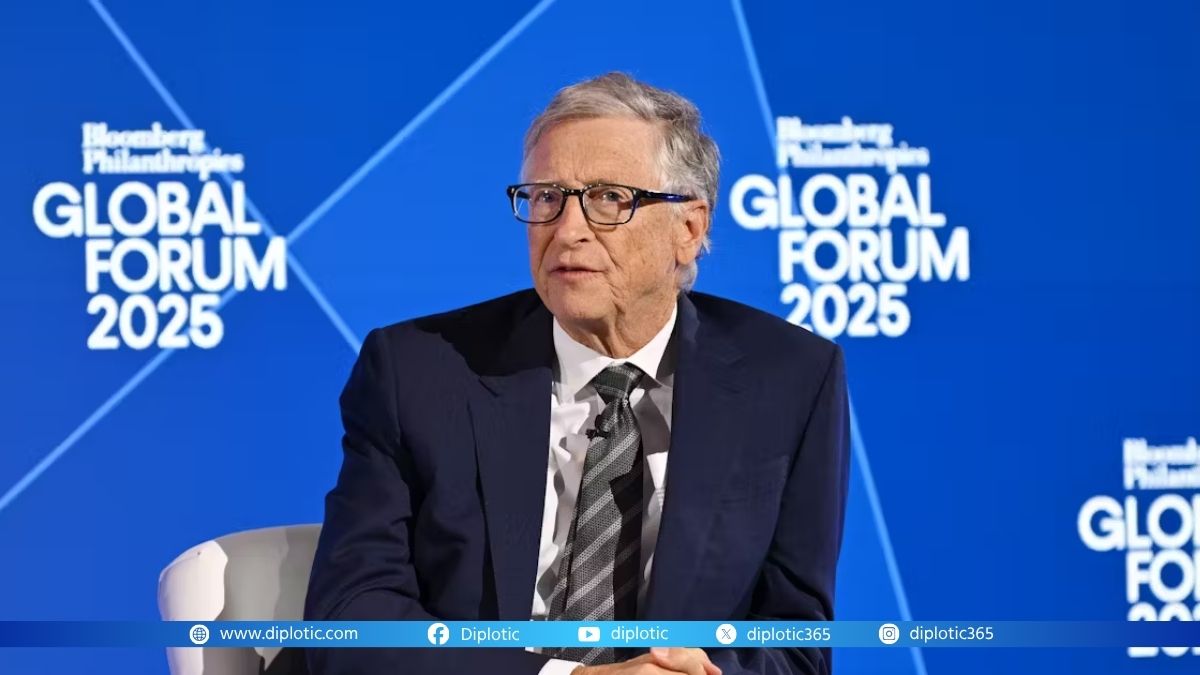
Bill Gates argues that the fixation on pre-2050 GHG-cutting is misguided, costly, and growth-dampening. Instead, a bold pivot to adaptation, human welfare, and smarter investment is needed for climate resilience and real impact.
In recent years, billions of dollars have been poured into the pursuit of deep greenhouse gas (GHG) emissions cuts by 2050. But as leading climate thinker and philanthropist Bill Gates now argues, the results have fallen short. The relentless focus on mitigation first, on reducing emissions before adapting to changes already underway, has produced “malinvestment,” hampered economic growth, and delivered only marginal temperature gains. According to Gates, that paradigm must shift toward adaptation, human welfare, and resilience if climate policy is to deliver real value.
The Misplaced Priority on Emissions Before Adaptation
From solar farms to wind arrays, carbon-capture pilot plants to clean energy startups, the dominant narrative of climate policy has centered on curbing emissions. But Gates warns that the technological readiness, scale, and timing of many of these solutions have been overhyped. In his own words: “The doomsday view of climate change … is causing much of the climate community to focus too much on near-term emissions goals, and it’s diverting resources from the most effective things we should be doing to improve life in a warming world.”
The danger is twofold. First: money flows into high-tech investments that are not deployable at scale, raising the risk of stranded investments and technological overreach. Second: policies aimed at cutting emissions aggressively (for example, via expensive infrastructure, subsidies, or regulation) may slow economic growth, particularly in emerging economies where growth is critical to lifting millions out of poverty. In sum, the cost-benefit equation of current mitigation-first policies is increasingly under scrutiny.
A Radical Pivot: From Temperature Targets to Human Lives
Gates is unequivocal: “Our chief goal should be to prevent suffering, particularly for those in the toughest conditions who live in the world’s poorest countries.” He argues that the success metric of climate policy should not simply be “0.1°C avoided” or “X gigatonnes of CO₂ reduced,” but rather improved human welfare: healthier lives, resilient agriculture, and equitable opportunity.
In that context, adaptation investing in resilient crops, early-warning systems, improved water infrastructure, and social safety nets becomes as urgent as mitigation. For instance, the Gates Foundation has committed over US $1.4 billion toward helping smallholder farmers in sub-Saharan Africa and South Asia deploy stress-tolerant crops, digital tools, and climate-smart agriculture. In the words of observers, “Development is adaptation.”
Why the Mitigation-First Strategy Has Fallen Short
There are several interlocking reasons why the emissions-first model has under-delivered:
Technology gaps: Many zero-carbon technologies are immature, expensive, or unequally accessible. Gates observes that while renewables are making headway, they cannot yet supply the full energy demand of a doubling global economy without heavy investment.
Opportunity cost: Resources channeled into less-ready GHG-cutting innovations divert financing from adaptation, health, and development solutions with much higher “lives saved per dollar” returns.
Economic drag: In emerging markets, strict regulations or high-cost mitigation pathways risk slowing growth precisely when growth is needed for adaptation, poverty reduction, and resilience building.
Marginal temperature gains: If the best-case scenario is only a modest temperature reduction after massive investment, the question becomes: does the cost justify the benefit?
The Case for Adaptation: Resilience, Equity & Impact
Placing adaptation at the forefront changes the calculus. It emphasizes:
Resilience: Drought-tolerant crops, flood-resilient infrastructure, and early-warning systems offer tangible protection now not just emissions reductions for 2050.
Equity: Those who contributed least to GHG emissions, smallholder farmers in Africa and Asia, are already suffering the worst impacts. Gates underscores that injustice and calls for targeted adaptation investment.
Greater impact per dollar: Funds invested in proven solutions (agriculture, health, infrastructure) may deliver more lives improved or saved than funds chasing speculative future technologies.
Growth enabling: Adaptation supports economic development and makes mitigation more viable in the future, rather than sacrificing growth now for speculative gains later.
A Dual-Track Strategy for the Future
This doesn’t mean mitigation is abandoned. Rather, Gates advocates for a dual-track strategy: accelerate breakthrough clean technologies (via investment, innovation, and policy) and simultaneously shift meaningful resources toward adaptation and human welfare today.
He writes, “Climate change, disease, and poverty are all major problems. We should deal with them in proportion to the suffering they cause.” This implies that blanket emissions-first targets without context may not represent optimal use of finite resources.
Implications for Policymakers, Investors, and the Climate Community
Re-evaluate priority setting: Policymakers must assess whether their climate budgets are skewed toward mitigation at the expense of adaptation and development.
Adopt metrics of human welfare: Beyond CO₂ per capita or temperature trajectories, metrics should include lives saved, households made resilient, and yield losses averted.
Invest in scalable technologies with dual benefits: Innovations that boost resilience (in agriculture, water, and health) and reduce emissions provide ‘double returns.’
Align growth and climate agendas: For emerging economies, climate policy must not stifle growth—rather, it should enhance it through resilience and green opportunity.
Ensure equity in climate funding: The global poor need adaptation finance now and cannot wait for emissions targets to be met decades hence.
Conclusion: A Strategic Pivot for Real-World Impact
If the past decade of mitigation-centered climate policy taught us anything, it is that good intentions are not enough. Bill Gates’s call for a pivot toward adaptation, resilience, and human welfare offers a pragmatic recalibration: one that recognizes the limitations of current technologies, the urgency of present suffering, and the need for strategic trade-offs.
In essence, the climate challenge is not only about reducing emissions; it’s about building a world in which people can thrive even as the planet changes. For those designing climate strategy, the question is no longer just “How do we cut GHGs by 2050?” but “How many lives will be improved by 2030 and how resilient will livelihoods be by 2040?” Gates invites the climate community to make that pivot.