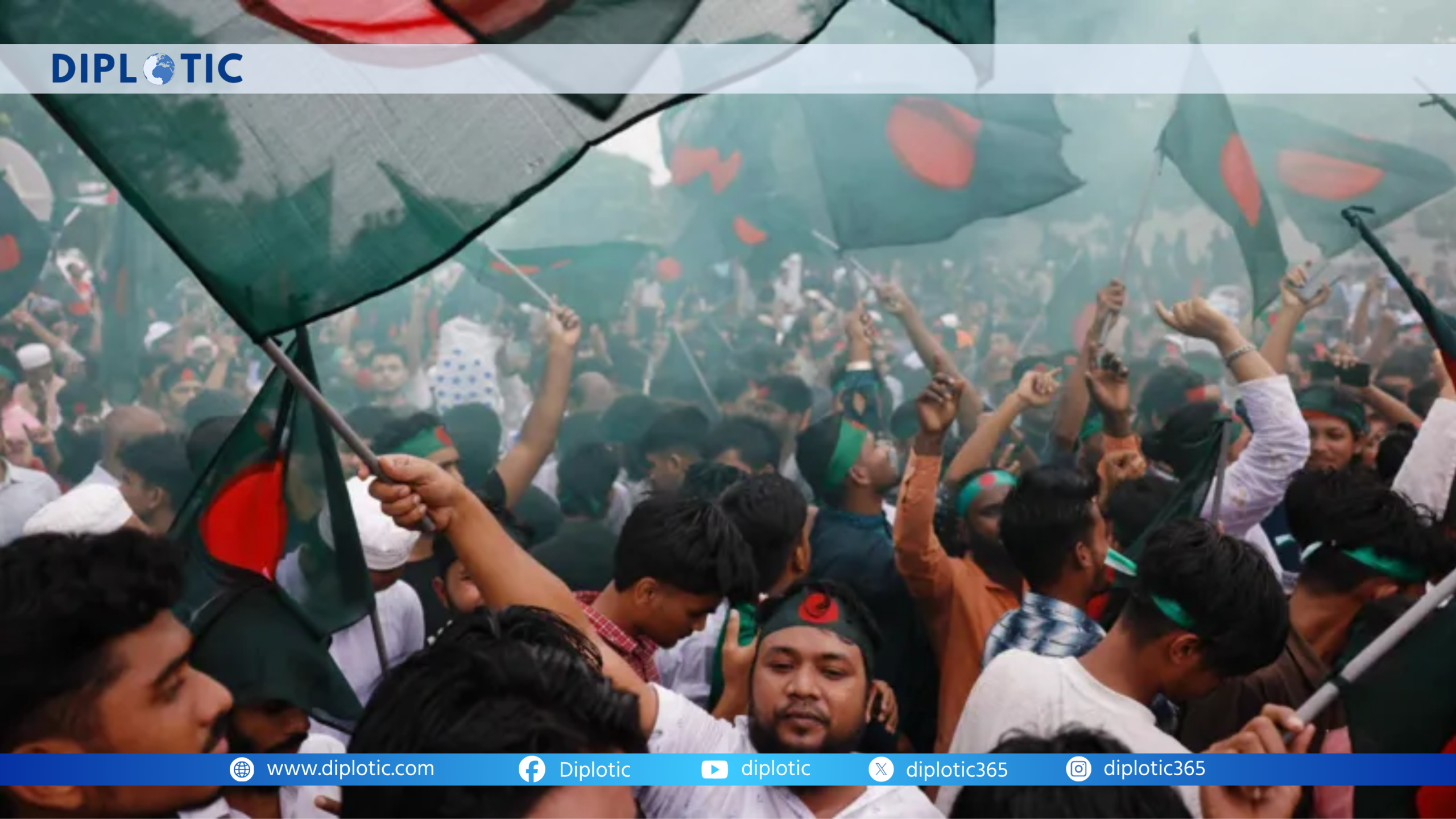
After seventeen years of what many considered flawed and non-participatory elections, Bangladesh went to the polls on February 12, 2026, in a vote freighted with immense expectation. The election was not merely about choosing a new government; it was an attempt to restore a basic contract between the state and its citizens. The result was a sweeping victory for the Bangladesh Nationalist Party (BNP), led by Tarique Rahman, son of the late former Prime Minister Khaleda Zia. The party defeated the right-wing Jamaat-e-Islami, presenting itself as a liberal, centrist alternative ready to steer the nation. For a country of over 170 million people, the world’s eighth most populous, the stakes are unusually high. The new government inherits a nation exhausted by decades of authoritarian drift, yet still possessing fundamental economic strengths. The question hanging over Dhaka is whether this political transition can finally turn Bangladesh around, delivering both democratic legitimacy and sustained prosperity, or whether the deep-seated fractures will prove too difficult to mend.
Why Did the Old Order Fall, and What Are the People Expecting Now?
The ouster of former Prime Minister Sheikh Hasina’s Awami League government was not a quiet transition. It was precipitated by a student-led uprising that reflected deep public fatigue with a regime that, despite economic achievements, had hollowed out the country’s democratic institutions. Hasina’s rule, which began in 2009, did deliver notable economic gains. Gross domestic product growth peaked at over eight percent in 2019, and by 2021, per capita income briefly surpassed that of neighboring India . The ready-made garment sector flourished, driving female labor participation to over 36 percent and significantly closing the gender pay gap . Internet penetration expanded almost a hundredfold, shifting the country’s developmental trajectory . These were real accomplishments that lifted millions.
But these developments came at a heavy cost. The elections of 2014, 2018, and 2024 were marred by vote rigging and largely lacked genuine opposition participation . Opposition leaders faced harassment, press freedom was restricted, and human rights violations became a recurring concern . Most symbolically, Khaleda Zia, Hasina’s main political rival and Tarique Rahman’s mother, was imprisoned and died in January 2026 after prolonged illness while in custody . Thousands of activists were jailed, disappeared, or found dead . Reports also suggested industrial-scale corruption, with an estimated $234 billion allegedly siphoned out of the country . This combination of democratic dysfunction and accumulated grievances finally boiled over, leading to Hasina’s ouster and replacement by an interim government led by Nobel laureate Mohammad Yunus. That caretaker administration set the stage for the February 12 election, with the Awami League barred from participation, leaving the BNP and Jamaat-e-Islami as the primary contenders .
For the electorate, particularly the roughly 25 percent of voters under thirty, this was their first credible vote. This generation, free from inherited party loyalties, prioritizes jobs, digital freedom, and genuine accountability . They were the driving force behind the uprising, and their expectations for the new government are concrete and urgent. The landslide victory for the BNP reflects not just support for the party itself, but a collective yearning for change and a functioning democracy .
What Immediate Economic and Governance Challenges Does the New Government Face?
While the political transition has generated optimism, the new government inherits a daunting array of economic and governance problems that require immediate attention. Domestically, the biggest test lies in rebuilding state institutions weakened by years of personalized, authoritarian rule that hollowed out the executive, parliament, and judiciary . Restoring public trust depends heavily on the reassertion of law and order. The recent political transition triggered a rise in mob justice and extrajudicial violence, exposing serious security failures . Governance weaknesses are starkly reflected in international indices; Bangladesh ranked 151st globally in the 2024 Corruption Perceptions Index . Tackling entrenched corruption across the state apparatus will be essential for any credible reform agenda.
The economic picture is equally challenging. While exports and remittances provide a safety net, structural weaknesses prevent long-term investment. The student uprising was fundamentally a wake-up call about jobs, yet merit-based hiring reforms promised during the transition remain unfulfilled . With youth unemployment running at twice the national average, the government is sitting on a potential powder keg unless it prioritizes job creation and skills training . Other immediate priorities include taming double-digit inflation that erodes household purchasing power and stabilizing a banking sector crippled by nonperforming loans, which now exceed 35 percent of all loans . A credible economic rebound strategy focused on diversification and productivity is urgently needed to move beyond the reliance on the ready-made garment sector and create sustainable growth .
How Will the New Government Navigate a Complex Geopolitical Landscape?
Strategically, Bangladesh’s location and large population give it outsized importance in South Asia and beyond. The new government must carefully recalibrate relationships with major powers that have competing interests in the region. For years, India enjoyed what was described as a “golden era” under Hasina’s government, with expanded transit links and close security cooperation . However, relations have been strained since her ouster, particularly as she remains sheltered in New Delhi . The new BNP government will need to reboot ties with its closest neighbor, balancing historical ties with the need for a fresh start . This will require delicate diplomacy to rebuild trust while asserting Bangladesh’s sovereign interests.
China remains indispensable as Bangladesh’s second-largest source of military equipment and a key partner for large-scale infrastructure projects . Beijing’s influence has grown through its Belt and Road Initiative, and maintaining this relationship will be important for continued investment. At the same time, the United States has signaled its interest in deeper engagement. A new trade deal signed in Washington on February 9, just days before the election, halved tariffs on Bangladeshi exports from 37 percent to 19 percent . Garment exports made of American cotton and synthetic fibers now enjoy zero reciprocal duty . Bangladesh also committed to purchasing 25 Boeing aircraft worth nearly $2.9 billion, along with $3.5 billion in U.S. agricultural goods and an estimated $15 billion in energy imports . These deals create powerful incentives for closer U.S.-Bangladesh ties. Navigating among these competing regional and global powers, each vying for influence, will require skillful statecraft. The new government must ensure that Bangladesh’s foreign policy serves its national interests without becoming entangled in great power rivalries .
What Does the Future Hold for Tarique Rahman and the BNP?
For Tarique Rahman, the likely next prime minister, the path ahead is fraught with both opportunity and peril. His party’s sweeping victory reflects a public mandate for change, but expectations are extraordinarily high. After years of democratic backsliding, citizens expect not just the form of democracy but its substance: functioning institutions, accountable governance, and tangible improvements in daily life . The BNP campaigned as a liberal, centrist alternative, and it must now deliver on that promise .
The most immediate task is to begin dismantling the legacy of authoritarian rule. This requires acknowledging past wrongdoings, initiating genuine reconciliation, and reversing the democratic decline that has marked much of the past 35 years of parliamentary democracy . It means rebuilding the executive, parliament, and judiciary as independent, functioning branches of government rather than extensions of the ruling party . It also means restoring public trust through visible action against corruption and the reestablishment of law and order .
On the economic front, the government must translate its political mandate into policies that create jobs, control inflation, and stabilize the financial sector. The youth who powered the uprising will be watching closely to see if their demands for meaningful employment and digital freedom are addressed . Failure to deliver could quickly turn hope into disillusionment, reigniting the very instability the election was meant to resolve.
A single election cannot dismantle the deep-seated fractures accumulated over nearly two decades. The vote on February 12 was a crucial first step, but it is only the beginning of a long and difficult journey. The coming months and years will determine whether Bangladesh can reclaim its democratic legitimacy and economic dynamism or slide further into a downward spiral of political instability and uncertainty . For Tarique Rahman and the BNP, the work is just beginning, and the nation is watching.