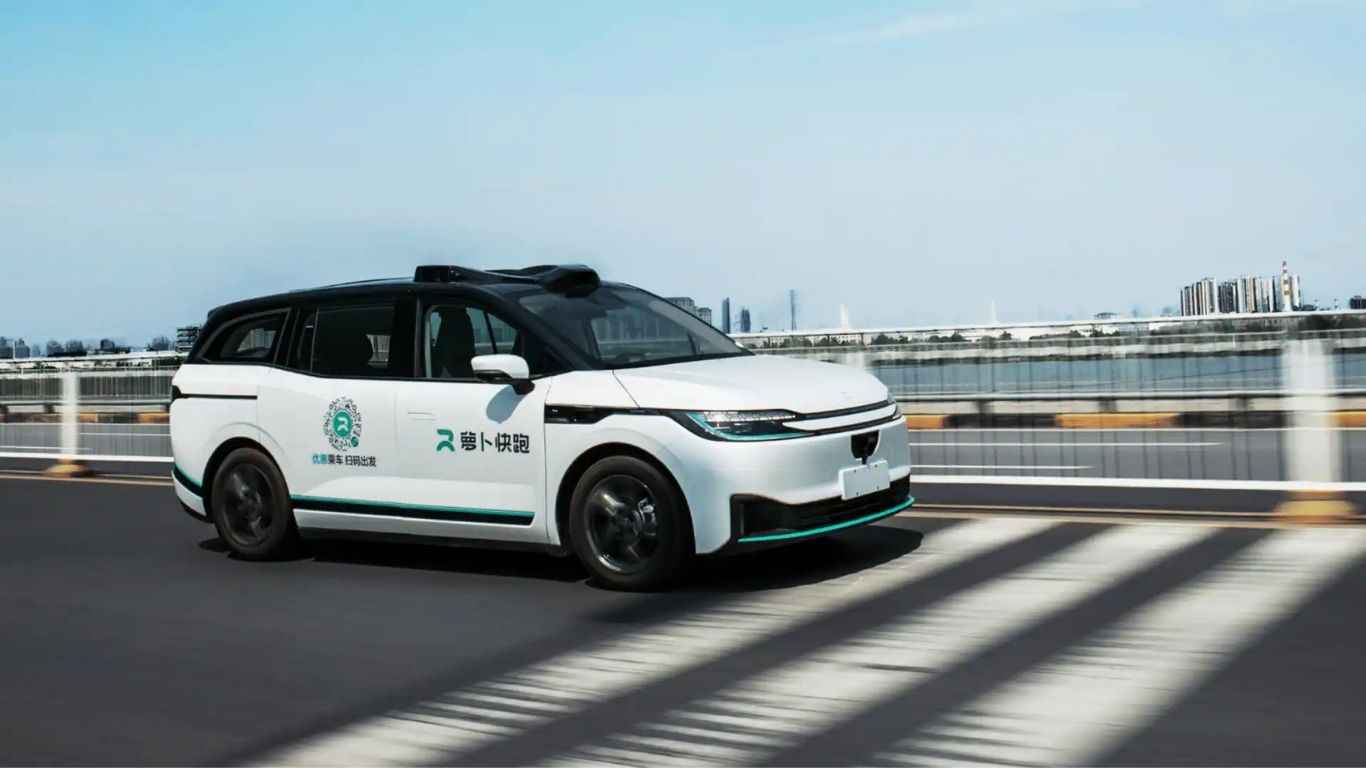
In a groundbreaking move set to reshape the global landscape of autonomous transportation, China’s tech titan Baidu has forged a strategic alliance with Uber Technologies Inc. to deploy its Apollo Go driverless cars on Uber’s ride-hailing platform outside of the United States and mainland China. This partnership signals a monumental step forward in both companies’ ambitions to dominate the future of urban mobility powered by autonomous vehicles (AVs).
The multi-year deal, announced on Thursday, will bring “thousands” of Baidu’s Apollo Go autonomous vehicles to international Uber markets, starting in Asia and the Middle East later this year. This expansion not only amplifies Baidu’s footprint beyond Chinese borders but also bolsters Uber’s commitment to integrating cutting-edge autonomous technologies across its global network of 15,000 cities.
A Bold Strategic Leap for Baidu
For Baidu, a company that has already made significant strides in autonomous driving in China, this marks its most ambitious international venture to date. Since launching Apollo Go in 2021, Baidu has built an extensive robotaxi network in major Chinese cities like Beijing, Wuhan, and Shenzhen, serving hundreds of thousands of passengers with fully autonomous rides.
However, Baidu’s ambitions have always extended beyond national boundaries. Earlier this year, the company announced plans to begin autonomous driving operations in Dubai, while media reports indicate it is also eyeing European markets for expansion. By teaming up with Uber, Baidu now gains immediate access to a global user base and logistical infrastructure that would have taken years to build independently.
Uber Reclaims Its AV Edge
Uber, which sold its own self-driving unit Advanced Technologies Group to Aurora Innovation in 2020, has been actively seeking to re-engage with the AV space through strategic partnerships. This includes recent collaborations with Alphabet’s Waymo in Austin, Texas, and U.K. startup Wayve for trials in London.
By aligning with Baidu one of the world’s most established autonomous driving companies, Uber significantly strengthens its competitive position in the race to scale driverless mobility services. The partnership allows Uber to offer robotaxi rides directly within its app, presenting riders with the futuristic option to hail an autonomous Apollo Go vehicle instead of a human-driven car.
Uber CEO Dara Khosrowshahi emphasized the transformative potential of this collaboration in a press release:
“As the world’s largest platform of its kind, spanning mobility, delivery, and freight, Uber is uniquely positioned to help AV leaders like Baidu bring their autonomous technology to the world.”
Market Reaction: A Vote of Confidence
The announcement was met with a positive response from investors. Baidu shares jumped 4.5% in U.S. premarket trading, signaling market confidence in its international growth trajectory. Uber stock also saw a more modest but notable 1% increase, reflecting optimism about its return to the autonomous driving space.
Why This Partnership Matters
This deal comes at a pivotal moment for the autonomous driving industry. As governments begin to greenlight broader AV operations and public acceptance grows, the global robotaxi market is expected to explode. According to McKinsey, autonomous mobility services could generate over $1 trillion in global revenue by 2030.
With regulatory hurdles gradually being cleared in regions like the Middle East and Asia-Pacific, Baidu and Uber are positioning themselves at the forefront of a next-generation transportation ecosystem. By combining Baidu’s AV hardware and software with Uber’s global logistics and customer base, the partnership is poised to unlock unprecedented scale and efficiency.
Moreover, this move may put pressure on other global players like Tesla, Cruise, and Zoox, who are racing to bring fully autonomous services to market but often lack the kind of integrated platform and partnership reach that Uber and Baidu now share.
The Road Ahead
The first robotaxi deployments under this partnership are expected by the end of 2025 in select international cities, starting with hubs in Asia and the Middle East where Baidu already has operational experience or favorable regulatory conditions.
While the companies have not disclosed the exact cities or launch dates, industry insiders anticipate that cities with established ride-hailing usage, advanced infrastructure, and regulatory openness such as Dubai, Singapore, and parts of Saudi Arabia will be the initial targets.
As the autonomous vehicle space becomes increasingly crowded and competitive, this high-stakes collaboration could serve as a template for global AV rollouts, combining technological excellence, platform scale, and strategic agility.