

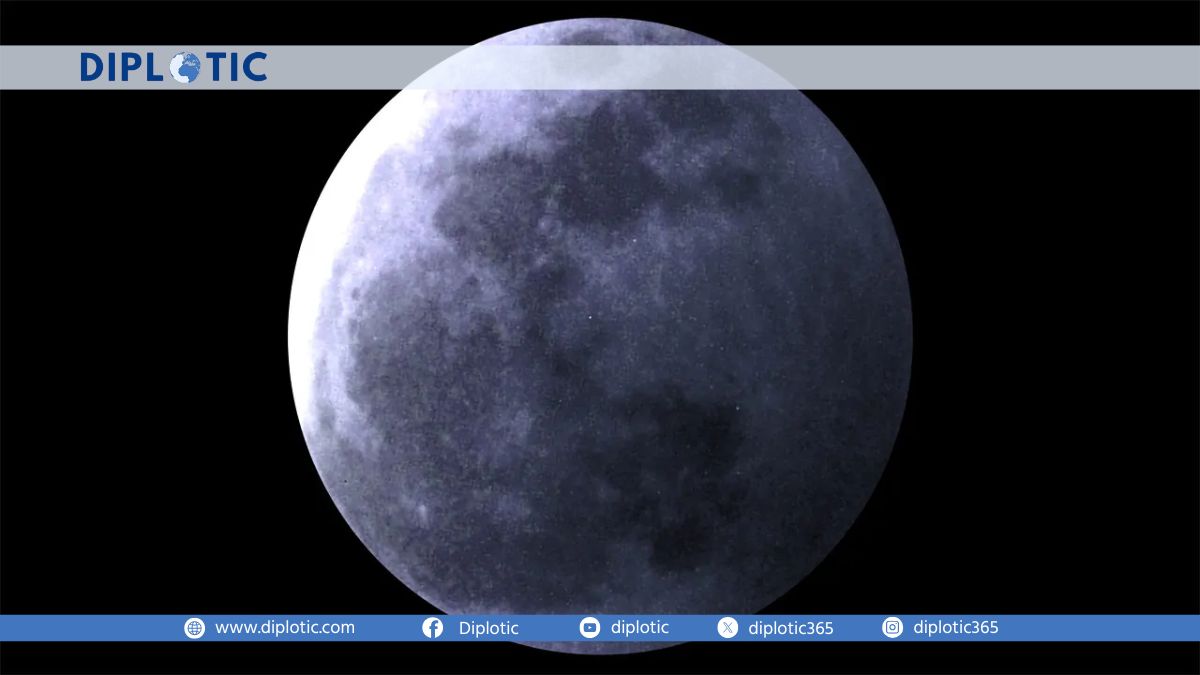
More than half a century after the last Apollo mission, humanity is heading back toward the Moon—but this time, with new ambitions and a new crew. The NASA-led Artemis II is not just another spaceflight; it is a symbolic and strategic return to deep space exploration.
As four astronauts loop around the Moon, they will travel farther than any human since the Apollo 13 mission—quietly rewriting the limits of human exploration. But beyond records and headlines, Artemis II is really a rehearsal for something bigger: putting humans back on the lunar surface.
The Crew Venturing Further Than Ever Before
The mission brings together a diverse and historic team:
- Reid Wiseman (Commander)
- Victor Glover
- Christina Koch
- Jeremy Hansen
Each carries a milestone. Glover becomes the first Black astronaut to travel to the Moon. Koch becomes the first woman to make the journey. Hansen marks Canada’s first lunar mission.
This is not just representation—it signals a new era of space exploration that is broader, more collaborative, and politically symbolic.
The Moon’s Far Side: A View Humans Rarely See
One of the most compelling moments of Artemis II is its flyby of the Moon’s far side—the hemisphere permanently hidden from Earth.
Unlike the familiar face we see from our planet, the far side is rugged, cratered, and largely unexplored by human eyes. Due to lighting conditions, nearly 60% of it has never been directly observed by astronauts.
During the flyby, the crew will rely not just on instruments but on human perception—what scientists often call the most sophisticated observation tool available. Subtle color variations, surface textures, and shadow patterns could offer new clues about how the Moon formed and evolved.
Breaking Records—But That’s Not the Point
Yes, the mission will set a new record for the farthest distance humans have ever traveled from Earth, surpassing Apollo 13.
But NASA officials have been careful to downplay the milestone. The real objective is testing—systems, navigation, human endurance, and the spacecraft itself.
At the center of it all is the Orion capsule, built to carry astronauts safely through deep space and back. Every maneuver, every communication delay, every system check feeds into a larger goal: preparing for a lunar landing mission in the coming years.
The Silence of Space: A 40-Minute Blackout
As the spacecraft moves behind the Moon, it will enter a communications blackout—around 40 minutes where no signals can reach Earth.
This is not new; Apollo missions experienced similar silence. But it remains one of the most psychologically intense phases of any lunar journey.
Cut off from Earth, the crew will rely entirely on onboard systems and training. In that silence, space becomes what it truly is: vast, indifferent, and unforgiving.
A Dress Rehearsal for a Lunar Comeback
At its core, Artemis II is a test run. NASA aims to land astronauts on the Moon again within the next few years, using this mission to validate every critical component.
The stakes are high. The mission unfolds amid a growing global space race, where nations are once again competing for influence beyond Earth. A successful Artemis program could redefine leadership in space exploration for decades.
Why This Mission Matters Now
This is not just about returning to the Moon—it’s about redefining humanity’s place in space.
The Apollo missions proved it was possible. Artemis aims to prove it is sustainable.
In a world shaped by conflict, climate stress, and technological rivalry, missions like Artemis II offer a different narrative: one of exploration, cooperation, and long-term vision.
And as the crew circles the far side of the Moon—out of sight, out of contact—they carry more than scientific instruments.
They carry the quiet question that has always driven space exploration:
How far can we go next?




