

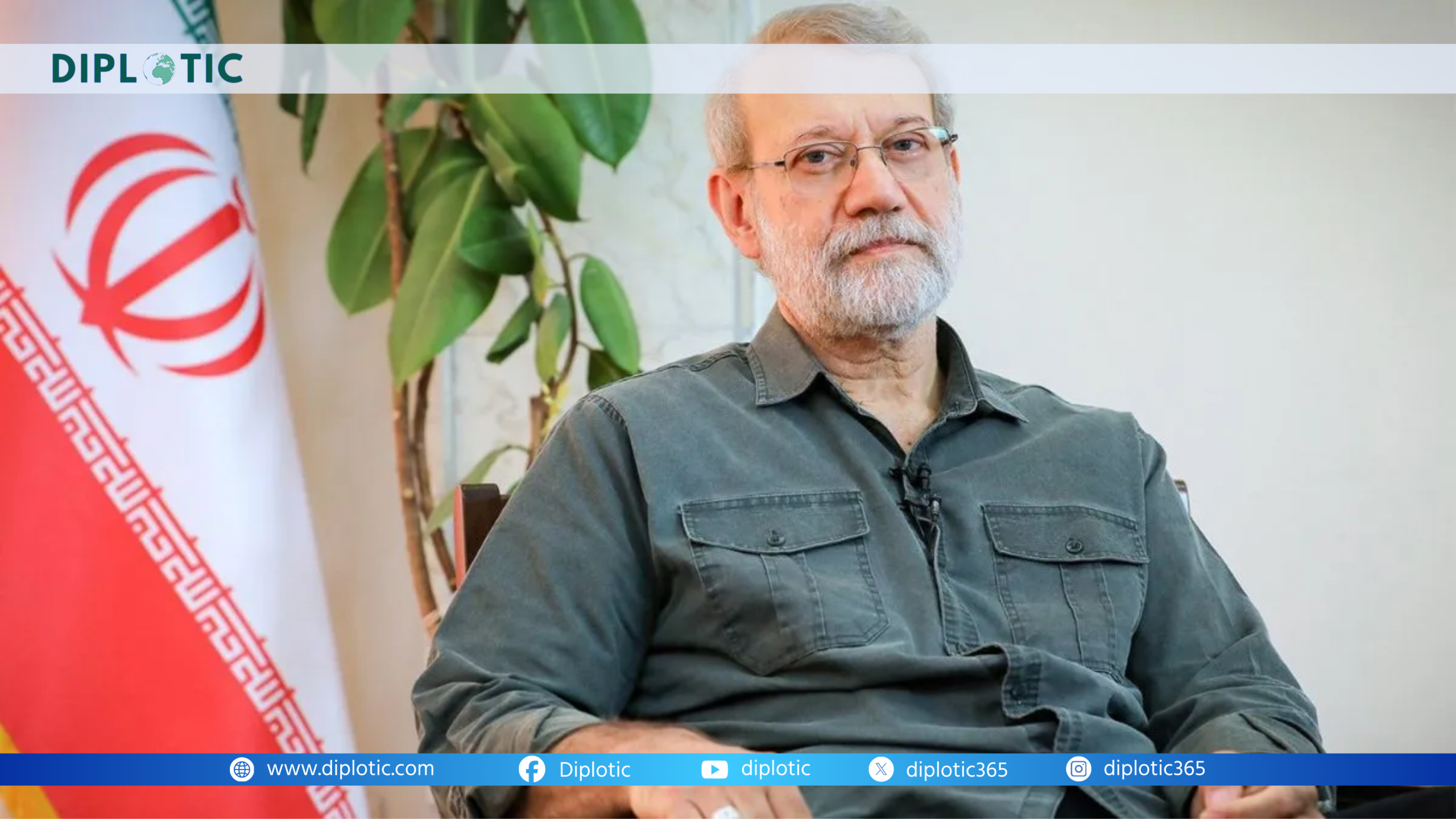
On the night of March 16, 2026, an Israeli strike claimed the life of one of Iran’s most versatile and influential figures. Ali Larijani, aged 67, was not just another official in the Islamic Republic’s complex power structure. He was a politician, security chief, philosopher, and veteran of the Iran-Iraq war—a renaissance man who held decades of experience across military, legislative, and cultural spheres . His death removes a figure who could build consensus across factions, negotiate with the West, and translate strategy into coordinated policy . But as analysts emphasize, the Islamic Republic is a multi-layered institutional system designed to absorb such losses . This explainer examines who Larijani was, what made him unique, what his death means for Iran’s internal dynamics, and why the regime is likely to endure despite losing one of its most pragmatic insiders.
Who Was Ali Larijani and Why Did He Matter?
Ali Larijani was, in many ways, the embodiment of Iran’s revolutionary elite. He came from a prominent clerical family with deep roots in the regime’s power structure. One of his brothers served as head of the judiciary and was at one point touted as a possible successor to Supreme Leader Ali Khamenei . Other brothers held important government positions. As Barbara Slavin, an American journalist who interviewed Larijani four times, observed: “It’s a funny kind of regime. It’s ideological, but it’s also very much based on family ties” .
Larijani’s own career spanned virtually every significant institution in the Islamic Republic. He was an Islamic Revolutionary Guard Corps veteran of the 1980s Iran-Iraq war, rising to the rank of brigadier general . He headed state broadcaster Irib, shaping the cultural and informational environment. He served as speaker of parliament, navigating the complex legislative landscape. He led Iran’s Supreme National Security Council twice—first from 2005 to 2007, and then again from August 2025 until his death . In the latter role, he was at the center of Iran’s strategic decision-making during a period of intense crisis.
Beyond his institutional roles, Larijani was an intellectual. He wrote at least six philosophy books and was an expert on Immanuel Kant’s views on science and mathematics . This combination of military background, political experience, and philosophical depth made him unique in a system often characterized by ideological rigidity.
Was He a Moderate or a Hardliner?
The question of Larijani’s ideological orientation resists simple answers. As Alan Eyre, a former US official who served as the State Department’s first Persian language spokesperson and a core member of the nuclear negotiating team in the 2010s, put it: “He was a moderate when he chose to be, and a hardliner when it suited him better. In other words, he was a highly functioning mix of pragmatism and opportunism” .
During his tenure as Iran’s chief nuclear negotiator, Larijani favored diplomacy and outreach in an effort to reduce sanctions on Iran . He engaged with American officials and was viewed by some in Washington as a potential interlocutor. Slavin noted: “He was someone that the United States could have talked to. Someone the United States has talked to in the past” . She recalled interviewing him in 2006 when he was reaching out to Stephen Hadley, then the US national security adviser .
Yet Larijani was also capable of aggressive rhetoric and actions when circumstances demanded. After the US and Israel sparked the current war, he warned President Donald Trump to “beware lest you be the ones to vanish” and declared that the Strait of Hormuz would become a strait of “defeat and suffering for warmongers” . When anti-government protests broke out in January, he was viewed as an architect of the brutal crackdown on demonstrators .
This ideological flexibility was not opportunism in the pejorative sense but rather a reflection of his role as a consensus-builder. Sina Toossi, an expert on Iran and US foreign policy, explained: “He was a rare figure who combined immense political experience and security credentials, and who could build consensus across factions. That made him particularly valuable in crisis moments” . His ability to navigate between hardliners and pragmatists, to find common ground where others saw only division, made him indispensable.
What Was His Role in Recent Months?
In the tumultuous period following the death of Supreme Leader Ali Khamenei in the initial US-Israeli strikes, Larijani’s experience and consensus-building skills became especially critical. He was reportedly working with former reformist president Hassan Rouhani to postpone the election of Mojtaba Khamenei as supreme leader and to find an alternative candidate . The efforts ultimately failed—Mojtaba, viewed as a principlist under whom the IRGC may play an even more powerful role, was selected by the Assembly of Experts on March 8 .
This episode illustrates both Larijani’s influence and its limits. He could mobilize opposition within the system and advocate for alternatives, but he could not ultimately prevent the dynastic succession that many insiders preferred. His death removes a figure who might have continued to moderate the new supreme leader’s tendencies or build coalitions to check IRGC power.
What Does His Death Mean for Iran’s Internal Dynamics?
Analysts agree that Larijani’s death is significant but not fatal for the Islamic Republic. Toossi emphasized: “It does not fundamentally threaten the regime’s survival. The Islamic Republic is a multi-layered and institutionalised system that is designed to absorb these kinds of losses” . He rejected the idea that Larijani was effectively the de facto leader of Iran in recent months, noting that decision-making is spread across institutions, with the supreme leader at the apex and the president, IRGC, and other bodies playing key roles . “Larijani was influential, but he was one actor within a broader system rather than its centre of gravity” .
The loss is nonetheless meaningful. Toossi noted: “It removes a pragmatic insider who could help translate strategy into coordinated policy” . In a system where factional competition often produces gridlock, Larijani’s ability to build bridges and forge consensus was a rare and valuable asset.
His likely replacement as secretary of the Supreme National Security Council is Saeed Jalili, his former deputy. Jalili is viewed as more hardline and less flexible. Eyre suggested that such a move would be “just another step in the ‘hardlining’ of the Iranian regime” . He continued: “Yes, there is some weakening in the sense that his replacement might be less competent, but the more important consequence is this ‘hardlining'” .
The question, Eyre argued, is not which figures will grow in importance following Larijani’s death, but which institutions. “His death increases the importance of the two main institutions running Iran: the IRGC and the Bayt-e Rahbari” (the supreme leader’s office) . “Israel can keep on killing supposedly ‘key’ leaders, but they will likely be replaced by younger, more hardline candidates” .
What Does This Mean for Prospects of Diplomacy?
Larijani’s death also has implications for the possibility of diplomatic engagement between Iran and the West. As someone with a history of negotiation and relationships with American officials, he represented a potential channel for communication, however fraught. His removal narrows the field of Iranian figures with both the credibility to engage with hardliners at home and the trust of interlocutors abroad.
Slavin raised a pointed question: “Is Israel just going to continue to kill every single plausible member of the Iranian regime who could negotiate with the West?” . The implication is that targeted killings, whatever their tactical value, may be undermining the possibility of a diplomatic resolution by eliminating precisely those figures most capable of pursuing one.
Yet it is also possible that the window for diplomacy had already closed. The selection of Mojtaba Khamenei as supreme leader, the increasing power of the IRGC, and the hardening of positions on both sides may have rendered negotiation impossible regardless of who survived. Larijani’s death may be less a cause of diplomatic failure than a symptom of a broader turn toward confrontation.
How Does the Regime Absorb Such Losses?
The Islamic Republic’s resilience in the face of leadership losses stems from its institutional depth. Unlike a personalistic dictatorship where power resides in a single individual, Iran’s system distributes authority across multiple bodies with overlapping responsibilities and constituencies. The supreme leader sits at the apex, but the president, parliament, judiciary, IRGC, and various councils all exercise significant power and have their own internal dynamics.
When a key figure is killed, the system does not collapse. Others step in, often from within the same institutional networks. Saeed Jalili, Larijani’s deputy, is a natural successor at the security council. Other figures with IRGC backgrounds, clerical ties, and administrative experience are waiting in the wings. The system regenerates.
This does not mean leadership losses are costless. Each removal disrupts relationships, erodes institutional memory, and shifts the balance of power among factions. The cumulative effect of multiple losses can be significant. But the system is designed to manage this churn. As Toossi put it: “Decapitation strikes rarely produce decisive political outcomes in systems like Iran’s. They tend to remove individuals, sometimes important ones, but leave the underlying structure and strategic logic intact” .
What Does the Future Hold?
Looking ahead, several developments bear watching. First, the consolidation of Mojtaba Khamenei’s position as supreme leader will shape Iran’s trajectory. If he proves to be the hardliner many expect, IRGC influence will likely grow, and pragmatic voices may be further marginalized. Larijani’s death removes a potential counterweight to this trend.
Second, the evolution of the IRGC’s role in governance and the economy will be critical. The Guard already controls an estimated 30 to 40 percent of the Iranian economy, and its political influence has grown steadily. Without figures like Larijani who could navigate between military and civilian institutions, the military’s dominance may accelerate.
Third, the succession at the Supreme National Security Council matters. Saeed Jalili’s approach to security policy and his relationships with other power centers will shape Iran’s strategic posture. If he proves more rigid and less consensus-oriented than Larijani, decision-making could become more fragmented or more dominated by hardline perspectives.
Finally, the broader context of war with the US and Israel will continue to shape all internal dynamics. External pressure tends to consolidate regimes, rallying support around existing institutions and marginalizing dissent. The current conflict may accelerate trends that were already underway, regardless of who occupies key positions.
Conclusion
Ali Larijani’s death removes a uniquely versatile figure from Iran’s political landscape. His combination of military background, legislative experience, cultural influence, and intellectual depth made him a rare consensus-builder in a factionalized system. His ability to engage with the West while maintaining credibility with hardliners made him a potential channel for diplomacy. His loss will be felt.
Yet the Islamic Republic is designed to absorb such losses. Institutional depth, distributed power, and a steady pipeline of successors ensure that no single figure’s death can bring down the system. The question is not whether the regime survives but in what form. Larijani’s passing may accelerate trends toward hardlining, military dominance, and dynastic succession that were already underway. It may narrow whatever space remained for pragmatic accommodation. But the underlying structure and strategic logic of the Islamic Republic remain intact.
As Eyre observed: “Israel can keep on killing supposedly ‘key’ leaders, but they will likely be replaced by younger, more hardline candidates” . The system regenerates, often in more extreme form. That is the paradox of decapitation strikes: they remove individuals but may strengthen the institutions and tendencies they seek to weaken. In the case of Ali Larijani, Iran has lost a philosopher, a pragmatist, and a bridge-builder. What replaces him may be none of those things.




