

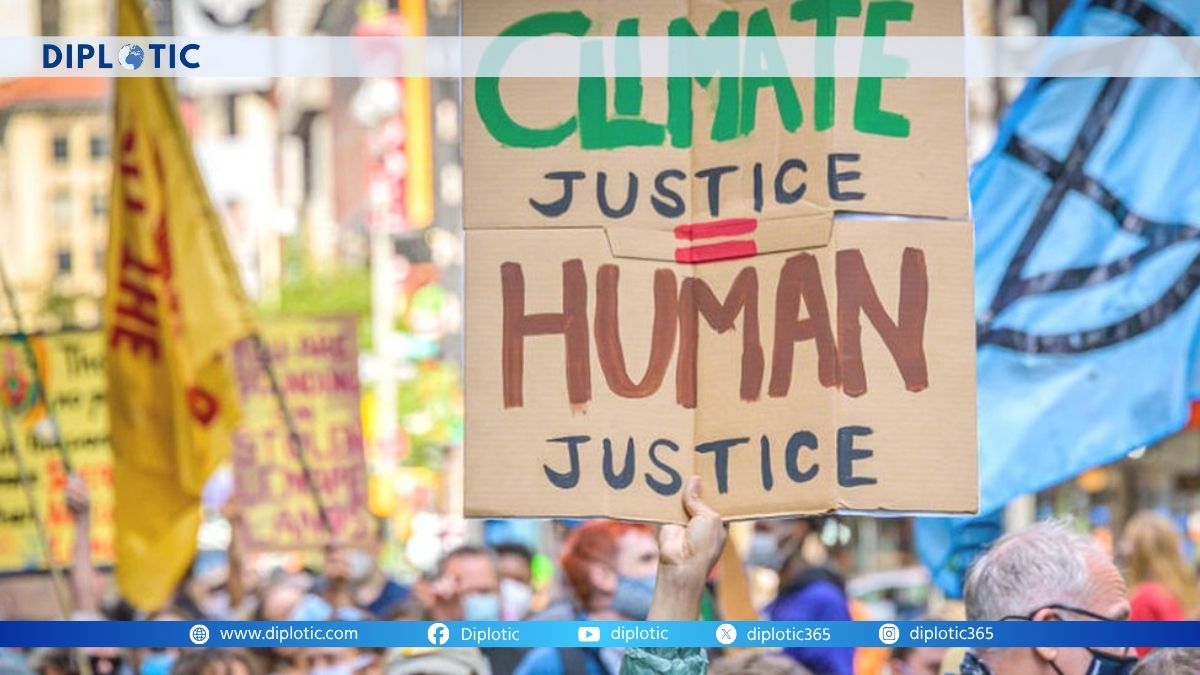
An investigative look at how colonial-era environmental destruction and historic emissions continue to shape Africa’s climate vulnerability, and why true climate justice requires a direct reckoning with colonial harm.
The unfinished story of climate justice and its colonial roots
Across Africa, the climate crisis is often described as a modern emergency driven by rising temperatures, shifting rainfall patterns and extreme weather. But behind today’s disasters lies a deeper history that many global institutions still avoid. The African Union’s decision to name 2025 the Year of Justice for Africans and People of African Descent has brought new attention to this question. It also comes at a moment when the African Court on Human and Peoples’ Rights is considering an advisory opinion on how states should address climate harm under human rights law. This offers a rare chance to look honestly at the links between colonial rule, environmental destruction and the climate shocks that continue to hit African communities the hardest.
The story is not only about rising emissions or global temperatures. It is about how colonial powers reshaped entire landscapes, destroyed local systems of survival and built economic models that favoured extraction over protection. A clear example surfaced again in 2025 when Amnesty International published detailed findings on a little-known French policy in Madagascar during the colonial era. Between 1924 and 1929, French authorities spread genetically manipulated cochineal parasites across the Androy region in the country’s deep south. The target was a drought-resistant vegetation that had supported the Antandroy people for generations. Each year, nearly 100km of vegetation cover disappeared.
This was not just an ecological change. It pushed an entire population into deeper drought exposure and, by removing their natural safety net, tied them more tightly to the colonial economy that depended on cheap labour. A century later, the Antandroy remain among the most vulnerable groups to drought and hunger. This is because today’s heatwaves and failed rains, which are intensified by human-induced climate change, meet a landscape deliberately stripped of its ability to withstand them.
The case raises a sharp question: can the world discuss climate justice without acknowledging how colonial disruption continues to shape vulnerability today?
Why the global climate conversation still avoids colonial responsibility
The scientific record already shows that colonialism played a major role in shaping global climate risks. In 2022, the Intergovernmental Panel on Climate Change noted clearly that colonial systems contributed to both the climate crisis itself and the unequal exposure to its effects. Yet political processes have been much slower to recognise this. When global efforts fall short, states most affected often turn to international courts for clarity.
This happened in 2023 when Vanuatu, a former colony of France and the United Kingdom, persuaded the UN General Assembly to seek an advisory opinion from the International Court of Justice (ICJ) on states’ climate obligations. Many African countries supported the effort, pointing directly to the lasting harm of colonial policies combined with rising global temperatures. That submission raised hopes that the world’s highest court would finally recognise the colonial dimensions of climate injustice.
But when the ICJ released its opinion in July 2025, the outcome surprised many. The word “colonialism” did not appear in the ruling. There was no discussion of how colonial actions deepened climate risk in Africa or elsewhere. Nor did the court answer a key question: how far back in time can responsibility for climate harm extend?
Former colonial powers often argue that their actions took place before environmental protections existed, and therefore cannot create obligations today. They also claim they were unaware of the long-term impacts of carbon emissions. The ICJ’s silence on these points left a major gap in global climate governance.
Still, the ruling was not without value. The Court affirmed that climate obligations flow not only from treaties but also from customary international law. This means states may bear responsibility for harms that began long ago if those harms continue to violate human rights today. For many African communities, this recognition opens a pathway to argue that the damage done during colonial rule still shapes their climate exposure. But the Court also required a “direct and certain causal link” to prove such responsibility. For environmental and social systems transformed across generations, meeting that standard is nearly impossible.
Thus, the ICJ opened a door and then quietly closed it again.
How colonial-era harms and modern emissions collide in Africa
Understanding climate justice today requires recognising that historical and modern forces operate together. In the case of Madagascar, the French colonial administration did not simply remove a plant species. It removed a form of protection that had buffered people from drought for centuries. It also forced the Antandroy into an economic system shaped by extraction, labour exploitation and the pursuit of profit for European markets.
At the same time, the industrialisation that fuelled Europe’s growth—and its wars—released vast amounts of greenhouse gases into the atmosphere. These gases remain for centuries. Many were emitted during the 19th and 20th centuries, including the colonial period. The warming they caused did not disappear when those empires collapsed.
Today Madagascar faces one of the world’s most severe drought cycles. When a drought strikes, the communities who lost their natural defence system under colonial rule suffer the most. They face food shortages, displacement and recurring humanitarian crises. This is not an isolated pattern. Across the continent, colonial actions that weakened local ecosystems, disrupted water systems or centralised land ownership have deepened the impacts of climate change.
Some governments argue that assigning modern legal responsibility for past actions is too complex. But the core issue is not about punishing history. It is about recognising that today’s climate injustices did not emerge in isolation. They are the result of long-term patterns of extraction, uneven development, fossil-fuel-driven economic growth and the political structures that once governed large parts of Africa.
The question now is how legal systems, both in Africa and globally, can address this shared history.
Will the African Court confront what the ICJ avoided?
Since mid-2025, the African Court on Human and Peoples’ Rights has been considering a request for an advisory opinion on African states’ human rights duties in the climate crisis. Unlike the ICJ, this court is rooted in a continent where the effects of colonial rule remain visible and where the climate crisis is already reshaping daily life. The request before the court explicitly highlights the links between colonial harm and climate vulnerability. Human rights groups plan to reinforce this connection in their submissions.
If the African Court recognises that climate justice is inseparable from reparative justice, it could set a powerful precedent. It would send a message that climate law cannot be separated from historical responsibility. It could also strengthen Africa’s broader reparations agenda, which seeks justice not only for environmental harm but also for slavery, land dispossession and other colonial crimes.
An opinion from the African Court could encourage African states to revisit the ICJ and press for a clearer global acknowledgment of colonial responsibility. It could also help define more realistic standards of proof for long-term environmental harm, recognising the complexity of ecosystems and the long shadow of historic emissions.
At stake is not only legal clarity. It is the possibility of reframing the climate crisis as part of a longer struggle for dignity, rights and equality.
Climate justice must remember the past to protect the future
As African states push for stronger climate action, they face a difficult truth: the climate crisis cannot be solved without understanding the forces that made it so unequal. Modern emissions drive today’s warming, but historical injustices shape who suffers first and worst. The Antandroy people of Madagascar show how colonial decisions, made a century ago, still determine survival today.
A just response to climate change must include this history. It requires legal systems willing to recognise long-term harm, political leaders ready to confront uncomfortable truths and global institutions prepared to acknowledge colonial responsibility. Only then can climate justice move from promise to reality.




