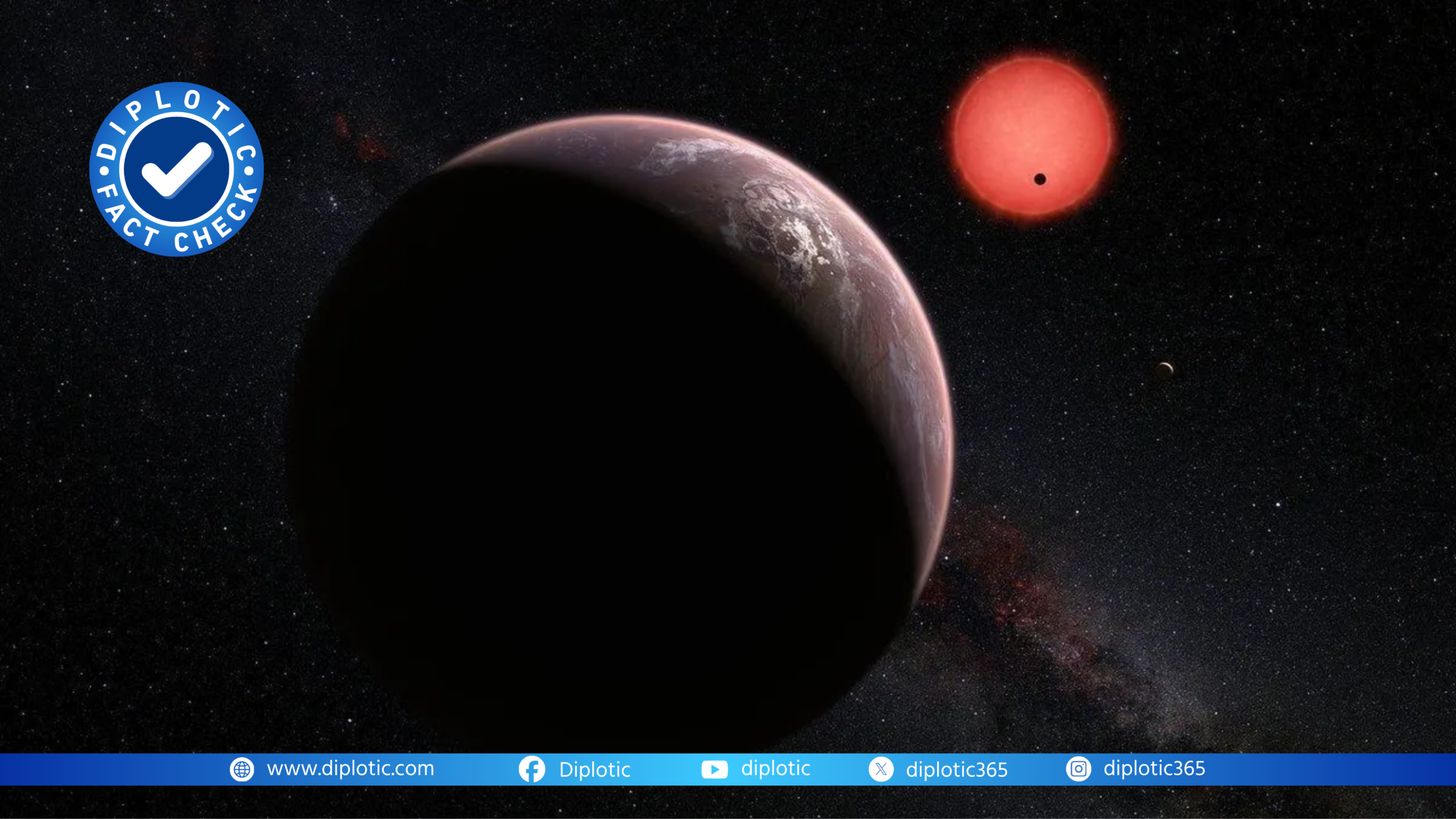
On March 6, 2026, news outlets reported that astronomers had confirmed GJ 887 d as a super-Earth orbiting in the habitable zone of the nearby red dwarf star GJ 887, only 10.7 light-years away. The discovery, based on new radial-velocity data from HARPS and ESPRESSO spectrographs, positions GJ 887 d as the second known habitable-zone planet within 10 light-years of Earth (after Proxima Centauri b). Headlines and social media quickly labeled it “potentially habitable” or “Earth-like,” sparking excitement about its proximity and prospects for future atmospheric studies with telescopes like the Habitable Worlds Observatory (HWO) or LIFE.
This claim carries significance because nearby habitable-zone worlds are prime targets for biosignature searches and could reshape our understanding of life’s prevalence. However, terms like “Earth-like” and “habitable” are often used loosely in popular coverage. This investigation examines whether GJ 887 d genuinely qualifies as Earth-like and habitable, or if the portrayal oversimplifies the scientific reality.
Claim 1: GJ 887 d is confirmed as an Earth-like planet.
Evaluation: GJ 887 d is classified as a super-Earth with a minimum mass of about six Earth masses (M⊕). Its radius is not yet constrained, but super-Earths in this mass range are typically 1.5–2.5 times Earth’s radius. The 2026 Astronomy & Astrophysics paper (accepted, arXiv preprint) confirms its orbital period of 51 days places it within the conservative habitable zone of the M-dwarf GJ 887. However, “Earth-like” in exoplanet science usually requires rocky composition, Earth-like mass and radius (0.8–1.5 M⊕, 0.8–1.5 R⊕), and evidence of a temperate surface environment. GJ 887 d’s mass exceeds the typical super-Earth threshold for rocky worlds, raising the possibility of a thick atmosphere or mini-Neptune characteristics. No radius measurement or atmospheric data exists yet to confirm terrestrial nature.
Verdict: Misleading. GJ 887 d is a super-Earth in the habitable zone, but current evidence does not support calling it truly Earth-like.
Claim 2: GJ 887 d is confirmed habitable.
Evaluation: The planet lies within the star’s conservative habitable zone, meaning it receives a stellar flux that could allow liquid water on the surface if it has an Earth-like atmosphere. It meets the Habitable Worlds Catalog (HWC) criteria for inclusion: habitable-zone orbit and minimum mass/radius thresholds. However, habitability requires far more than zone placement—key factors include atmospheric composition, magnetic field protection, stellar activity (M-dwarfs like GJ 887 are flare-active), tidal locking, and water inventory. No direct evidence of an atmosphere, surface conditions, or biosignatures exists. The paper highlights it as a high-priority target for future characterization, not a confirmed habitable world.
Verdict: Partially True as context. It is in the habitable zone and catalog-eligible, but no confirmation of actual habitability exists.
Claim 3: GJ 887 d is one of the most promising nearby targets for finding signs of life.
Evaluation: At 10.7 light-years, GJ 887 d is the second-closest known habitable-zone planet after Proxima Centauri b (4.2 light-years). Its brightness (GJ 887 is among the brightest M-dwarfs) and proximity make it accessible for future direct-imaging missions (HWO, LIFE) and atmospheric spectroscopy. The system’s four (possibly five) planets offer comparative studies of habitability around M-dwarfs. While Proxima b faces intense stellar flares and tidal locking, GJ 887 d’s longer orbital period reduces some of those concerns. Experts view it as a strong candidate for biosignature searches once next-generation telescopes launch (2040s for HWO).
Verdict: True. Its proximity, stellar brightness, and habitable-zone placement make it a high-priority target for future life-detection efforts.
Claim 4: Headlines calling GJ 887 d “potentially habitable” and “Earth-like” are accurate and not exaggerated.
Evaluation: “Potentially habitable” is scientifically defensible: the planet is in the zone and meets basic catalog criteria. “Earth-like” appears in some headlines but is imprecise; super-Earths differ significantly from Earth in mass, likely composition, and geophysical processes. Coverage often clarifies the planet’s super-Earth status and the need for future observations. The Astronomy & Astrophysics paper and related releases use cautious language (“confirmed in the habitable zone,” “worthy of further attention”), while popular summaries sometimes amplify optimism.
Verdict: Mostly True as context, but overstated in some headlines. “Potentially habitable” is fair; “Earth-like” stretches the evidence.
Claim 5: Regardless of exact classification, the discovery underscores the growing number of nearby habitable-zone worlds.
Evaluation: GJ 887 d joins Proxima Centauri b and a handful of others within 10–15 light-years as habitable-zone candidates around M-dwarfs, the galaxy’s most common stars. Each new detection refines models of habitability in red-dwarf systems and expands targets for upcoming missions. The principle at stake is incremental progress: no single planet proves life elsewhere, but accumulating nearby candidates increases the odds of eventual atmospheric characterization and biosignature detection.
Verdict: True. The find contributes meaningfully to the census of nearby potentially habitable worlds.
Conclusion: A Promising Super-Earth in the Habitable Zone, Not Yet Earth-like
GJ 887 d is a confirmed super-Earth (minimum ~6 Earth masses) orbiting every 51 days in the habitable zone of the nearby M-dwarf GJ 887, just 10.7 light-years away. It is the second known habitable-zone planet within 10 light-years and a strong candidate for future atmospheric studies due to its proximity and the host star’s brightness.
However, it is not confirmed to be Earth-like: its mass suggests it may be a super-Earth with a thick atmosphere or mini-Neptune traits, and no radius, composition, or atmospheric data exists yet. “Habitable” applies only in the sense of zone placement and catalog eligibility—actual surface habitability remains unproven. Headlines calling it Earth-like or fully habitable stretch current evidence, while “potentially habitable” is appropriate.
The real significance lies in its place among a growing list of nearby targets. Each discovery like GJ 887 d refines our search for life and prepares us for the next generation of telescopes. For now, it is an exciting, high-priority world—not proof of habitability, but a compelling reason to keep looking. In the hunt for other Earths, proximity and potential matter greatly, and GJ 887 d delivers both.