

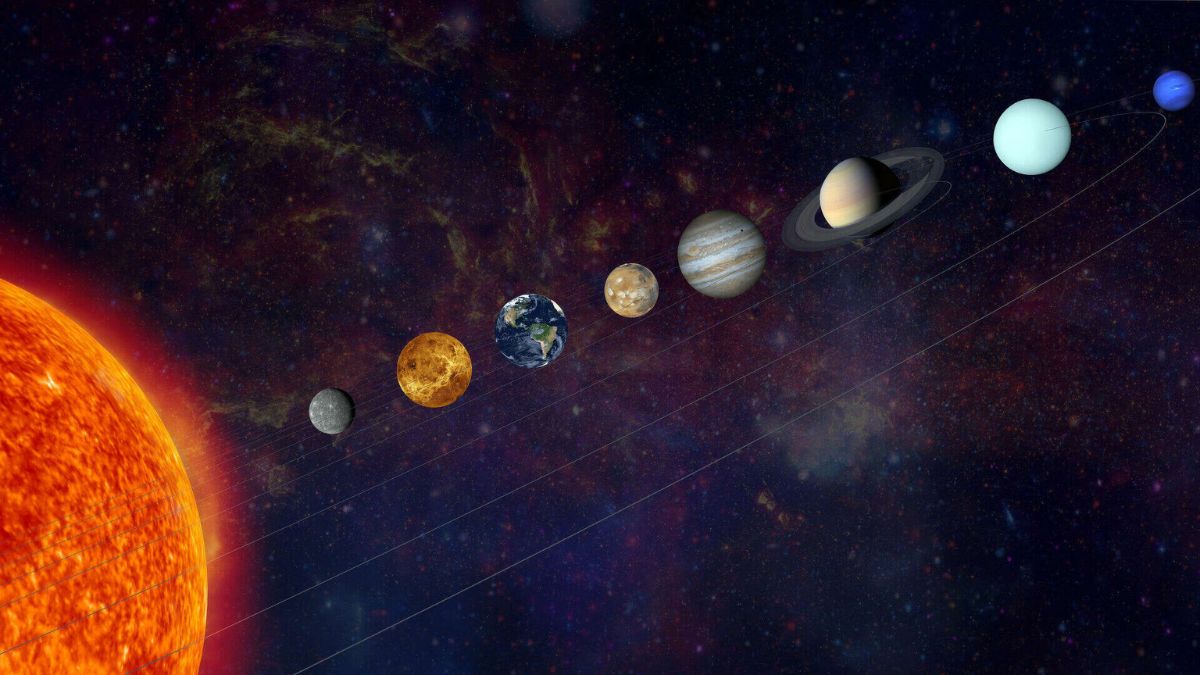
Tonight, the sky over South Asia offers something special. Weather permitting, observers across India, Pakistan, Bangladesh, Nepal, and Sri Lanka can witness a rare alignment of six planets—Mercury, Venus, Jupiter, Saturn, Uranus, and Neptune—stretched across the evening horizon in what astronomers call a “planetary parade” . The phenomenon peaks today, March 3, 2026, building on an alignment that began in late February and continues to offer spectacular viewing . For skywatchers from Karachi to Kathmandu, from Dhaka to Colombo, this is a chance to see multiple worlds in a single sweeping glance. But before you rush to your terrace, there is important context to understand. Scientists urge realistic expectations: while social media promises a dazzling line of planets, the actual view will be more subtle—and perhaps more meaningful—than viral hype suggests . This explainer covers what this alignment actually is, how to watch it safely, and why South Asians have particular reason to look up.
What Is a Planetary Parade and Why Is It Happening Now?
A planetary alignment, often called a “planet parade,” occurs when several planets appear to cluster in the same region of the sky from Earth’s perspective . This is not a physical straight line in space—the planets remain millions of kilometers apart—but a visual illusion created by their orbital positions. All major planets orbit the Sun on roughly the same flat plane, called the ecliptic. From Earth, this plane appears as a path across the sky that the Sun follows during the day. When multiple planets congregate on the same side of the Sun, they appear strung along this path, creating the impression of a parade .
The current alignment is special because it involves six planets simultaneously. While smaller groupings occur more frequently, six-planet events like this happen roughly once a decade . The planets’ vastly different orbital speeds—Mercury zips around the Sun in just 88 days, while Neptune takes 165 years—make these configurations relatively rare . This particular parade began in late February and reaches its peak visibility today, March 3, before slowly dispersing . Notably, Mars is absent from this evening display, hidden in the Sun’s glare, but will feature in morning skies later this spring .
Which Planets Can South Asians Actually See Tonight?
Here is the ground truth for March 3, 2026. Jupiter will be the undisputed star of the show. The gas giant will be positioned high in the evening sky, a steady, radiant beacon that won’t set until approximately 3:30 am local time . It will be easily visible to the naked eye even from light-polluted cities like Delhi, Mumbai, Dhaka, and Lahore. For those with binoculars or a small telescope, Jupiter’s four largest moons and possibly its main cloud belts may also be visible .
Venus, often called the “evening star,” will appear brilliant but low on the western horizon shortly after sunset. It will set approximately 45 minutes to 1.5 hours after the Sun, making timing critical . Mercury will hover near Venus but will be significantly harder to spot, requiring an absolutely flat, unobstructed western horizon and likely binoculars . Saturn will also sit low in the west near Venus and Mercury, offering a rewarding sight for those who catch it quickly before it dips below the horizon .
The distant ice giants present greater challenges. Uranus, though high in the sky, is too faint for naked-eye viewing and will require binoculars or a telescope . Neptune will be extremely difficult to locate, positioned low on the western horizon near Saturn and demanding experienced skill with telescopes . The realistic tally for most South Asian skywatchers is four planets—Venus, Mercury, Saturn, and Jupiter—with Uranus as a bonus for those equipped with binoculars . That is still a spectacular evening sky, well worth stepping outside for.
How and When Should You Watch This Alignment?
Timing is everything. The optimal viewing window begins approximately 30 to 45 minutes after sunset, roughly between 6:15 pm and 8:00 pm local time depending on your exact location . Start scanning the western horizon as twilight deepens. Venus will be the first to appear, shining brilliantly. Mercury will be nearby but may require binoculars and a clear view. Saturn will hover slightly higher. Jupiter will dominate the southeastern sky, unmistakable as the brightest object after the sky darkens fully .
Location matters. Urban observers should find elevated spots with unobstructed western views—rooftops, open grounds, or balconies facing west . For fainter planets, darker skies away from city lights are ideal. Locations like Ladakh in northern India, rural areas of Rajasthan and Madhya Pradesh, coastal stretches of Tamil Nadu and Sri Lanka, and hill stations across Nepal offer optimal viewing conditions . Even in major cities, however, Venus and Jupiter should shine clearly on a clear night .
Here is the most important warning from astronomers: do not use telescopes, binoculars, or even your unaided eye to search for planets before sunset . Accidental exposure to direct sunlight through optical instruments can cause permanent and severe eye damage. No celestial view is worth your eyesight. Wait until the Sun has fully set before beginning your observation.
Why Are South Asian Scientists Managing Expectations?
In the days leading up to this alignment, social media erupted with claims of a rare “planet parade” stretching across the sky in a perfect line. Scientists at the Indian Institute of Astrophysics (IIA) in Bengaluru have stepped in to provide a gentle but crucial reality check . In detailed videos and statements, they explain that the term “planet parade” is often used loosely to describe several planets appearing in the same region of the sky. The reality is more subtle—a gentle, majestic arc of planets scattered across the ecliptic, not the dramatic line viral graphics depict .
The IIA’s guidance serves an important purpose: preventing disappointment among casual observers who might otherwise expect too much and miss the quiet beauty of what is actually visible . By understanding that only Jupiter will be truly easy to spot, that Venus and Saturn will require prompt timing, and that Mercury will be genuinely challenging, skywatchers can approach the event with realistic expectations and still find wonder in the experience.
What Other Celestial Events Await South Asia This Month?
If clouds interfere tonight or if the planetary parade leaves you wanting more, March offers another spectacular event. On March 3, 2026, a total lunar eclipse—often called a “blood moon”—will be visible across parts of South Asia . When Earth passes directly between the Sun and the Moon, its shadow will cast a deep red hue across the lunar surface. This reddish color occurs because of Rayleigh scattering: Earth’s atmosphere filters out shorter wavelengths of light while allowing longer red wavelengths to bend around the planet and illuminate the Moon .
According to India’s Ministry of Earth Sciences, the eclipse will be visible across most of India, with the exception of some northeastern areas and the Andaman and Nicobar Islands . In locations like Chennai and Kanniyakumari, the totality phase will last up to 31 minutes. The eclipse will be visible to the naked eye, though binoculars or telescopes can enhance details . Observers should choose locations with a clear eastern horizon and minimal light pollution.
Looking further ahead, March and April will bring improved viewing conditions for Venus, which will emerge as a more prominent evening feature, while Mars and Saturn will rise in the eastern morning sky alongside Mercury . For serious skywatchers, the coming weeks offer multiple opportunities to connect with our solar system’s dynamic dance.
What Is the Deeper Meaning of Looking Up?
In a fast-paced digital age, events like this six-planet alignment offer something increasingly precious: a reason to pause, to look away from screens, and to reconnect with the cosmos . The sight of multiple planets sharing the same stretch of sky serves as a reminder of Earth’s place within a vast solar system . For students, families, and amateur astronomers across South Asia, tonight presents an accessible and memorable astronomical event.
While ancient cultures once interpreted such alignments as omens, we now understand them as harmless dances of gravity . Their combined gravitational pull on Earth is far less than that of our own Moon. Yet their significance is far from zero. It was a similar, far rarer alignment of outer planets that enabled NASA’s Voyager spacecraft to perform a “grand tour” in the late 1970s, slingshotting from Jupiter to Saturn to Uranus and beyond, returning the first intimate portraits of these distant worlds .
As you step outside after sunset tonight, whether from a Karachi rooftop, a Kathmandu hillside, a Dhaka balcony, or a Colombo beach, you join a tradition of skywatchers stretching back millennia. You may not see a perfect line of six worlds. But if you are patient, if you know where to look, you might just catch Jupiter holding court in the deepening dusk, Venus glowing briefly near the horizon, and the quiet satisfaction of witnessing our solar system in motion . That, perhaps, is enough. The stars are not going anywhere, and the real show—whether tonight’s alignment or the lunar eclipse tomorrow—is always worth the wait.




