The streets of Damascus have seen many changes over the past decade, but few policies have raised as many quiet questions as the recent alcohol ban. In early 2026, authorities in Damascus announced that alcohol sales would be prohibited across most of the city, with limited exceptions in certain Christian-majority neighborhoods. Officials framed the decision as a response to public complaints and a step to protect social values. Yet behind this explanation lies a deeper story about governance, identity, and the direction Syria is taking after years of conflict. As the country attempts to rebuild after the fall of Bashar al-Assad in 2024, policies like this one are raising a central question: is Syria moving toward stability through social order, or toward tighter control over everyday life?
The new regulation bans alcohol sales in restaurants and nightclubs across most of the capital. Only specific areas such as Bab Touma, Bab Sharqi, and Qassaa are allowed limited sales, and even there, strict conditions apply. Alcohol must be sold in sealed containers for takeaway, and businesses must meet distance rules from religious, educational, and state institutions. These rules are not minor adjustments. They reshape how public life functions in a city known for its mixed communities and layered cultural history. The decision also comes at a time when Syria’s leadership is trying to balance public expectations, religious sensitivities, and international scrutiny. The alcohol ban may appear to be about lifestyle, but in reality, it opens a wider debate about power, identity, and the future of civil freedoms in a recovering state.
Why Now? Understanding the Timing Behind the Ban
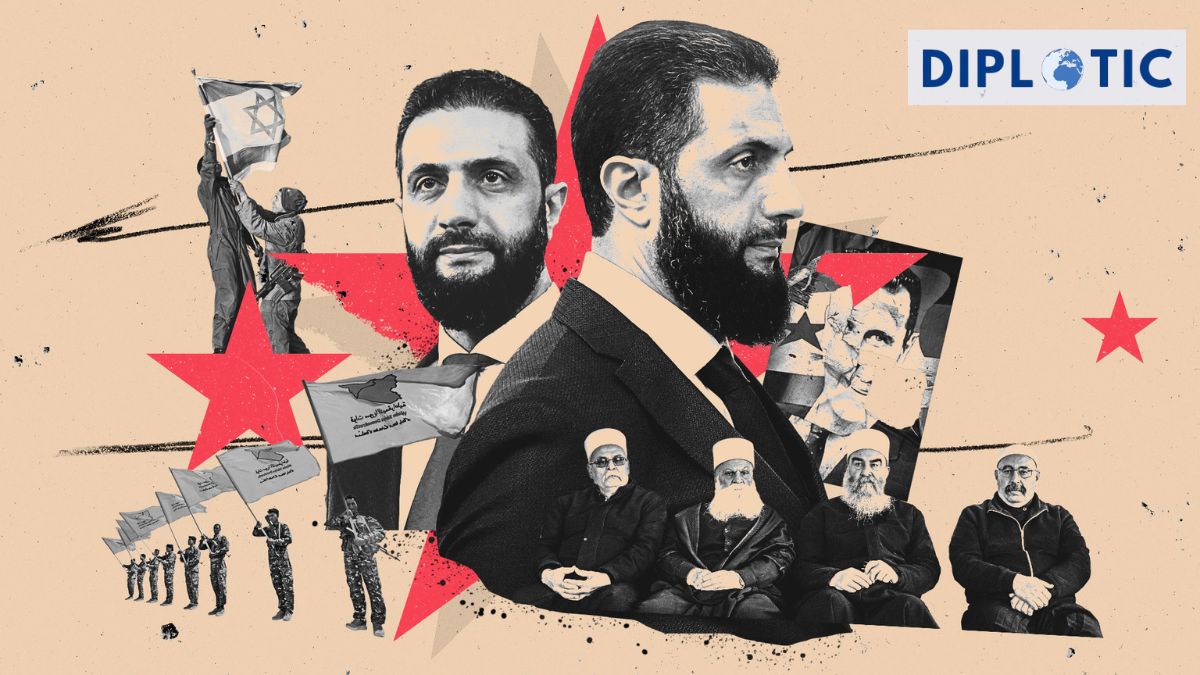
To understand the alcohol ban, it is important to look at the political environment in Syria today. After the removal of Bashar al-Assad in late 2024, a transitional government led by Ahmed al-Sharaa took control. This leadership emerged from a complex background, including ties to armed groups that once operated outside formal state structures. Since taking power, the new government has faced the difficult task of stabilizing a country deeply affected by over a decade of war.
In the early phase of transition, the leadership avoided strict social rules. This approach appeared designed to reassure both citizens and international observers that Syria would not shift abruptly toward restrictive governance. However, over the past year, there have been signs of change. Policies such as restrictions on public appearance for female employees and regulations on public behavior indicate a gradual move toward tighter social oversight. The alcohol ban fits into this broader pattern.
Officials say the decision came after repeated complaints from residents. In a country where many people follow conservative social norms, alcohol consumption has always been a sensitive issue. Yet Syria has historically maintained a degree of flexibility, especially in urban areas like Damascus. The timing of the ban suggests that the government is responding not only to public concerns but also to its own need to establish authority. In a fragile political environment, visible actions on social issues can serve as signals of control and responsiveness.
At the same time, the government faces ongoing challenges, including economic hardship, security threats, and political divisions. By focusing on moral regulation, authorities may be attempting to create a sense of order in daily life. However, this approach raises an important question: does addressing social behavior help solve deeper structural problems, or does it shift attention away from them? The alcohol ban, when viewed in this context, becomes more than a local regulation. It becomes part of a broader strategy to define the role of the state in shaping society.
A City Divided? The Sectarian Lines Within the Policy
One of the most debated aspects of the new law is its selective application. While alcohol is banned across most of Damascus, exceptions are made for certain Christian-majority neighborhoods. This has led to concerns that the policy may reinforce divisions within the city rather than promote unity. Damascus has long been known for its diverse population, where Muslims, Christians, and other communities have lived side by side. Policies that treat these groups differently risk altering that balance.
The decision to allow alcohol sales only in designated Christian areas creates a form of spatial separation. It suggests that certain practices belong to specific communities and should remain confined within those boundaries. Critics argue that this approach echoes older systems where communities were more clearly divided along religious lines. Even during periods of empire, such divisions gradually softened over time. Reintroducing them now raises questions about the direction of social policy.
For many residents, the issue is not simply about alcohol. It is about equal treatment under the law. Secular Muslims and members of other minority groups may also choose to consume alcohol, yet the policy limits where and how this can occur. This creates a situation where personal choices are indirectly shaped by geographic and communal identity. Such outcomes can affect how people perceive their place within the broader society.
Supporters of the policy argue that it respects cultural differences by allowing communities to maintain their own practices. They see the exemptions as a practical compromise in a diverse city. However, the structure of the ban suggests a more complex reality. Instead of integrating different lifestyles within shared spaces, the policy appears to separate them. This raises a deeper question about governance: should a state manage diversity by accommodating differences within a common framework, or by dividing spaces according to identity?
The answer to this question will have long-term implications. If policies continue to follow this pattern, they may gradually reshape how communities interact with each other. In a country already affected by years of conflict, maintaining social cohesion is a delicate task. Decisions that influence everyday life, even in subtle ways, can play a significant role in either strengthening or weakening that cohesion.
Public Morality or Political Signal? Reading Between the Lines
The official explanation for the alcohol ban focuses on public morality. Authorities describe the measure as a response to behavior considered inappropriate or disruptive. This language reflects a broader trend in governance where moral concerns are used to justify regulatory action. However, it is worth asking whether the policy serves additional purposes beyond its stated goals.
In many post-conflict societies, governments use visible policies to demonstrate control and stability. Regulating public behavior can be one way to show that the state is active and responsive. In Syria’s case, the alcohol ban may function as a signal that the government is capable of enforcing rules and shaping social norms. This is particularly relevant in a context where political institutions are still evolving.
The policy also interacts with religious expectations. Syria’s majority population follows Islam, which generally discourages alcohol consumption. By aligning with these values, the government may be seeking broader social support. At the same time, it must balance this approach with the need to protect minority rights and maintain an image of inclusivity.
There is also an international dimension to consider. Syria remains under close observation from global actors concerned with human rights and political reform. Policies that appear restrictive can influence how the country is viewed abroad. The challenge for the government is to manage internal expectations without increasing external criticism.
Another layer of complexity lies in enforcement. Implementing such a ban requires monitoring businesses, regulating supply chains, and ensuring compliance. This expands the role of the state in everyday economic activity. For business owners, especially those in hospitality, the new rules may create uncertainty and financial pressure. These economic effects add another dimension to the debate.
Taken together, these factors suggest that the alcohol ban is not just about regulating consumption. It is part of a broader effort to define the identity of the post-conflict Syrian state. Whether this identity leans toward openness or control remains an open question. The answer will depend on how such policies evolve and how they are received by the public.
What Comes Next for Syria’s Social and Political Landscape?
The introduction of the alcohol ban marks a significant moment in Syria’s ongoing transition. It reflects the challenges of rebuilding a state after years of conflict while trying to address competing social expectations. As the country moves forward, similar policies will likely shape the relationship between citizens and the government.
One key issue is the future of civil liberties. Many Syrians hoped that the post-2024 period would bring greater openness and participation. Early political steps, including the formation of a transitional parliament, created cautious optimism. However, concerns have emerged about how inclusive these processes are. Reports of controlled elections and limited representation suggest that political reform remains incomplete.
In this context, social policies take on added importance. They can either support a more open society or signal a move toward tighter control. The alcohol ban, along with other recent measures, indicates a trend that deserves close attention. It raises questions about how far the government is willing to go in regulating personal behavior.
Another important factor is public response. While some citizens may support stricter social rules, others may see them as unnecessary or restrictive. The diversity of opinions within Syrian society means that no single policy will satisfy الجميع. Managing these differences requires careful balancing and open dialogue.
Looking ahead, the direction Syria takes will depend on how it handles both political and social challenges. Policies like the alcohol ban provide insight into current priorities, but they are only one part of a larger picture. Economic recovery, security stability, and political inclusion will all play critical roles in shaping the country’s future.
In the end, the question is not only about alcohol. It is about how a nation defines itself after conflict. Will Syria move toward a model that embraces diversity within a shared framework, or toward one that emphasizes control and separation? The answer will emerge over time, through decisions like this one and the reactions they provoke.