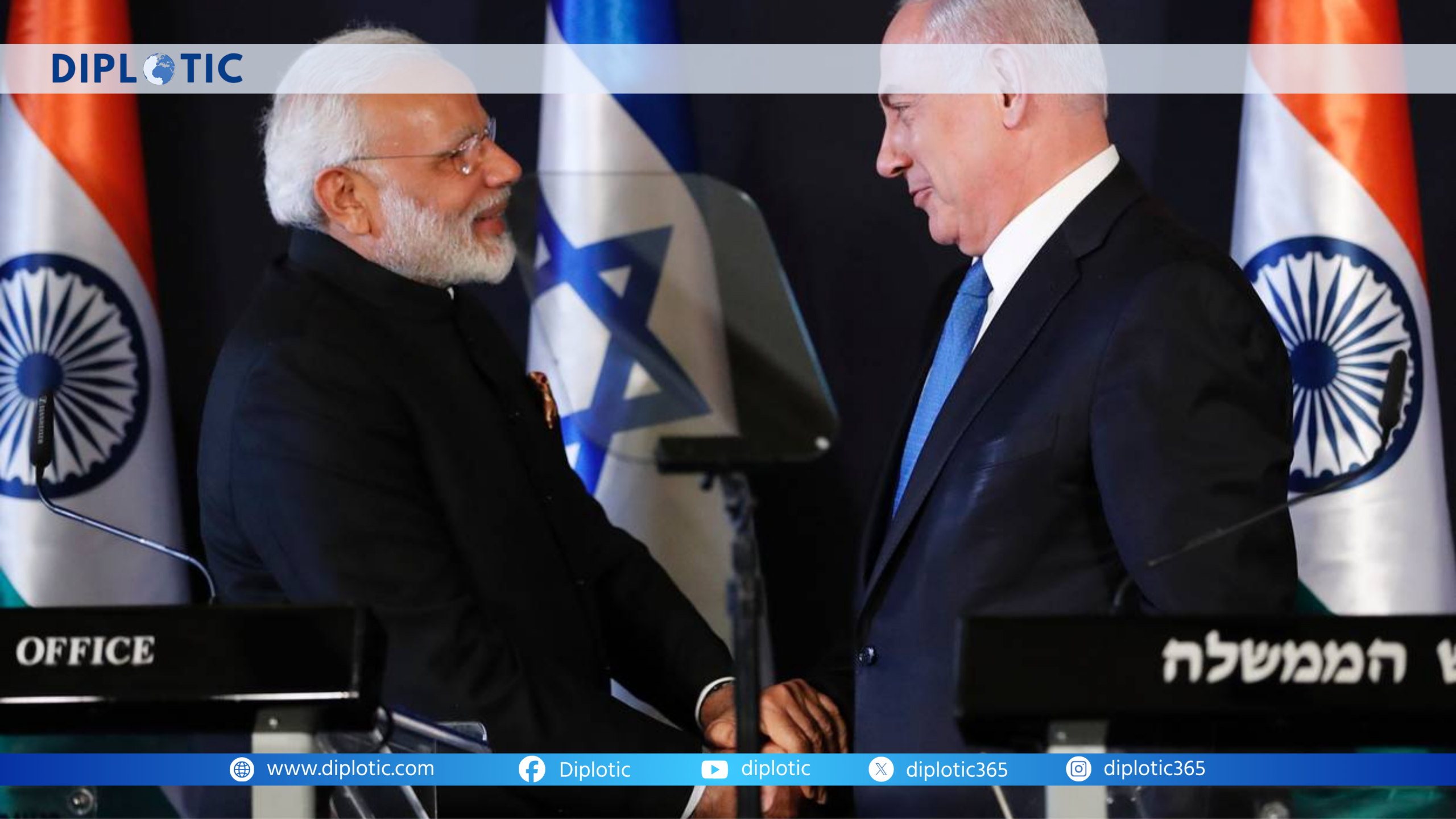
In a historic development that reshapes the geopolitical landscape of the Middle East and South Asia, India and Israel have elevated their bilateral relationship to a “Special Strategic Partnership for Peace, Innovation, and Prosperity.” The announcement came during the Indian Prime Minister’s landmark state visit to Israel, marking a new chapter in ties that have evolved from hesitant diplomatic beginnings to a robust, multi-dimensional alliance . This elevation is not merely symbolic. It encompasses concrete agreements across critical domains—from linking India’s Unified Payments Interface (UPI) with Israel’s fast payment system to fast-tracking a long-pending Free Trade Agreement, from deploying 50,000 additional Indian workers in Israel to co-developing cutting-edge technologies in artificial intelligence, semiconductors, and cybersecurity . For two nations that share a commitment to innovation and face common threats from terrorism, this partnership represents a strategic hedge and a blueprint for future-oriented cooperation. This explainer breaks down what the Special Strategic Partnership means, the key outcomes of the recent visit, the challenges that remain, and the road ahead.
How Did India-Israel Relations Evolve to This Point?
The journey to this elevated partnership spans over seven decades, marked by cautious beginnings and a gradual convergence of interests. India recognized the State of Israel in 1950 but maintained limited engagement throughout the Cold War, constrained by its Non-Aligned Movement posture and its significant relations with Arab nations . Full diplomatic relations were finally established in 1992, a watershed moment that signaled India’s shift toward a more pragmatic, less ideologically constrained foreign policy .
The defense relationship deepened significantly during the 1999 Kargil War, when Israel provided critical military assistance and intelligence to India, cementing a silent but profound security bond that has since grown into a multi-billion dollar defense trade relationship . The trajectory shifted again in 2017 when Prime Minister Modi became the first Indian Prime Minister to visit Israel, a visit that symbolically “de-hyphenated” India’s relations with Israel and Palestine, allowing each relationship to be pursued on its own merits . The formation of the I2U2 Group (India, Israel, UAE, USA) in 2022-23 further integrated Israel into a regional economic framework, setting the stage for the comprehensive strategic elevation now achieved .
What New Institutional Frameworks Were Established?
The recent visit produced several institutional mechanisms designed to ensure that cooperation extends beyond government-to-government contacts to encompass academia, legislature, and the private sector. The India-Israel Academic Cooperation Forum (I2I Forum) and the India-Israel Parliamentary Friendship Group were established to create ongoing channels of dialogue and collaboration across these critical sectors . These bodies are intended to institutionalize the partnership, making it resilient to political changes in either country and ensuring that cooperation becomes self-sustaining.
At the highest strategic level, a new Critical and Emerging Technology (CET) initiative was launched, to be led by the National Security Advisors of both nations. This mechanism will now govern cooperation in niche, high-stakes sectors like semiconductors and quantum computing, recognizing that technological leadership is inseparable from national security in the 21st century . The CET framework ensures that collaboration in these sensitive areas is coordinated, secure, and aligned with the strategic interests of both countries.
How Will Digital Payments and Fintech Integration Work?
One of the most immediately tangible outcomes of the visit is the breakthrough agreement to link India’s Unified Payments Interface (UPI) with Israel’s fast payment system . This integration will enable real-time, seamless cross-border transactions between the two countries, a development with profound implications for trade, tourism, and remittances. For Indian tourists, students, and business travelers in Israel, the ability to pay using familiar UPI interfaces will be transformative. For Israeli businesses seeking to enter the Indian market, it removes a significant friction point in financial transactions.
This fintech integration is part of a broader push to deepen economic connectivity. Following the Bilateral Investment Agreement signed in 2025, both nations have now fast-tracked negotiations for a comprehensive Free Trade Agreement (FTA) . The FTA has been under discussion for years, with delays caused by complex regulatory structures and the need to protect sensitive domestic sectors in both economies. The renewed political impetus from the Special Strategic Partnership aims to unlock these negotiations, potentially creating a trade framework that significantly expands market access for goods and services .
What Does the Partnership Mean for Technology and AI Leadership?
The CET initiative and a landmark Memorandum of Understanding on Artificial Intelligence signal a shared ambition to co-lead in frontier technologies. The AI cooperation focuses both on industrial applications and, uniquely, on a specific framework for “Advancing Education through AI” . This reflects a recognition that AI’s transformative potential must be harnessed not just for economic growth but for human capital development.
A particularly innovative outcome is the launch of a “Strategic Foresight Mechanism” that will use AI and big data to predict global trends in economy and technology . This forward-looking tool will allow both nations to anticipate shifts in the global landscape and position themselves proactively, rather than reacting to changes after they occur. In cybersecurity, a Letter of Intent was signed to establish an Indo-Israel Centre of Excellence in Cybersecurity in India . A multi-year program was also adopted to integrate “Security by Design” principles and conduct joint financial-cyber simulations to protect digital economies from sophisticated state-sponsored attacks .
Space cooperation, long a pillar of the relationship, is being reoriented toward the private sector. ISRO and the Israel Space Agency were directed to move beyond traditional satellite launches and actively foster joint ventures between private space start-ups from both countries . This shift recognizes that the future of space innovation lies in agile, entrepreneurial companies, and that combining Israeli technological creativity with Indian engineering scale could produce globally competitive ventures.
What Progress Was Made in Agriculture, Water, and Heritage?
The partnership’s foundations in agriculture, one of the earliest areas of cooperation, were further strengthened. Over one million Indian farmers have already been trained across 35 operational Indo-Israel Centres of Excellence . The new initiatives include establishing the India-Israel Innovation Centre for Agriculture (IINCA) and a new Joint Centre of Excellence in Fisheries and Aquaculture . These centers will serve as hubs for disseminating Israeli drip irrigation, precision farming, and aquaculture technologies to Indian farmers, potentially transforming productivity in water-stressed regions.
Water diplomacy emerged as a significant theme, with an expansion of the ongoing collaboration to clean the Ganges using Israeli wastewater reuse and desalination technologies . If successful, this model could be scaled to address water challenges across all Indian states, turning a perennial crisis into a managed resource. A uniquely cultural initiative was also announced: a Memorandum of Understanding between Lothal, India’s National Maritime Heritage Complex, and the Israel Antiquities Authority for underwater archaeological exploration . This collaboration will explore shared maritime heritage and could yield insights into ancient trade routes connecting the two civilizations.
How Will Labor Mobility and Worker Safety Be Addressed?
A major component of the partnership addresses labor mobility, with an ambitious goal to deploy 50,000 additional Indian workers in Israel over the next five years, primarily in construction and nursing sectors . This builds on existing frameworks and responds to Israel’s labor demands while providing employment opportunities for Indian workers.
Crucially, the agreement formalizes protocols to ensure worker safety and legal rights, building on the 2023 Framework Agreement . Given the physical risks inherent in construction and the emotional challenges of working far from home, these protections are essential. The protocols aim to prevent the exploitation that has sometimes plagued migrant labor arrangements and to ensure that Indian workers in Israel benefit from the same legal protections as domestic workers. This focus on worker welfare reflects a broader commitment to making the partnership beneficial not just for governments and corporations but for ordinary citizens.
What Are the Key Challenges to Sustaining This Partnership?
Despite the impressive scope of the new agreements, several challenges could complicate implementation and long-term sustainability. Regional stability remains the most significant external variable. Ongoing Middle East tensions, including the Gaza conflict, require India to balance its deepening partnership with Israel against its energy security interests and its relationships with Arab nations . India’s reliance on oil from the region means that any major escalation could place it in a difficult position. The suspension of Druzhba oil flows during past conflicts illustrates the vulnerability of energy supplies to regional instability .
The Palestine question continues to require careful diplomatic navigation. India remains publicly committed to a two-state solution, a stance that can create friction during heightened Israel-Palestine escalations . However, India’s support for President Trump’s Gaza Peace Plan suggests a careful alignment with peace processes while maintaining an independent posture at the United Nations . This balancing act requires constant calibration and could be tested by future outbreaks of violence.
Cross-border terrorism poses a shared threat, but synchronizing global policy responses is complicated by differing international definitions of terrorism . The 2025 attacks in Pahalgam and New Delhi underscore the persistent threat and the need for intelligence-sharing that goes beyond hardware sales . Cybersecurity vulnerabilities will only increase as financial systems like UPI and Israel’s payment network become more integrated, creating attractive targets for state-sponsored cyberattacks . The March 2025 inaugural Cyber Policy Dialogue was established specifically to address this challenge, but the threat evolves continuously.
Trade barriers, despite high-level political intent, remain stubborn. The FTA negotiations have faced repeated delays due to complex regulatory structures and the need to protect domestic manufacturing in both countries . The 2026 Terms of Reference were signed only after years of negotiation, reflecting the difficulty of aligning two very different economies. Overcoming these barriers will require sustained political will and creative compromise.
What Is the Way Forward for This Special Strategic Partnership?
Looking ahead, several priority areas will determine whether the partnership fulfills its transformative potential. The India-Middle East-Europe Economic Corridor (IMEC) presents a major opportunity to integrate Israel as a Mediterranean gateway for Indian goods . Accelerating IMEC’s implementation would create a seamless trade route connecting Asia to Europe through the Middle East, with Israel playing a pivotal role.
Semiconductor diplomacy offers another high-potential avenue. Leveraging Israel’s world-class chip design capabilities to fuel India’s Atmanirbhar (self-reliant) semiconductor missions in Dholera and other industrial nodes could create a symbiotic relationship . India provides scale and manufacturing ambition; Israel provides design expertise and innovation. Together, they could reduce global dependence on existing semiconductor hubs.
Water security cooperation, already demonstrating success in the Ganges project, should be scaled to all Indian states . Israeli wastewater reuse and desalination technologies, adapted to Indian conditions, could transform water management across the subcontinent. This would be a tangible, visible benefit of the partnership that touches millions of lives. Academic integration through the I2I Forum must move beyond ceremonial meetings to ensure that joint research and development moves from laboratories to commercial markets . The goal is to create a pipeline that converts scientific collaboration into economic value.