

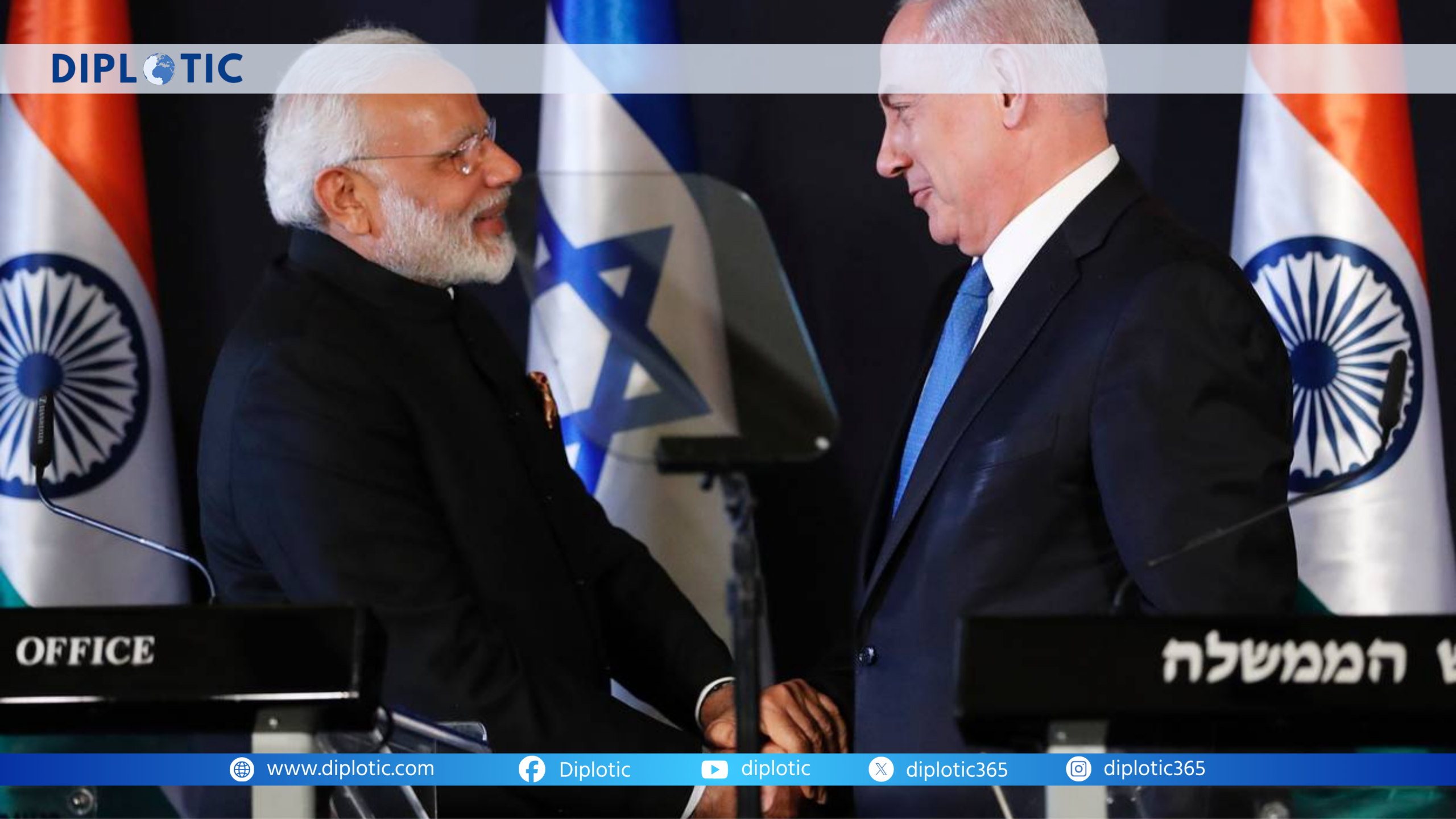
Indian Prime Minister Narendra Modi is set to visit Israel from February 25–26, 2026 in his second official trip to that nation. His first visit in 2017 was a historic moment, marking the first time an Indian prime minister had travelled to Israel. The upcoming trip has drawn attention not just for its diplomatic symbolism but also for its broader implications on geopolitical alignments, economic cooperation, and security dynamics in South Asia and beyond. At a time of shifting global power balances, evolving Middle East partnerships, and new trade corridors, Modi’s visit highlights India’s expanding strategic role.
For decades, India maintained a cautious posture toward Israel, balancing its relations with Arab and Muslim-majority nations with its own strategic interests. That approach shifted significantly in 2017 during Modi’s first visit, which opened a new chapter in ties between the two democracies. Over the intervening years, cooperation in defence, agriculture, technology, and counterterrorism deepened. The 2026 visit comes against a backdrop of intensifying global geopolitical competition and evolving regional alliances. It reflects a continued effort by India to diversify its diplomatic partnerships while navigating complex regional sensitivities.
Modi’s agenda reportedly includes talks on defence cooperation, energy collaboration, technological partnerships, and trade. Israel is a world leader in areas such as cybersecurity, water management, agricultural technology, and defence systems. For India, cooperation in these sectors underscores its own national priorities — from modernising its armed forces to boosting food security and technological innovation. The visit also aligns with India’s broader foreign policy goals of strengthening ties with countries that share democratic values and face similar security challenges.
However, this visit is not purely bilateral. It carries a regional dimension that resonates across South Asia and the Middle East. India’s expanding ties with Israel occur alongside other diplomatic moves, including closer engagement with West Asian nations through energy partnerships, investment flows, and diaspora connections. Understanding this visit therefore requires looking beyond ritual diplomacy to the strategic choices shaping India’s place in a fast-changing world.
Why the 2026 Visit Matters for India’s Strategic Interests
India’s relationship with Israel has grown significantly in recent years. Defence cooperation has been a cornerstone, with India purchasing advanced systems such as unmanned aerial vehicles, missile defence technology, and surveillance equipment. These acquisitions support India’s goal of modernising its armed forces while addressing security challenges along its borders. Regular joint exercises and information sharing on counterterrorism further deepen this partnership.
Beyond defence, agricultural technology is another key area of collaboration. Israel’s expertise in water-scarce farming, drip irrigation, and soil management has long attracted interest from Indian states facing similar challenges. Shared research initiatives and technology transfer can yield practical benefits for India’s large farming community. In addition, Israeli firms have shown interest in India’s technology ecosystem, especially in sectors related to artificial intelligence, cybersecurity, and start-up incubation.
Energy ties also feature in the agenda. India is one of the world’s fastest-growing energy consumers, and partnerships with Middle Eastern countries — including Israel — diversify its energy portfolio. While Israel itself is not a major oil exporter, it plays a central role in energy infrastructure and technology within the region. Engagement with Israel therefore complements India’s broader strategy of securing reliable energy supplies through diversified relationships spanning the Gulf, Central Asia, and the Indo-Pacific.
The timing of this visit also reflects global shifts. The United States and several European nations have emphasised strategic cooperation with democracies in Asia and the Middle East. India’s ties with Israel fit within this broader pattern of aligning interests around technology, defence, and trade, while maintaining independent foreign policy choices. Modi’s visit may signal India’s intent to consolidate these ties proactively rather than reactively.
Regional and Geopolitical Implications
Modi’s visit to Israel is not only about bilateral cooperation. It sends signals to South Asia, the Middle East, and global partners about India’s strategic posture. South Asia’s geopolitical landscape is already shaped by complex relationships — including India’s ties with its neighbours, its position in the Indo-Pacific, and its engagements with both Western and non-Western powers.
In the Middle East, India’s outreach has paralleled the region’s own strategic recalibrations. Countries like Saudi Arabia, the United Arab Emirates, and Israel have gradually expanded cross-border cooperation on trade and security, sometimes transcending old political divides. India’s stronger engagement with Israel fits into this mosaic of shifting alliances, where economic and security interests often outweigh historical constraints.
India’s improved ties with Israel also sit alongside its relationships with Arab states. India remains a major partner for Gulf countries in trade, energy imports, remittances from Indian expatriates, and investment flows. These relationships have been cultivated through high-level visits, bilateral agreements, and economic cooperation frameworks. Modi’s Israel visit may therefore be viewed through the lens of India’s broader West Asia strategy — one that balances multiple partnerships without becoming entangled in regional conflicts.
South Asian neighbours are observing these developments closely. India’s growing global influence changes regional power equations. For smaller states with intertwined economic and security concerns, India’s diversified diplomacy offers both opportunities and challenges. While many countries welcome enhanced connectivity and investment, they also watch for shifts in geopolitical pressure points.
Another implication touches global governance. India and Israel share democratic frameworks, but their regional contexts differ significantly. India’s growing engagement with Israel may influence its role in international institutions where Middle Eastern issues feature prominently. Cooperation on issues such as counterterrorism, cybersecurity, and climate resilience could find expression in multilateral forums where both countries participate.
Political Dynamics and Domestic Perceptions
Domestically, Modi’s visit has generated varied responses within India. Supporters of stronger ties with Israel point to practical benefits: enhanced technology transfers, defence cooperation, and economic opportunities. For many in the business and scientific community, Israel represents a source of innovation that can help India accelerate its own development objectives.
Critics, however, focus on how foreign policy aligns with India’s historical support for Palestinian statehood and its leadership role in the Non-Aligned Movement during the 20th century. While India’s diplomatic positions have evolved with global realities, the visit sparks debate about balancing historical commitments with contemporary strategic interests. These discussions highlight the balancing act inherent in modern diplomacy.
Public perceptions also reflect India’s diverse society. Some view the visit through cultural lenses that celebrate shared historical values and democratic affinity. Others emphasise the economic and security dimensions. These varied interpretations showcase how foreign policy events are not simply diplomatic exercises but are woven into national narratives about identity, ambition, and global standing.
Internationally, observers are assessing whether this visit will lead to tangible policy outcomes or remain symbolic. Past visits between the two nations have often been followed by incremental progress in joint ventures, technology exchanges, and institutional linkages. If similar outcomes emerge after the 2026 visit, they could reinforce the sense that India and Israel are deepening a long-term strategic partnership.
What This Visit Signals for South Asia’s Future
Looking ahead, Modi’s visit to Israel in February 2026 may be seen as part of a larger strategic trajectory. India’s foreign policy is increasingly shaped by practical cooperation, diversified alliances, and regional engagement rather than rigid ideological alignment. In an era of global competition, countries are seeking partners that offer both economic value and strategic depth.
For South Asia, this trend introduces new opportunities for connectivity, technology transfer, and economic integration. India’s role as a diplomatic bridge between different regions — South Asia, the Middle East, Southeast Asia, and beyond — can expand if it continues to balance interests thoughtfully. The challenge will be managing regional sensitivities, sustaining equitable partnerships, and ensuring that economic cooperation delivers broad-based benefits.
At the same time, the strategic landscape of 2026 is markedly different from that of 2017. New security challenges — ranging from cyber threats to climate-induced risks — require collaborative solutions that go beyond traditional alliances. India’s engagement with Israel, in this context, reflects a larger effort to participate meaningfully in global problem-solving, not merely bilateral agenda-setting.
In conclusion, Prime Minister Modi’s visit to Israel is more than a scheduled diplomatic trip. It is a waypoint in a larger journey of strategic realignment, economic cooperation, and international engagement. How the outcomes of this visit unfold will influence not just India–Israel ties but the broader contours of South Asia’s strategic landscape in the years ahead.




