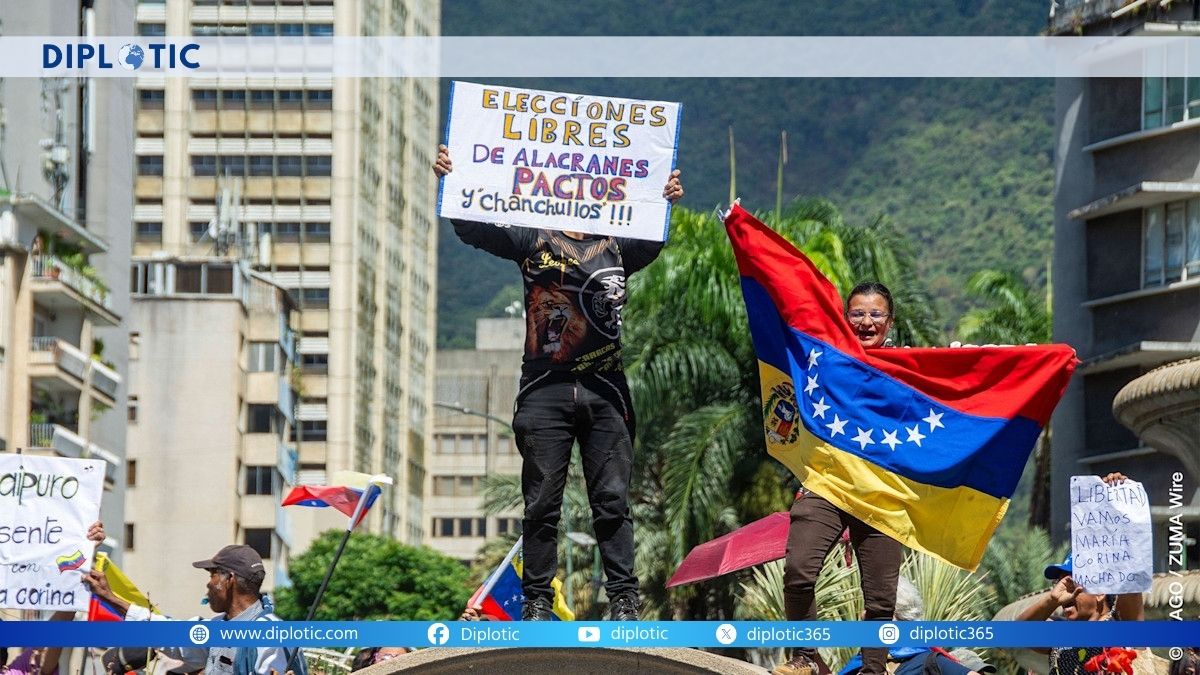
In the sweltering heat of Caracas on November 25, 2025, President Nicolás Maduro stood before a sea of red-clad supporters, clad in camouflage fatigues and gripping a ceremonial sword once wielded by independence hero Simón Bolívar. “We must be ready to defend every inch of this blessed land from imperialist threat or aggression,” he declared, his voice booming over the crowd’s chants. The rally, part of a nationwide march marking the bicentennial of Bolívar’s sword presentation, drew thousands—mostly government workers, soldiers, and loyalists—waving flags and vowing unity. It was a calculated show of resolve amid whispers of a U.S. “new phase” in operations against Venezuela, one that could include strikes on land. As U.S. warships patrol the Caribbean and the death toll from naval attacks climbs past 83, Maduro’s words echo a deeper puzzle: In a standoff blending drug wars, disputed elections, and old grudges, who blinks first, and at what cost to the region?
This moment caps years of fraying ties, but 2025 has accelerated the slide. Trump’s return to the White House brought renewed vows to dismantle what he calls Maduro’s “narco-regime,” linking it to fentanyl floods and gang violence on U.S. streets. Yet the path here winds through economic collapse, proxy battles, and a web of international players pulling strings. Venezuela’s oil riches—once the world’s largest reserves—now fuel not just tankers but geopolitical chess. As Maduro rallies his base, questions swirl: Does his sword-waving bravado mask desperation, or signal a regime braced for the unthinkable?
What Sparked Maduro’s Sword Rally and the Surge in U.S. Naval Power?
The Caracas march was no spontaneous outburst; it was scripted theater, timed to the drumbeat of U.S. escalation. Since early September, American destroyers and drones have sunk 22 suspected drug boats in international waters off Venezuela’s coast, killing at least 83 people—mostly unnamed crew from humble fishing villages. The first strike, on September 2, targeted a vessel Washington tied to the Tren de Aragua gang, with Trump releasing grainy video of the explosion and hailing it as a win against “narco-terrorists.” By mid-November, the tally included strikes near Aruba and Curaçao, where debris washed ashore in Trinidad and Tobago, carrying bodies locals identified as everyday smugglers or fishermen caught in the net.
These operations stem from a broader U.S. buildup: In August, Trump dispatched the USS Gerald R. Ford carrier group, three destroyers, a submarine, and 4,500 Marines to Puerto Rico and Panama— the largest Caribbean deployment since the 1989 Panama invasion. Defense Secretary Pete Hegseth framed it as a “drug interdiction surge,” but leaked memos suggest eyes on regime assets like ports and airstrips. The Pentagon claims vessels carried cocaine bound for Florida, yet no public evidence of loads has surfaced—only assertions of ties to Maduro’s inner circle.
Maduro’s response? Mobilization. The rally invoked Bolívar’s legacy, with Maduro hoisting the sword as a symbol of defiance, urging civilians and troops alike to form a “war of all the people.” It’s a page from Cuban playbooks, emphasizing guerrilla tactics over conventional defense—a nod to Havana’s advisory role. Venezuela’s military, starved by sanctions, numbers 120,000 but lacks modern gear; enlistment drives in August filled ranks with 50,000 militia volunteers, many from poor barrios desperate for pay.
A parallel thread runs through economics. Venezuela’s GDP has shrunk 75% since 2013, hyperinflation once hit 1.7 million percent, and oil output—down to 800,000 barrels daily—barely covers imports. U.S. strikes disrupt not just smuggling but legitimate trade; fishermen in Sucre state report 40% income drops, blaming “ghost boats” sunk in error. Maduro ties this to “economic war,” accusing Washington of eyeing Orinoco Belt reserves to bail out U.S. shale firms. Related angles emerge regionally: Guyana, locked in a border dispute over Essequibo (two-thirds Venezuelan-claimed), quietly cheers the pressure, its VP warning “you cannot trust Maduro.” Colombia’s Petro, a leftist ally, decries the strikes as “human rights violations,” arguing they ignore root causes like poverty driving youth to sea.
What intrigues is the human mosaic. Families in Paria Peninsula mourn sons labeled “cartel thugs,” while U.S. sailors on the USS Sampson log 18-hour patrols, morale strained by vague rules of engagement. As FAA warnings ground flights over Venezuelan airspace—prompting airlines like Lufthansa to cancel routes—the noose tightens. Maduro’s sword isn’t just prop; it’s a hook for loyalty in a nation where 7 million have fled. But with whispers of “Phase Two”—perhaps port raids— the rally feels like a last stand, raising the core curiosity: Does defiance deter, or draw the line closer to crossing?
(Word count for this section: 528)
Why Did the U.S. Label Maduro’s Inner Circle a Terrorist Cartel This Week?
The sword rally’s timing was no coincidence; it followed Monday’s bombshell from Foggy Bottom. On November 24, Secretary of State Marco Rubio announced the designation of Cartel de los Soles—”Cartel of the Suns”—as a Foreign Terrorist Organization (FTO), effective immediately after Federal Register publication. Named for generals’ sun-emblazoned epaulets, the network allegedly spans Venezuela’s military, intelligence, and judiciary, funneling cocaine through state ports to U.S. streets and Europe. Rubio’s statement minced no words: “Headed by Nicolás Maduro and his cronies,” it corrupts institutions and fuels hemispheric violence.
This escalates a decade-long feud. The cartel tag dates to 1993 probes of National Guard generals, but Trump’s team revived it with Treasury’s July Specially Designated Global Terrorist label. Now FTO status unlocks asset freezes, travel bans, and—crucially—military “options” under anti-terror laws, per Hegseth. Trump, aboard Air Force One en route to Mar-a-Lago, hinted at talks: “If we can save lives the easy way, that’s fine. If hard way, that’s fine too.” Yet analysts see regime change lurking; a NYT war game simulated ousting Maduro, predicting chaos with guerrillas and factions vying for oil fields.
Maduro’s legitimacy fuels the fire. Sworn in January for a term after July’s disputed election—where opposition’s Edmundo González claimed 67%—the U.S., EU, and 50 nations reject him as “illegitimate.” Trump’s bounty on Maduro hit $50 million in August, tying him to Tren de Aragua, though DEA assessments dispute direct control. Venezuela counters: Diosdado Cabello, interior minister and heir apparent, calls it “psychological warfare” to seize resources.
Parallel pressures abound. Ecuador, Paraguay, and Argentina echoed the FTO tag, hardening anti-Maduro stances. Yet Mexico’s Sheinbaum and Colombia’s Petro balk, demanding evidence and warning of refugee waves—3 million Venezuelans already strain Bogotá’s borders. A related lens: Cyber shadows. Russian-backed Venezuelan defenses could hack U.S. grids if strikes hit home soil, per think tanks.
The designation’s mechanics intrigue: It blocks $2 billion in frozen assets, but enforcement lags in porous ports. As Maduro’s rally chanted “¡Patria o muerte!”, the label paints him not just dictator, but terrorist-in-chief. This binary—ally or outlaw—sharpens the standoff, prompting questions: Does terror branding hasten talks or harden lines for conflict?
(Word count for this section: 412)
What Do Americans and U.S. Lawmakers Really Think of Strikes on Venezuelan Waters?
Back home, Maduro’s defiance lands on deaf—or divided—ears. A CBS/YouGov poll from November 19-21 captured it starkly: 70% of 2,489 adults oppose military action in Venezuela, with 56% doubting it’d curb drug inflows. Only 13% see Caracas as a “major threat,” per breakdowns; awareness is middling—40% heard “some,” 20% “a lot.” Reuters/Ipsos echoed: Risks outweigh benefits for most, though Republicans tilt supportive (51% vs. Democrats’ 22%).
This war-weariness traces to quagmires past. Swing-state voters in Pennsylvania and Ohio, hit by opioids, blame cartels but favor treatment over bombs—$42 billion underfunded annually, HHS says. Florida’s exiles back pressure (65% in Miami polls), haunted by Maduro’s crackdowns. Yet nationally, Gallup pegs Trump’s foreign approval at 48%, dipping post-strikes.
Capitol Hill mirrors the split. GOP hawks like Tom Cotton laud “deterrence,” but moderates waver. Sen. Todd Young (R-IN) warned strikes risk “direct conflict,” voting against unchecked action. Rand Paul (R-KY) blasted the FTO tag as “war pretense,” joining Democrats in a failed approval bid. Hakeem Jeffries’ resolution ties funds to diplomacy; Bernie Sanders ties it to inequities: “Billions for bombs, crumbs for addicts.”
Related concerns: Legality. UN’s Volker Türk decries “extrajudicial killings”; Amnesty logs civilian deaths, like Paria fishermen. Enlistment dips 15%, DoD reports, as vets recall Afghanistan’s $2 trillion tab. A parallel: Economic ripple. Strikes hike shipping insurance 20%, per Lloyd’s, pinching U.S. importers.
Town halls buzz with queries: “Why Venezuela over borders?” This groundswell—polls shifting 4 points post-Hegseth’s “nothing off table”—pressures Trump, who polls say under-explains (60% say so). As lawmakers probe endgames in briefings, the divide exposes a nation tired of abroad fights, fueling curiosity: Can polls pivot policy, or just prolong the probe?
(Word count for this section: 356)
How Are Neighbors Like Cuba and Colombia Reacting to the Caribbean Standoff?
The ripples spread fast, fracturing Latin America’s patchwork. Cuba’s Bruno Rodríguez slammed U.S. moves as “exaggerated aggression” on November 25, appealing to Americans to halt “madness” before “incalculable deaths.” Havana, Venezuela’s oil lifeline and military whisperer, sees echoes of 1962’s blockade; it advises asymmetric war, blending ELN guerrillas into urban defenses. Nicaraguan axis joins the chorus, calling it “imperial offensive.”
Colombia, sharing 1,400 miles of border, treads warily. Petro accused Rubio of targeting “wrong people”—fishers, not kingpins—insisting drug fights yield to rights. Strikes killed Colombians, repatriated sans charges, straining ties; Bogotá worries 2 million more refugees if chaos erupts. Mexico’s Sheinbaum echoes: Cooperation needs evidence, not overreach.
CARICOM’s Kerrie Symmonds demanded strike notices, fearing spillover—Trinidad beaches littered with wreckage. UN’s Dujarric warned of “confrontational rhetoric” risks. Allies like Dominican Republic cooperated on coke hauls, but intel-sharing dips—Canada, EU curtail flows over legality qualms.
A related angle: Energy dominoes. Strikes idle rigs, spiking global prices 5%; Brazil’s Lula mediates quietly, fearing Amazon border flux. Russia’s tankers evade via Cuba, but U.S. tails them. This patchwork—leftists decry, rightists endorse—highlights a hemisphere divided, where U.S. muscle strains old pacts. As Petro pushes joint patrols sans strikes, the question lingers: Can neighbors broker peace, or just buffer the blast?
(Word count for this section: 312)
As Maduro’s sword gleams in rally footage and U.S. radars sweep the horizon, Venezuela’s crisis bridges old empires and new threats—a reminder that in the Americas’ fragile balance, one nation’s defense is another’s provocation. With talks teased but troops massed, the coming weeks could cool the fever or ignite it, shaping not just Caracas’ fate but a region’s wary watch on power’s edge.