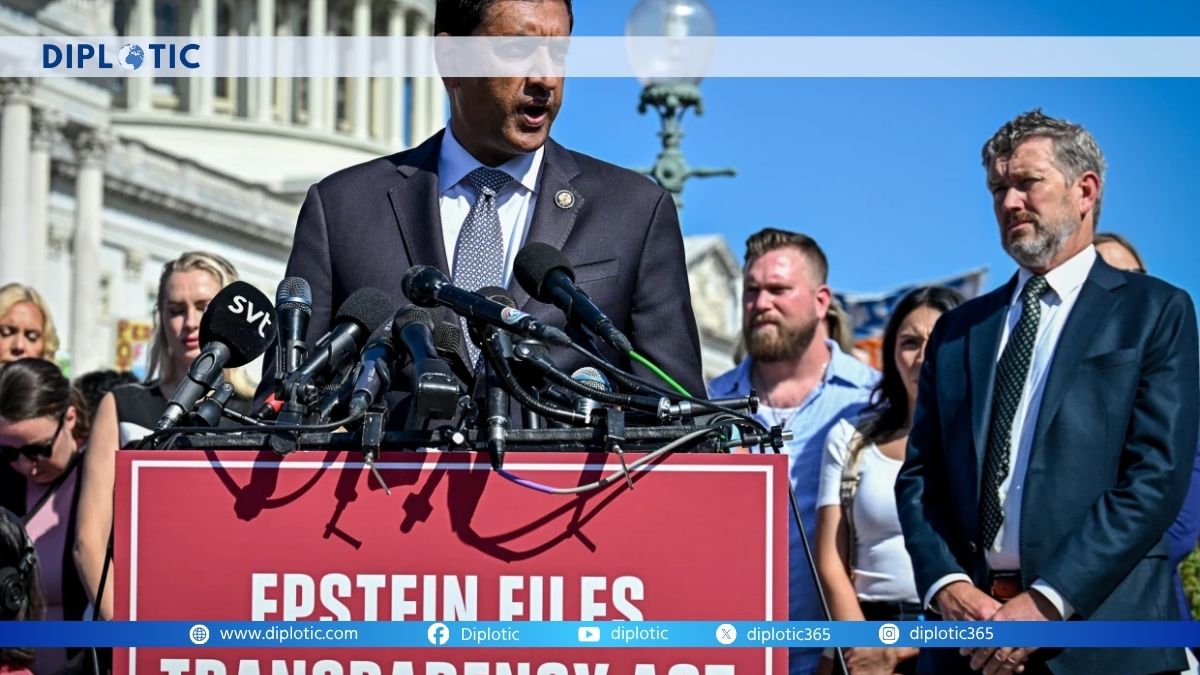
On November 12, 2025, an important procedural milestone was reached in the United States House of Representatives (House): the discharge petition aimed at forcing a vote on releasing files related to Jeffrey Epstein secured its 218th signature, the minimum required under House rules to trigger floor consideration. The final signature came from Adelita Grijalva (D-Ariz.), sworn in on that day.
Understanding how the petition reached this point helps clarify the significance of the threshold. A discharge petition is a rarely-used parliamentary tool that allows rank-and-file members of the House to bypass committee bottlenecks or leadership control: if a majority of representatives (218 out of 435) sign, they can force a vote on a particular piece of legislation.
The petition in question — known as the “Epstein Files Transparency Act” led by Thomas Massie (R-Ky.) and Ro Khanna (D-Calif.) — targets the release of documents held by the United States Department of Justice (DOJ) related to investigations into Epstein and his associates.
What makes this moment unusual is the bipartisan mix of signatures: all House Democrats plus four Republicans had signed, and Grijalva’s addition pushed the total to 218.
With the threshold reached, several procedural gears have begun to turn. But reaching the threshold is not the same as passage of the bill. The rules set in motion a timeline and allow leadership to mount resistance or delay. Understanding what happens next is critical.
What the next steps are in the House
Once the 218-signature mark is hit, the rules of the House trigger a “ripening” period before the discharge petition can be brought to the floor. By rule, after the last signature is added, at least seven legislative days must pass before a member can move to bring the petition to the floor. In practical terms this means calendar days only so far as the House is actually in session; holidays or recesses may pause the count.
After that seven-day period, the Speaker of the House has up to two legislative days to schedule the bill for a floor vote. Once scheduled, the full House can debate and vote.
In this case, however, the Speaker, Mike Johnson (R-La.), announced that he would bypass the standard waiting period and schedule the vote as early as next week. That accelerates the timeline significantly and brings the floor vote much closer.
Once the motion is made, the House may have hours of debate, amendments, procedural votes (such as on whether to debate at all, whether to table or refer the motion), and then a final vote on whether to pass the bill compelling the release of the Epstein-related files.
It is important to note that even if the House passes the bill, it will still need to clear additional steps (Senate, President) before it becomes law. But the floor vote alone places the question clearly on the public record, sets members’ positions in stone, and raises the stakes for leadership and the White House. The push to force a floor vote in this manner is itself a sign of how tense the issue has become.
What hurdles remain after the House vote
Even assuming the House schedules and holds the vote in the next week, significant obstacles remain. First, one or more signers could withdraw their name from the petition before it is officially moved, reducing the count below 218 and undermining the mechanism. Reports note that while the petition reached the required number, signature removal remains possible.
Second, the Speaker has tools to delay or derail the process even after the petition is valid. For example, the Speaker could refer the bill to a committee, or move to table the motion or send it to a rules vote that flattens its momentum. Though Johnson has said he intends to bring the vote forward, the potential for tactical delay remains significant.
Third, even if the House passes the measure, the bill must pass the United States Senate, where the leadership has indicated little interest in considering it. And even in the Senate, the rules demand a 60-vote threshold for many items, subject to leadership packaging. Finally, the bill must be signed into law by the Donald Trump Administration, which has pushed back hard, calling the efforts a “hoax” and criticizing the underlying aim of the petition.
Fourth, there is the question of scope and enforcement. The petition sets the floor vote but does not guarantee that all desired documents will be released, nor does it guarantee compliance by the involved agencies. The DOJ and the House Oversight Committee already have released large volumes of Epstein-related documents, and leadership may argue that the petition is duplicative.
In short, the race is now shifting: from getting enough signatures to forcing the floor moment — and then to wrestling legs, rules and venues across Congress and executive branch. For supporters of release, getting the vote itself is as much about public exposure and pressure as about the outcome.
Why this matters: implications for oversight and transparency
The significance of this petition driven to 218 signatures goes beyond procedural novelty. It signals rising demands in Congress for accountability and transparency regarding victims, power, secrecy and institutions. At the core is the question: should the government release fully unredacted or minimally redacted files related to Epstein’s criminal network, his associates, the flight logs, the bank records, the travel logs — and the Justice Department’s own internal handling of the case? That is what the petition champions.
For the House, this moment tests the power of rank-and-file members to assert control over the agenda, bypass leadership, and force a vote on issues that leadership may prefer to keep at arm’s length. The fact that the petition relies on bipartisan support — Democrats plus a handful of Republicans — underscores the cross-party pressure for transparency.
For the executive branch, especially the Trump Administration, the implications are sensitive: release of certain documents could raise questions about prior associations, institutional oversight, potential gaps or failures in investigations, and perhaps even political fallout. The Administration’s pushback suggests it views the petition and eventual bill not simply as a transparency measure but as a political and reputational risk.
For victims and the public, winning a floor vote is a public vindication: signatures, speeches, televised debate, votes — all amplify the demand for transparency, create public record, and may build momentum for further investigation or reform. Even if the bill does not ultimately become law, the pressure it creates may force concessions or partial releases from agencies.
Finally, the episode underscores how oversight tools—like discharge petitions—are increasingly part of the toolkit for demanding transparency in high-profile cases. What happens next may set precedent for how Congress handles demands for documents in other cases involving national security, institutional accountability or elite misconduct.
Conclusion: Where this path may lead
The achievement of 218 signatures on the discharge petition compels a House floor vote and turns a procedural maneuver into a visible moment of accountability. Yet the journey is far from over. The rules mandate waiting periods, tactical options for delay exist, the Senate remains a significant barrier, and the President’s opposition may doom the bill’s chances of becoming law. Still, the shift from mere signature gathering to floor scheduling marks a meaningful pivot. What is at stake extends beyond a single case: it is about the balance of power between Congress and the executive, about the transparency owed to victims and to the public, and about the mechanisms by which oversight is enforced in a modern polity. As the push moves from petition to vote to potential law—or not—it will test whether Congress can translate procedural leverage into substantive outcomes.