

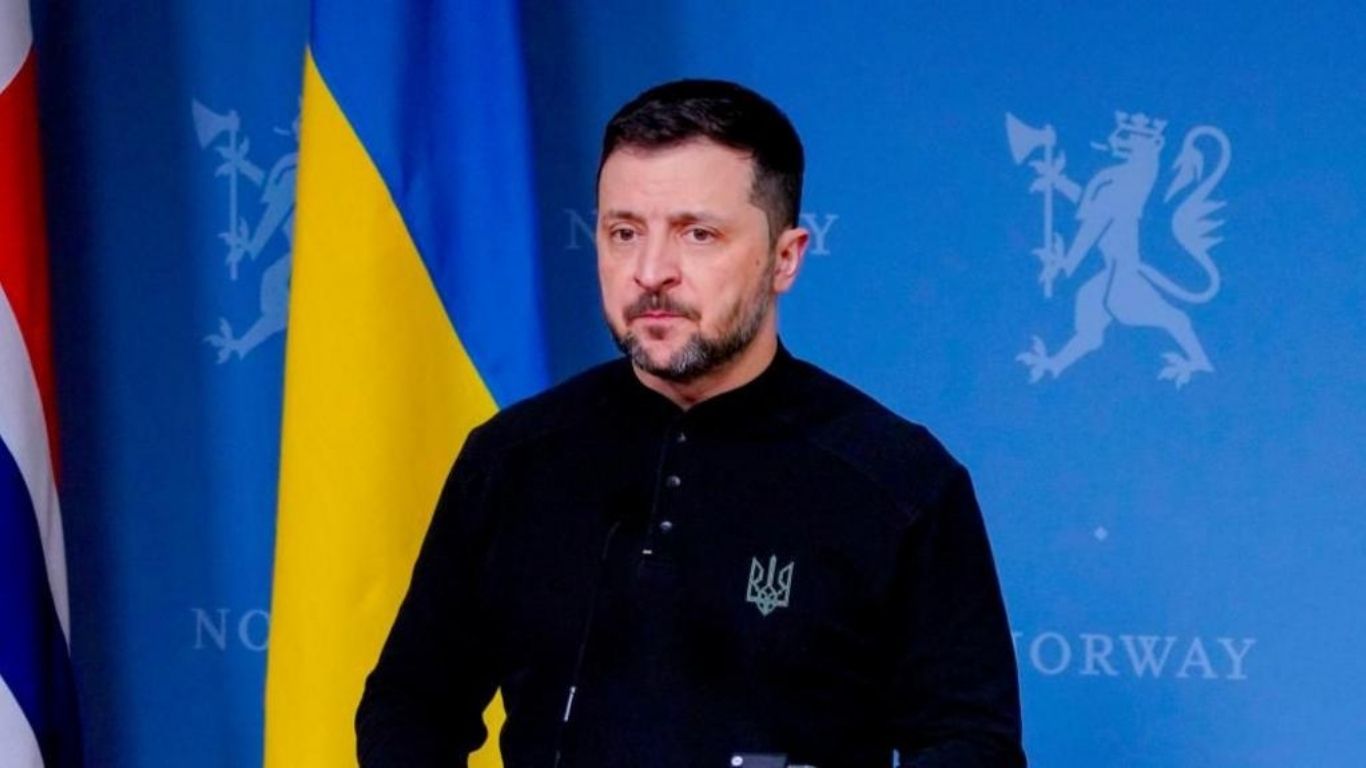
Ukrainian President Volodymyr Zelensky rejects land concessions as Trump and Putin prepare for a pivotal summit. With deadly Russian strikes continuing, the future of Ukraine’s sovereignty hangs in the balance.
As former US President Donald Trump prepares to meet Russian President Vladimir Putin next week, Ukrainian President Volodymyr Zelensky has delivered an unambiguous message: Ukraine will not surrender a single inch of its land. Speaking in a firm video address, Zelensky declared that any decisions made about his country without Ukrainian participation would be “dead decisions.”
The statement comes amid intensifying fears in Kyiv and across Europe that the Alaska summit could result in a land-swap deal, effectively legitimizing Russian territorial gains in exchange for a temporary ceasefire.
A Summit Shrouded in Controversy
The upcoming Trump-Putin meeting is already being framed as a potential diplomatic turning point or disaster for Ukraine. Trump has openly suggested the idea of Russia and Ukraine “swapping” territories to end the conflict, a concept that Moscow would likely welcome but which Kyiv sees as a direct assault on its sovereignty.
According to diplomatic insiders, proposals under discussion could see Ukraine cede parts of Donetsk and Luhansk still under its control, in return for Russia relinquishing small border areas in Sumy and Kharkiv regions. Such an arrangement would heavily favor Moscow and undermine the sacrifices made by Ukrainian forces over the last four years.
Zelensky’s Message: No Negotiations Without Ukraine
Zelensky’s warning was as much to Washington as it was to Moscow. His reference to “dead decisions” underscored the Ukrainian government’s position that any agreement struck without Kyiv’s consent is illegitimate and unenforceable.
“Only the Ukrainian people can decide the fate of our land,” Zelensky insisted. “We will not be dictated to from abroad, and certainly not by those who have not borne the cost of this war.”
War on the Ground: Civilian Casualties Mount
While diplomatic maneuvering continues, the war on the ground shows no sign of slowing. Overnight, several Ukrainian civilians were killed in another round of Russian aerial attacks, striking residential neighborhoods and critical infrastructure. Air defense systems intercepted some missiles and drones, but not all—adding to the mounting civilian toll and further fueling public anger against any suggestion of territorial concessions.
These attacks highlight the gap between diplomatic rhetoric and battlefield realities. Even as world leaders discuss possible ceasefire terms, Russia continues to employ heavy bombardment, undermining the trust needed for genuine peace talks.
European Fears of Appeasement
European governments have reacted cautiously to Trump’s land-swap comments, with some warning against repeating the mistakes of history. Comparisons to Neville Chamberlain’s 1938 appeasement of Nazi Germany are becoming more frequent in political circles.
“Any deal that rewards aggression risks emboldening it,” said a senior EU diplomat. “We have seen this pattern before with Russia agreements are signed, Moscow uses the pause to regroup, and then the attacks resume.”
Putin’s Strategic Advantage
For Putin, the Alaska summit represents more than just a diplomatic opportunity it is a chance to cement battlefield gains without expending additional military resources. Russian forces are currently advancing in eastern Ukraine, with several key cities in Donetsk under threat of encirclement.
If Moscow can secure recognition of these territorial gains through negotiation, it would achieve a significant strategic victory while weakening Ukraine’s defensive position for the future.
Trump’s Balancing Act
Trump, for his part, has claimed that his thinking toward Putin has “evolved,” using words like “disappointed” and “disgusting” to describe certain Kremlin actions. Yet, critics argue that his policy record shows a reluctance to impose truly damaging costs on Moscow.
With domestic political pressures mounting and allies watching closely, Trump’s approach in Alaska will be a key test of whether he prioritizes swift conflict resolution or the long-term security of Ukraine and its allies.
The Risk of Excluding Kyiv from the Table
Perhaps the most dangerous element of the current diplomatic landscape is the possibility of Ukraine being sidelined in discussions about its own future. Analysts warn that a deal struck between Washington and Moscow without Ukrainian participation would not only be morally questionable but also practically unenforceable.
“Peace without Ukraine is not peace it’s a pause before the next war,” said Olena Holub, a Kyiv-based political analyst.
A Fragile Countdown to Alaska
With the summit just days away, tensions are mounting on multiple fronts: on the battlefield, where Russia continues its relentless strikes; in Kyiv, where leaders are bracing for potential diplomatic pressure; and across Europe, where fears of a fractured Western response are growing.
For Zelensky, the message is clear Ukraine’s borders are not bargaining chips. For Putin, the meeting offers a chance to lock in gains. And for Trump, the Alaska summit could define his foreign policy legacy for years to come.




