

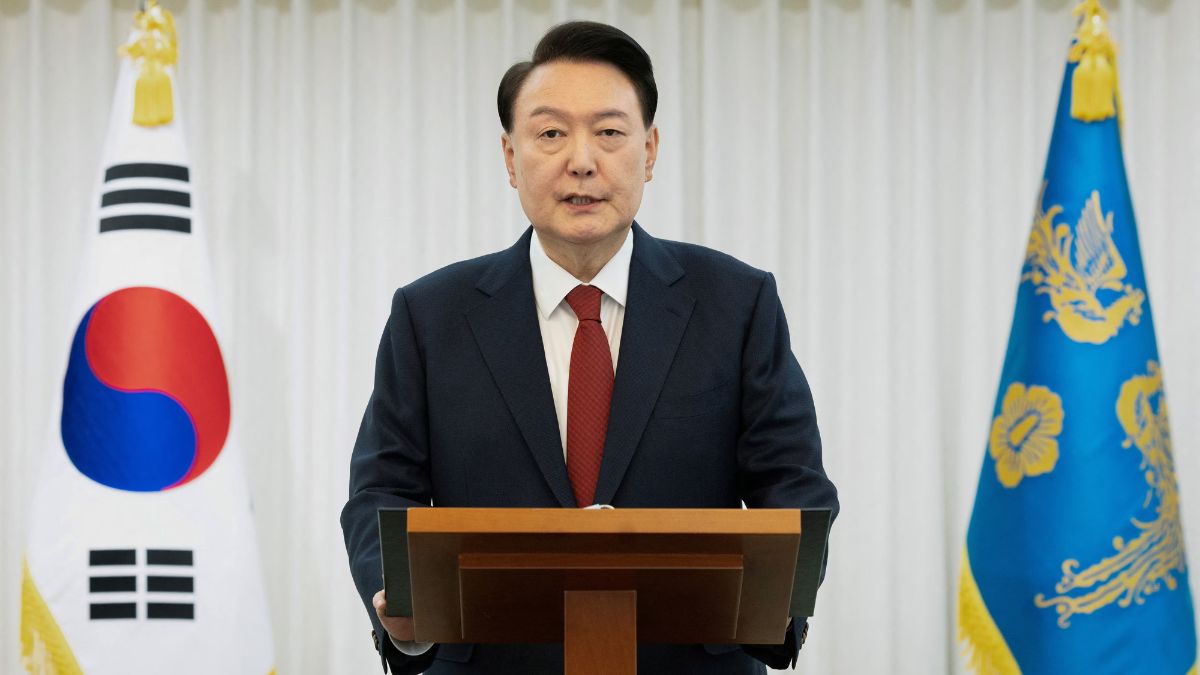
The Making of a Political Firestorm
On a cold January afternoon, a 22-year-old pharmacy student, Shin Jeong-min, stood outside South Korea’s Constitutional Court, chanting in defense of the impeached president, Yoon Suk Yeol. Around her, hundreds of supporters—most of them older—fervently demanded his reinstatement. Their reasoning? If Yoon was removed and the opposition took over, South Korea would become North Korea 2.0.
Now, let’s pause for a second. A modern democracy with the world’s tenth-largest economy, home to K-pop, Samsung, and technological marvels—turning into an authoritarian communist state overnight? Sounds absurd. But for Yoon’s followers, this isn’t a conspiracy; it’s gospel truth.
How Fear Became a Political Strategy
When Yoon declared martial law last December, his justification was simple: an invasion from within. He claimed—without a shred of evidence—that “North Korean communist forces” had infiltrated the opposition. His solution? Ban political activity, deploy the army, and suspend democratic rights.
But here’s where it gets interesting. His base—comprising mostly elderly South Koreans who lived through the Cold War—bought into this idea. They remember the devastating Korean War and North Korea’s past infiltration attempts. Yoon played on those fears masterfully, reviving Cold War-era paranoia and packaging it as a defense of democracy.
The Ghosts of South Korea’s Past
To be fair, North Korean spies did exist. In the 1960s and 70s, they routinely attempted to assassinate South Korean leaders and sabotage infrastructure. In 1968, commandos crawled across the border to kill then-President Park Chung-hee. The gun battle lasted for weeks.
But times have changed. Today, Pyongyang’s biggest threats are cyber warfare and nuclear weapons, not spies sneaking across the border. And yet, Yoon’s rhetoric echoes South Korea’s past military dictators, who used the communist boogeyman to tighten their grip on power.
From Political Leader to Cult Figure
Two months after his failed coup, Yoon’s supporters have only grown more radical. Those who previously had no strong views on North Korea are now convinced that their democracy is being hijacked by communist infiltrators. A movement that once lurked on the fringes of South Korean politics is now mainstream.
Take Oh Jung-hyuk, a 57-year-old musician who joined one of the pro-Yoon rallies. “At first, I didn’t support him, but martial law opened my eyes,” he said. “The left has taken over our country.”
Or Kim Gyung-joo, a 30-year-old IT worker. He used to lean left, but after binging YouTube videos, he now believes martial law was “unavoidable.”
Sound familiar? If you’ve been paying attention to political trends worldwide, you’ll notice a pattern. A leader frames himself as the last line of defense against a fabricated existential threat, convincing followers that democracy must be temporarily suspended to save it. It’s a page straight out of the authoritarian playbook.
Yoon’s Manufactured Enemies
Yoon’s supporters love pointing to real events as proof of their conspiracy theories. Did former President Moon Jae-in meet with Kim Jong Un to negotiate peace? Yes. Does the opposition leader, Lee Jae-myung, face allegations of sending money to the North? Yes.
But here’s the thing: None of these incidents suggest that the opposition wants to merge with North Korea or turn the country communist. That’s a leap of logic that only works if you’re already primed to believe the worst.
As sociology professor Shin Jin-wook puts it, “Yoon’s rhetoric almost completely matches that of past dictators, and he is the first president to use this anti-communist ideology so blatantly since Korea became a democracy in 1987.”
Fear, China, and the New Enemy
At recent rallies, many supporters have swapped their old “Stop the Steal” signs for new ones reading “Chinese Communist Party OUT.”
Why? Because Yoon’s camp has expanded the enemy list. Now, it’s not just North Korea; it’s China too. There’s a growing belief that Beijing is secretly controlling South Korean politics and pulling the strings behind Yoon’s impeachment.
To be clear, there’s zero evidence of Chinese interference in South Korean elections. But it doesn’t matter. Fear is a powerful motivator, and Yoon’s movement has weaponized it brilliantly.
The Fight for South Korea’s Future
Despite Yoon’s efforts, he remains deeply unpopular with the general public. Immediately after his martial law stunt, 75% of South Koreans wanted him permanently removed. That number has since fallen to 57%, but the majority still see him as a threat to democracy.
Yet, for his supporters, he’s a hero. A martyr. A man wrongfully punished for trying to save his country from an invisible enemy.
Polling expert Lee Sang-sin warns that Yoon’s movement is “growing like a cult.” His tactics may have failed in the short term, but the impact on South Korean society could last for years.
If history has taught us anything, it’s that manufactured fear doesn’t just disappear—it festers. And if South Korea’s leadership doesn’t address this brewing crisis head-on, today’s political paranoia could become tomorrow’s national crisis.
The question isn’t whether Yoon will return to power—it’s whether South Korea’s democracy will survive the damage he’s already done.




