

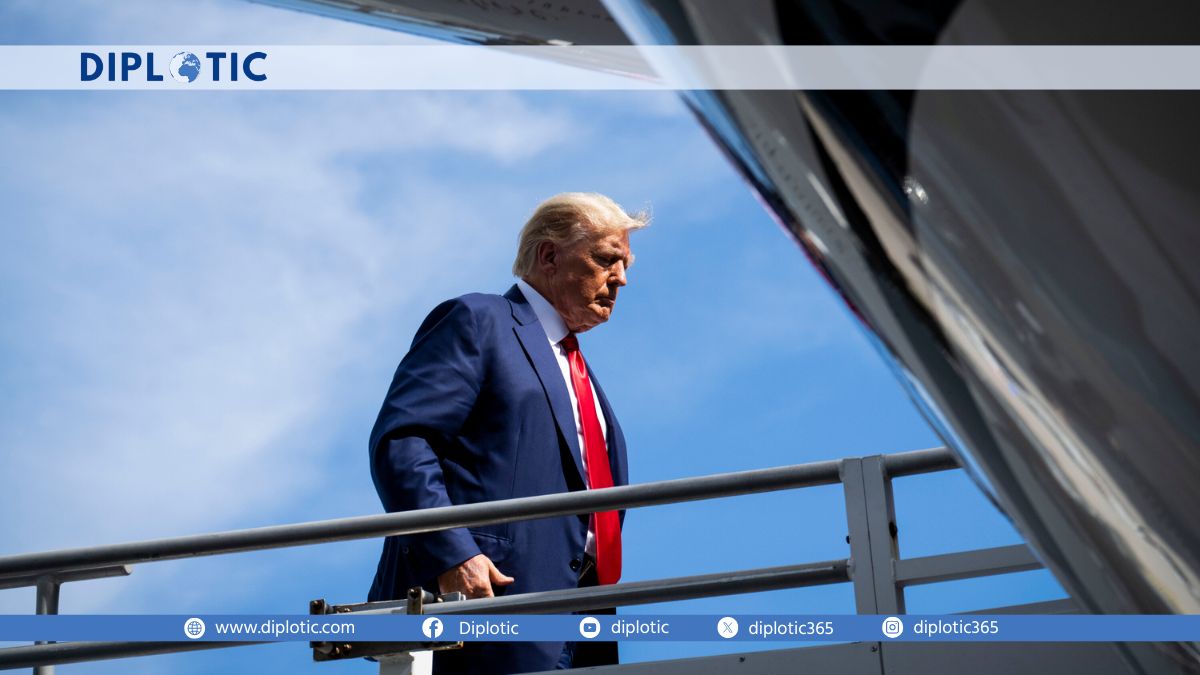
In a surprising diplomatic statement that quickly attracted regional and international attention, Pakistan’s Prime Minister Shehbaz Sharif referred to former US President Donald Trump as the “Saviour of South Asia.” This comment, made in the context of Trump’s past mediation claims between Pakistan and India, has reopened debate over Washington’s role in South Asian geopolitics particularly concerning Kashmir, Indo-Pak relations, and regional power balancing.
Beyond its immediate political optics, the remark carries deep diplomatic implications, signaling Pakistan’s evolving foreign policy strategy and its recalibration of ties with global power centers.
Context Behind the Statement
The remark traces back to Trump’s repeated claims during his presidency that he played a behind-the-scenes role in reducing tensions between India and Pakistan, especially following the 2019 Pulwama crisis and the subsequent Balakot airstrikes.
Trump publicly asserted that his diplomatic intervention prevented the situation from escalating into a full-scale war between two nuclear-armed neighbors. Though India consistently rejected any third-party mediation, Pakistan welcomed the narrative,framing Trump as a stabilizing external actor.
By reviving this rhetoric, Pakistan’s current leadership appears to be:
- Reasserting internationalization of the Kashmir dispute
- Signaling openness to external mediation
- Reframing US involvement as a positive stabilizing force
Why Pakistan Is Elevating Trump’s Role
1. Diplomatic Leverage Against India
Pakistan has long sought international involvement in Kashmir, while India insists on bilateral resolution under the Simla Agreement. By praising Trump, Islamabad attempts to:
- Re-legitimize third-party mediation
- Increase diplomatic pressure on New Delhi
- Reopen global debate on Kashmir
2. Strategic Messaging to Washington
Calling Trump the “Saviour of South Asia” also sends a calculated signal to US political circles, particularly amid uncertainty surrounding future American foreign policy directions.
Pakistan appears to be:
- Keeping diplomatic doors open with both major US political camps
- Rebranding itself as a cooperative strategic partner
- Seeking economic and security engagement
3. Domestic Political Optics
Domestically, the statement resonates with Pakistan’s political narrative that:
- Global powers recognize Pakistan’s security concerns
- Pakistan remains diplomatically relevant
- India’s unilateral Kashmir policies lack legitimacy
This helps bolster internal political legitimacy and public morale.
India’s Predictable Rejection
India’s response has been consistent: firm rejection of third-party mediation.
New Delhi maintains that:
- Kashmir is an internal matter
- Any dialogue with Pakistan must be bilateral
- Terrorism and dialogue cannot coexist
Thus, Pakistan’s praise of Trump is unlikely to soften India’s stance. Instead, it may harden diplomatic positions, increasing strategic distrust.
Implications for Regional Diplomacy
1. Renewed Global Focus on Kashmir
Such statements revive international attention toward Kashmir something India actively seeks to prevent. While symbolic, it may:
- Reignite human rights discussions
- Encourage diplomatic interventions
- Influence global media narratives
2. Shifting US–South Asia Dynamics
If Trump or similar leadership returns to power, Pakistan anticipates a transactional diplomacy model, where mediation and influence could re-emerge as bargaining tools.
This may:
- Increase Pakistan’s diplomatic leverage
- Create new uncertainties for India
- Reshape regional power equations
3. Strategic Messaging Toward China & the Gulf
The statement also indirectly communicates Pakistan’s multi-vector diplomacy balancing relations among:
- China
- United States
- Gulf states
Pakistan aims to project itself as geopolitically flexible rather than bloc-bound.
Is This Symbolism or Strategy?
While the statement appears symbolic, it aligns with a broader strategic recalibration. Pakistan is:
- Searching for diplomatic breakthroughs
- Seeking renewed international engagement
- Attempting to reposition itself in global strategic frameworks
Thus, this remark should be seen less as personal praise and more as strategic signaling.
Conclusion: Rhetoric with Real Consequences
Labeling Trump the “Saviour of South Asia” is not merely diplomatic flattery it is a calculated geopolitical statement. It reflects Pakistan’s attempt to reinsert itself into global power diplomacy, internationalize regional disputes, and maintain strategic relevance.
However, in a region as volatile as South Asia, symbolic diplomacy can produce tangible consequences influencing alliances, media narratives, and strategic posturing.
Ultimately, whether this rhetoric leads to meaningful diplomatic engagement or merely adds to regional polarization will depend on future geopolitical alignments and leadership decisions in Washington, Islamabad, and New Delhi.




