

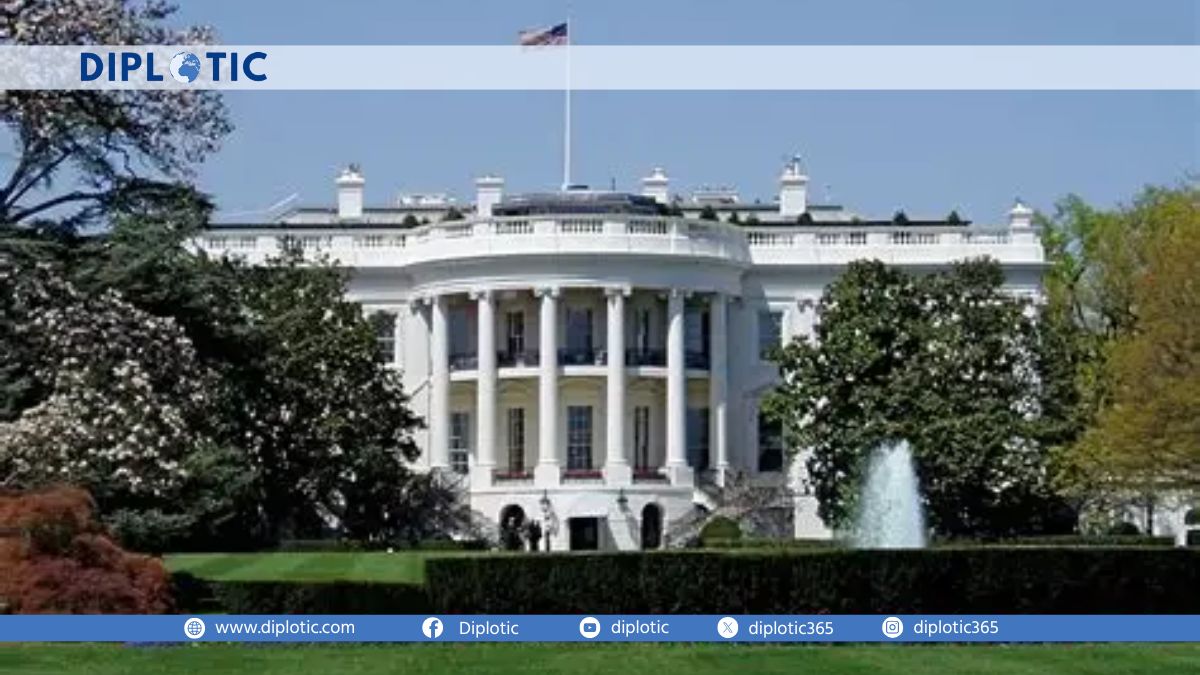
The wrecking ball is always more readable than a paragraph of law. Pictures of heavy equipment taking down a 120-year-old wing of the White House became, for many Americans, a clearer argument about the state of the republic than any legal brief: here is a physical emblem of governance stripped to its foundations, and behind it a political logic that treats public office as private property. What follows is not a polemic but an investigation — a tracing of how formal rules and informal norms once worked together to constrain power, where that system is fraying today, and what the loss of a single ingredient — character — actually means when institutions are tested. I weave law, history, reporting, and reportage into a single narrative because this crisis is not a single event; it is a collision of architecture, money, personnel moves and precedent. Along the way I track what statutes actually say about oaths and duties, what legal scholars mean when they promise separation of powers, and why, historically, a republic survives when officeholders keep a private promise that isn’t written on parchment. The question is blunt: when norms collapse, do laws suffice — and if not, what does that tell us about survival?
When norms evaporate, what fills the void?
Norms are the soft tissue of a constitution: not written in the margin of statutes but present in the everyday assumptions officials carry about what is proper. For decades, the United States’ working order — call it governance culture — relied on a set of unstated expectations. Cabinet secretaries and career civil servants kept their heads down and their oaths in mind; judges assumed that government lawyers would operate with a presumption of regularity; senators expected nominees to answer questions honestly and to respect the arc of precedent. These expectations are not decoration. They lubricate a system of interlocking constraints that must function between crises. When they function, the system can afford resilience: statutes and precedents, enforced imperfectly and slowly, are supplemented by the belief that those who wield power will not weaponize every loophole.
When norms fail, however, the raw incentives embedded in institutions come into focus. A presidency that treats public resources as private trappings converts technical gaps into sites of personal advantage. Contracting processes, ethics reviews, customary deference to congressional prerogatives — these were never foolproof barriers, but they worked because most actors respected their role in a bigger story. Images of work crews removing an historic East Wing — a symbolic act, but one with procurement, funding and transparency implications — make the point that demolition isn’t only about bricks. It is about who signs off and on what basis; about whether oversight offices ask the right questions and whether they are answered in good faith. An ill faith, moreover, does not need to break every law to do grave damage: it simply needs to stretch norms thin until public trust snaps.
Legal scholars sometimes call this pathology “constitutional decay” — a process that arrives not with a single, decisive blow but with attrition. The erosion can be procedural: ignoring reporting requirements, reassigning watchdogs to friends, or invoking emergency powers as routine policy tools. It can be symbolic: the ritualistic acts that once marked restraint and humility — modest statements of gifts accepted, the quiet recusal from a matter where conflict exists — vanish, replaced by theatrical assertions of invulnerability. And it can be spatial: transforming public places into personal stages. Even if courts later roll back overreach, the psychological effect on institutions and the public is immediate. Citizens who used to trust that a check would be applied next week or next month begin to assume that power is now unconstrained today.
History furnishes examples. Republics that relied heavily on virtue as a guard against temptation often collapsed when tradition outlived its practice. Figures who assumed office under the banner of reform, only to convert oversight into loyalty tests, reveal a critical dynamic: norms are self-enforcing only as long as a critical mass of professionals believes in them. Once that belief fractures, legal texts remain but often lack the force required to stop an administration determined to skirt inconvenient rules. That is why commentators at times revert to an almost moral register — saying, bluntly, that character matters. It is not a sentimentalism; it is a recognition that the rhetorical staples of governance — oaths, decorum, reserve — are, materially, a form of institutional insurance.
This is not to say norms are neutral or apolitical. They can hide inequities and protect elites. But in a liberal republic, norms historically operated as a brake on the worst impulses of power, buffering law’s slow gears. Where laws are blunt, norms have been the fine instrument. When a president, or a cohort around a president, treats a public mansion like a private estate, the loss is not only aesthetic. It signals that the soft constraints have been willingly set aside. And once that happens, the distribution of incentives in executive decisions changes: the calculus shifts from “Is this defensible?” to “Can we get away with it?” The answer to that question determines whether formal checks — courts, Congress, inspector generals — get a chance to act before the public perception of inevitability solidifies.
Which laws and oaths actually constrain power?
Law is, properly, the skeleton under the body politic. It provides authorities, sets limits, and prescribes remedies. But law assumes compliance; it is both a tool for remedy and a map of expected behavior. Consider the federal oath of office codified in 5 U.S.C. § 3331, a deceptively simple text that has, for generations, been the first public promise an official makes to the republic. The oath reads, in essence, that an officer will “support and defend the Constitution of the United States,” and it’s a touchstone because it transforms an individual appointment into a constitutional duty. The legal text itself is less a magic incantation than a baseline framework — but it has normative heft precisely because generations of public servants have treated it seriously. That authoritative baseline is recorded and summarized for public use on sites that collect federal statutes and court materials, where the oath’s textual history is traced and explained (https://www.law.cornell.edu/uscode/text/5/3331). The statute is enforceable only in limited ways — failure to take the oath can void an appointment, for instance — but the oath’s real force is cultural: it informs how officials see their role.
Complementing statutory oaths are the constitutional checks embedded in our basic structure. The separation of powers, as classical scholarship and modern commentaries explain, disperses lawmaking, execution and adjudication to prevent concentration (https://www.britannica.com/topic/separation-of-powers). Yet separation of powers is an architecture that requires active guarding. Courts can enjoin executive action that exceeds statutory authority; Congress can pass laws and deny funding; public prosecutors can investigate abuse. Those remedies are real, and the spring 2025 litigation landscape already showed judges willing to question government lawyers’ good faith when facts warrant. But law operates in time: litigation and legislative process are slow, evidence-intensive and often reactive rather than proactive.
That temporal gap is crucial. When an administration acts with speed and opacity — reassigning attorneys, changing reporting lines, or relying on outside donors in ways that circumvent appropriations — it can reduce the window in which law functions effectively. Consider the appropriations clauses in the Constitution and the statutory frameworks that direct public spending: Congress appropriates and expects executive agencies to spend in accordance with congressional intent. Yet political actors can try to re-route funds or create parallel funding mechanisms that complicate oversight. The result is a tug-of-war in which the executive’s de facto control of immediate action can outpace Congress’s institutional reach, especially if congressional oversight is weakened by partisan timidity.
That’s why legal anchors matter but do not by themselves guarantee restraint. The law says a great deal about what officials must do, but it seldom addresses why they decide to do it. The difference between a technical compliance culture and a culture of constitutional guardianship shows up in discretionary decisions where statute gives wiggle room. Do you appoint a career official with an open record or a loyalist whose job is to block inquiries? Do you consult inspectors general or sideline them? Those are decisions that often go unreviewed until after the fact — unless somebody within the system decides to treat legality as more than a minimum standard. The Supreme Court and other public records have explained the historical shape of oaths and the expectation they create (https://www.supremecourt.gov/about/oath/oathsofoffice.aspx), but the living practice of those words depends on a supply of officials who interpret the text in favor of institutional durability.
Why the East Wing matters — symbolism, money, and secrecy
Architecture can be policy; policy can become architecture. The demolition of a part of the White House is more than a construction story because the White House is a public symbol, an administrative center, and a legal locus where presidential duties meet public scrutiny. Physical changes to it implicate preservation statutes, procurement rules, funding sources and the optics of stewardship. The decision to alter or remove historically significant structures has always required justification beyond taste — typically, a public process involving historical boards, oversight committees, and clear funding lines. When those processes are short-circuited or obscured, it raises the crucial question: by whose authority, for whose benefit, and at what cost?
Money is the practical terminus of many of these disputes. Public appropriations are explicit: Congress controls the purse, and that control is a constitutional hedge against unilateral transformations. But administrations have long used creative accounting, private donations, and nonprofit entities to advance projects that would otherwise face congressional scrutiny. When projects are funded outside regular appropriations channels — by opaque donations or shadowy commitments — the transparency that makes oversight possible evaporates. The specifics matter: who solicited the funds, who promised what in return, and what contractual obligations were made public? If the promise is to deliver access or influence to unspecified donors, we are no longer in a realm of public stewardship but in one of private patronage.
Secrecy compounds the problem. When a project is launched without publication of environmental reviews, historical assessments, or procurement notices, the clock begins on lost opportunities for civic input. The architecture of review — and the small rituals that accompany it, such as hearings or public comment periods — functions as a social brake. Remove the ritual, and you transform a public trust into a managerial decision. A nation that accepts such managerial decisions without inquiry risks normalizing a model of executive behavior that privileges unilateral action over deliberative governance.
Symbolism carries its own power. The White House has, across centuries, been a site of restraint and pageant: a ceremonial hearth and a locus of policy. Presidents have altered it, of course; change is not inherently bad. But there has been a shared sense that the house belongs to the republic, not to the occupant. That sense is the last bulwark that turns executive preference into an act of stewardship. When presidents treat the place like private property, it signals to subordinates, to contractors and to foreign observers a different theory of power: one where public resources are fungible extensions of personal will. The consequence is multiplication: if one administration normalizes graft, the next is forced to either tolerate the precedent or expend political capital to reverse it — and that capital is often in short supply.
Public reaction matters. Outrage, legal challenges, press scrutiny and congressional hearings can slow or undo change, but these remedies presuppose a functioning oversight ecosystem. If Congress is unwilling or unable to act, if courts defer for procedural reasons, and if watchdog offices are hollowed out, the backlash loses bite. The story of a building’s demolition thus becomes a barometer for institutional health: it tells whether the formal checks still matter, and whether the informal norms that underwrote them have been preserved.
Can institutions recover — or is character the only check?
If laws and structures can be strained, the question becomes not merely what went wrong but what remedies will work. There are three broad paths: legal enforcement, institutional rebuilding, and cultural renewal. Litigation can be effective: injunctions, discovery and public records can expose wrongdoing and limit action. Congress can pass new constraints or enforce existing ones through hearings, oversight, and appropriation riders. Independent prosecutors and inspectors general can investigate criminal or ethical breaches. Those are the mechanical fixes, and in many instances they are necessary.
But mechanical fixes face political reality. Courts move slowly, criminal prosecutions require proof beyond a reasonable doubt, and congressional reform requires majority coalitions and public will. In short, law can punish and can sometimes prevent, but it rarely changes the underlying incentives that led to the abuse. That leaves the softer but essential domain of culture: the selection of officials, the norms they inherit, and the expectations they internalize. Recruit a civil service that treats the oath of office as more than rote text; insist that nominees demonstrate a record of institutional fidelity; rebuild inspector general offices; insist on public transparency for contracts affecting national treasures. These are incremental, often boring steps — yet they are the ones that rebuild the muscle memory of governance.
Here is the blunt paradox: in practice, character functions as a multiplier for law. A strong legal regime plus officials of poor character produces damage; a weaker legal regime with stewards of character can survive many shocks. Character is not mystical; it is patterns of choice. It appears in the staffer who flags an ethics concern, in the attorney who refuses to twist a legal opinion to fit a political end, and in the official who tells a boss that an order would violate statute. When those individuals are present in sufficient numbers, they slow the advance of bad decisions and produce public warning signs early enough for institutional remedies to take hold.
Rebuilding character is hard because it is diffuse and slow. It depends on professional norms, on law schools teaching public service ethics, on political leaders valuing independent judgment, on media exposing abuses and on voters preferring competence over spectacle. There are signs institutions can rebound: whistleblowers reassert norms, public interest groups litigate aggressively, and a robust press forces facts into public view. But recovery also requires active patience — a willingness to do the mundane work of reform even while the spectacle demands rage and immediacy.
Finally, the debate about character leads back to structure: the separation of powers is only as effective as the people staffing it. The Constitution lays out divisions and remedies (https://www.britannica.com/topic/separation-of-powers) and statutes record duties and oaths (https://www.law.cornell.edu/uscode/text/5/3331). But how those texts operate in practice is decided daily by people who either honor or hollow them. The debate is not new; critics of constitutional theory have long warned that legal architecture without civic virtue is brittle. Today’s challenge is to make law enforceable while restoring the culture that makes enforcement meaningful.
Conclusion: The house is both symbol and instrument. Tearing down a wing can be reversed in brick and mortar, but a larger demolition — of trust, of norms, of expectations — is harder to rebuild. That is why the question is not simply whether laws exist, but whether there will be people willing to use them to hold power to account. If history teaches anything, it is that republics survive when a sufficient number of officials choose the republic over the person. The rest — court orders, oversight committees, ethics statutes — are necessary, but not sufficient. In the short run, law constrains; in the long run, character sustains. And when citizens and institutions insist on both, a nation endures.




