

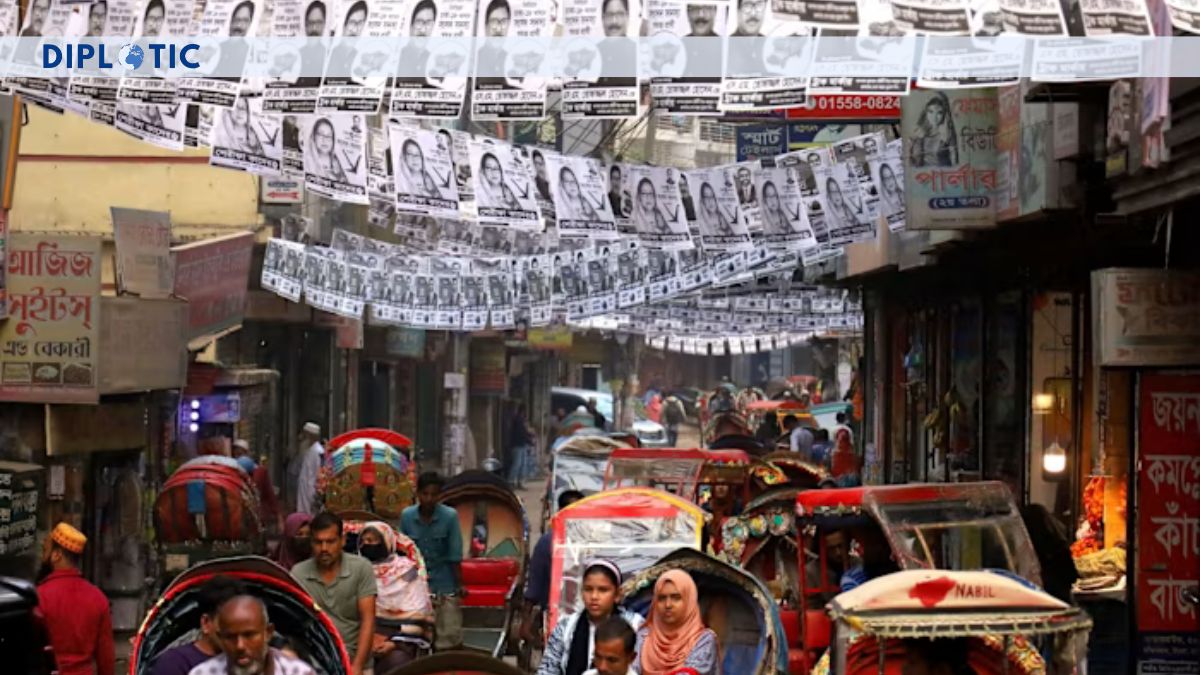
On 12 February 2026, Bangladesh will hold one of the most consequential elections in its modern history. With more than 127 million voters eligible, this election is framed as a return to democratic rule after intense political upheaval from the 2024 Monsoon Uprising to the fall of long-time Prime Minister Sheikh Hasina and the interim government led by Nobel laureate Muhammad Yunus.
The core question facing Bangladeshis policymakers, civil society, youth and voters alike is: “Which version of democracy will prevail?” Will this election inaugurate a competitive pluralist democracy, a dominant-party or hegemonic model, or a more restricted, managed democracy that lacks legitimacy and inclusion?
The Election: A Historic But Contested Democratic Test
The upcoming vote is widely characterised by analysts as a stress test for Bangladesh’s democratic system. After years of political polarization, deep institutional distrust, and questions over constitutional legitimacy, the election’s legitimacy will depend not just on the act of voting — but on whether the process is seen as free, fair, inclusive, and credible.
Even proponents of the election acknowledge its pivotal role: many view it as a chance to restore representative governance after months of interim rule and unrest.
But this election differs dramatically from previous cycles due to major structural and political shifts:
The Awami League, Bangladesh’s historically dominant party under Hasina, is effectively banned from the contest.
The BNP (Bangladesh Nationalist Party) is widely seen as a frontrunner, with leadership returning from exile and contesting most seats.
New coalitions — including those involving Jamaat-e-Islami and youth-driven parties — are burgeoning, reshaping party dynamics.
These structural discontinuities raise fundamental questions about inclusivity, voter choice, and representation — core pillars of substantive democracy.
Competing Democratic Visions
Competitive Pluralist Democracy: Aspirations vs Reality
Competitive pluralist democracy represents the ideal Western-style model: multiple parties, meaningful opposition, independent institutions, and strong civil liberties. In this vision:
Voters freely choose among diverse parties.
Judicial and electoral institutions act independently.
Civil society and media play robust roles in shaping public debate.
Many—especially young voters who helped mobilise against authoritarian tendencies — want this form of democracy. According to Al Jazeera, Around 44 % of voters are Gen Z, many of whom have never participated in a genuinely competitive election.
For this version to prevail, the election must be inclusive — not just in balloting numbers, but in allowing all major political currents to contest and civil liberties to flourish.
But the practical roadblocks are significant:
According to The Business Standard, allegations of institutional weakness — particularly regarding the Election Commission — have raised fears about administrative fairness.
Digital manipulation and misinformation campaigns are cited as threats to participatory politics.
Some citizens argue the current election is structurally one-sided because large segments of voters feel their choices are limited.
These factors make it unclear whether pluralist democracy — with genuine competition and checks on power — can be fully realised.
Managed or Restricted Democracy: Stability First
An alternative vision is a managed democracy: elections occur regularly, but real political competition is constrained, and power remains concentrated among elites or controlled coalitions. In this model, institutional reforms may be touted, but opposition space, media freedom and civil liberties are limited.
Proponents of this view argue that stability and order matter, especially amid violence and polarisation. However, critics insist that managed democracy often amounts to procedural rather than substantive democracy, where elections exist but lack genuine competition or accountability.
Institutional legitimacy — especially for the Judicial branch and election machinery — is central. Reports highlight concerns about weak institutional safeguards, which could tilt outcomes and undermine broader democratic trust.
Dominant-Party Hegemony: A Return to One-Party Rule?
With the Awami League’s exclusion and the BNP’s rise, some analysts warn of the potential emergence of a dominant party system — where one political coalition controls state institutions with minimal effective opposition.
While not formally authoritarian, such systems often limit opposition influence, weaken checks and balances, and produce governance that is procedural rather than participatory.
This version could prevail if:
Opposition is subdued after the election.
Legislative power consolidates around one bloc.
Institutional autonomy (judiciary, media, civil liberties) is compromised.
Many across political and civil society spectrums caution that excluding large political communities from genuine competition undermines legitimacy and may sow resentment rather than stability.
Beyond Ballots: Institutions, Inclusion, and Trust
A central lesson from democratic theory and from Bangladesh’s own political experience is that elections alone do not guarantee democracy. Core democratic outcomes require:
Independent institutions that enforce rules impartially.
Political inclusion so citizens of all identities feel represented.
Civil liberties including media freedom, assembly rights, and information access.
Public trust confidence that votes translate to real outcomes.
Without these, even well-organised elections can produce democratic backsliding or sectarian divides.
Conclusion: The Precarious Balance
So, which version of democracy will prevail in Bangladesh?
The election could either:
Catalyze a genuine democratic renewal, with inclusive participation and institutional strengthening; or
Produce a constrained democratic model, offering stability but limited political pluralism and weak checks on power.
The outcome will hinge on not just the vote count, but post-election governance choices, institutional independence, civil liberties protection, and how citizens especially youth engage beyond election day.
For Bangladesh, democracy’s future is not predetermined by a single election but this election will shape whether democratic aspirations become lived reality, or whether democratic practice remains electoral but hollow.




