

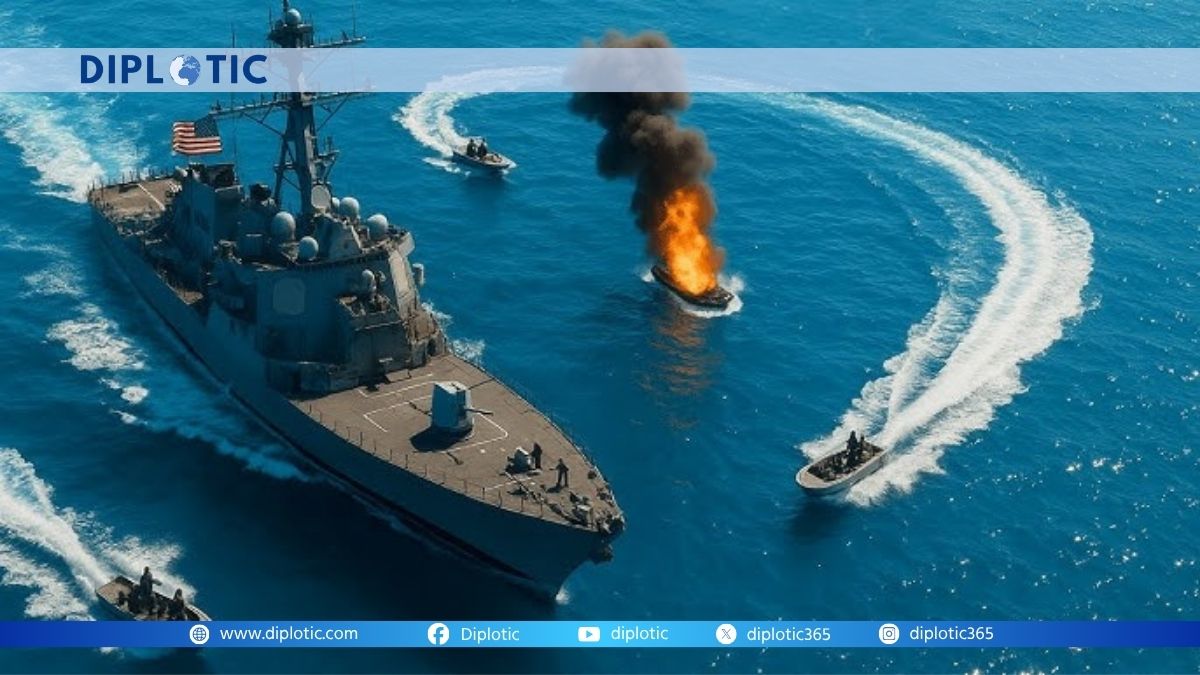
The recent US military strike on a drug-smuggling vessel near Venezuela’s coast marks a significant escalation in Washington’s war on narcotics trafficking and a strategic move reshaping the regional security dynamic in the Caribbean. Authorized by President Donald Trump, this targeted strike off Venezuelan waters, part of a series of lethal interdictions since September 2025, underscores a bold US campaign against what it designates “narco-terrorist” organizations. This operation not only disrupts illicit narcotics routes but also intensifies geopolitical tensions, raising critical questions about international law, regional stability, and the future of US-Latin America relations.
Precision Military Action in the Caribbean Waters
On October 16, 2025, US forces launched a precision strike on a suspected drug-smuggling speedboat, reportedly linked to Venezuela’s Tren de Aragua cartel. This latest operation resulted in several fatalities and survivors rescued by helicopter, evidencing the lethality and complexity of US naval interdiction efforts in the region. The Pentagon, though reticent on operational details, affirmed the strike occurred in international waters and framed it as a necessary self-defense measure against escalating narcotics trafficking threatening US security.
Over the past two months, at least five such strikes have targeted vessels suspected of transporting narcotics across the Caribbean, killing 27 alleged traffickers in total. President Trump has openly touted these strikes as a critical front in combating “narcoterrorism,” characterizing the deployed US Navy warships, fighter jets, and special forces as instrumental in dismantling sophisticated drug corridors.
Impact on Regional Security and Drug Trafficking Networks
The US campaign represents a paradigm shift in the battle against drug smuggling, utilizing military force with unprecedented lethality in a peacetime maritime law enforcement context. By targeting vessels originating from strategic Venezuelan coastal points such as San Juan de Unare, the US aims to fracture the operational capabilities of powerful cartels entrenched in the region.
This aggressive posture disrupts not only the physical drug transportation chains but also the economic foundations sustaining narcoterrorist groups. The destruction of vessels, seizure of narcotics, and removal of cartel operatives degrade trafficking networks and impose elevated risks on illicit operations. However, this strategy may pivot traffickers to more covert and diversified routes, including land-based smuggling, complicating interdiction efforts.
Security experts warn that the military nature of these strikes introduces heightened risks of escalation and potential civilian casualties, intensifying pressure on regional actors to bolster maritime surveillance and multilateral cooperation. The ongoing US naval buildup in the Caribbean, including guided missile destroyers and a nuclear submarine deployment, signals long-term commitment but also heightens tensions with neighboring countries wary of US military presence.
Legal and Diplomatic Controversies
The strikes have ignited intense debate over their legality under international law and sovereignty norms. While the US claims authorization under self-defense against non-state actors threatening national security, critics challenge the absence of clear evidence of narcotics on the targeted vessels and question the extrajudicial nature of these military actions far from declared war zones.
Venezuela’s government vehemently condemns the strikes as violations of its territorial integrity and unlawful assassinations, framing them as provocations aimed at destabilizing President Nicolás Maduro’s regime. Several Latin American countries and legal experts have called for investigations and adherence to maritime and international humanitarian law to prevent unchecked US military interventions.
The diplomatic fallout further complicates US-Venezuela relations already strained by sanctions and mutual antagonism. Mexico, Colombia, and Caribbean nations have expressed concern about regional security spillovers and urged dialogue to prevent escalation while supporting coordinated drug-fighting efforts.
Broader Geopolitical and Strategic Relevance
Strategically, the US strikes in the Caribbean integrate into a broader push to assert hegemonic control over critical narcotics transit routes connecting Latin America to North America and Europe. By aggressively targeting drug-smuggling vessels, the US aims to choke financing sources for criminal and insurgent groups destabilizing both hemispheres.
These actions intersect with wider US policy objectives under President Trump’s administration, which has expanded CIA covert operations in Venezuela and bolstered naval deployments to counter narco-terror networks. The campaign showcases a blend of conventional military power projection and unconventional counter-narcotics tactics, setting a precedent for future security operations in contested littoral zones.
Prospects for Regional Cooperation and Conflict Mitigation
Looking ahead, sustained US military actions demand heightened multilateral coordination among Caribbean and Latin American states to address narcotics trafficking comprehensively. Enhancing intelligence sharing, maritime patrol cooperation, and legal frameworks supporting interdictions will be essential to amplify effectiveness while minimizing diplomatic frictions.
Moreover, balancing assertive counter-narcotics measures with respect for sovereignty and international norms is critical to avoid escalating conflicts. Regional security dialogues facilitated by intergovernmental organizations such as the Organization of American States (OAS) and Caribbean Community (CARICOM) could foster collaborative, rules-based approaches that bolster stability.
Humanitarian and development initiatives addressing the socioeconomic root causes of drug trafficking, such as poverty, corruption, and weak governance, must also accompany interdiction efforts to deliver sustainable outcomes.




