
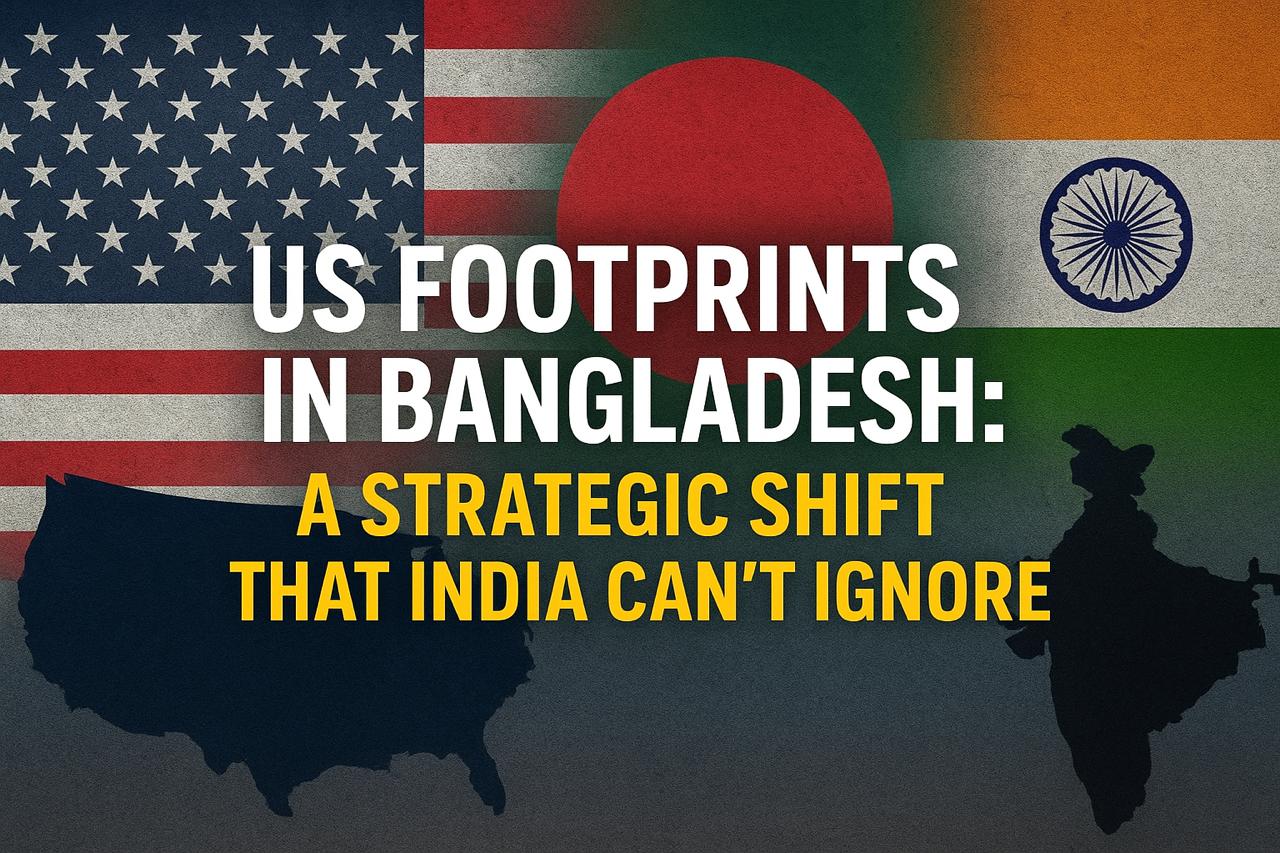
Picture this: Washington’s diplomats landing in Dhaka, military officials discussing security deals, and trade envoys talking big numbers. It’s not just business it’s strategy. For India, which has always considered Bangladesh a close neighbor under its wing, US’s growing interest sounds like a knock at the door. Should New Delhi smile, welcome it, or quietly worry about what’s coming next?
The Changing Face of South Asia
South Asia has always been a stage for power struggles during the Cold War or today’s multipolar world. Yet something new is happening. Bangladesh, once dismissed as a struggling nation, has turned into a rising star. Its economy is booming, its factories dress the world, and its ports sit at a crossroads between South and Southeast Asia.
The world is noticing. China already poured billions into bridges, highways, and ports. Now the US is stepping in too. For India, the question is unavoidable: how does this reshape the neighborhood?
Bangladesh: From Underdog to Key Player
For many years, Bangladesh was only famous in stories of floods and poverty. Today the story is different.
It is a very fast-growing economy in Asia.
Its strategic position positions it as a natural portal to the Bay of Bengal.
Politically, it is a bridge attached to India, moulded by China, and now courted by the US.
This shift means Bangladesh is no longer just a “smaller neighbor.” It is a stage where superpowers want a seat.
Why the US Is Knocking on Dhaka’s Door
America’s sudden warmth toward Bangladesh isn’t accidental.
- Indo-Pacific Strategy: To keep sea routes free and secure, Bangladesh matters.
- China Factor: With Beijing already deeply involved in Dhaka, the US doesn’t want to lag.
- Defense Ties: Washington is pushing for agreements that could give it closer military cooperation.
- Democracy Talk: The US often wraps its presence in the language of democracy and human rights, though many see this as a strategy more than charity.
In short, Washington wants Dhaka on its side not Beijing’s.
India’s Long Bond with Bangladesh
For India, Bangladesh is not just another country. Their bond is written in blood India helped Bangladesh win its independence in 1971.
Since then, New Delhi has poured effort into:
- Border security and anti-insurgency cooperation.
- Trade and transit links connecting India’s northeast.
- Deep cultural and people-to-people ties.
But Dhaka has choices now. China is a major investor. And with the US entering the picture, Bangladesh suddenly looks like the most popular kid on the block.
Should India Be Worried?
The honest answer: a little.
India and the US are partners in many ways, united against China’s rise. But America building its own footprint in Bangladesh feels different.
- Influence Concerns: India has long seen South Asia as its sphere of influence. A strong US presence shifts that balance.
- Security Questions: Defense pacts between Dhaka and Washington could unsettle New Delhi.
- The Triangle: With China already there, a US entry makes Bangladesh the point of a tense triangle, leaving India in a tough spot.
Bangladesh Plays the Balancing Game
One thing is clear: Bangladesh is not a pawn it’s playing its own game.
- With China, it takes money and infrastructure but avoids being trapped.
- India, nurtures security and cultural ties.
- The US, welcomes trade, defense talks, and global recognition.
This careful balancing act keeps everyone engaged but no one fully dominant.
A Silver Lining for India?
It’s not all bad news. Some Indian analysts argue that the US presence could actually help.
- Both India and the US want to check China’s power.
- If Washington pushes for stronger democratic institutions in Dhaka, that could bring stability that India benefits from.
- More US trade and investment in Bangladesh might even open new regional markets for India.
So instead of competition, India could choose partnership though it will always be watchful.
Looking Ahead
The road ahead will depend on three things:
- How far will the US and Bangladesh go in defense cooperation?
- How Dhaka balances ties with the “big three”—India, China, and the US.
- How flexible India is in adapting to the new reality.
Most likely, India will play it smart: keeping its friendship with Dhaka strong while ensuring America’s presence doesn’t sideline it.
Final Thoughts
Bangladesh has stepped into the global spotlight, and the world’s giants are circling. For the US, it’s about strategy. For China, it’s about influence. For India, it’s about history and neighborhood.
But the real story is Bangladesh itself. By carefully balancing, it proves that even a smaller nation can shape the destiny of a region. For India, the lesson is simple: influence isn’t inherited, it’s earned every single day, through trust and respect.




