

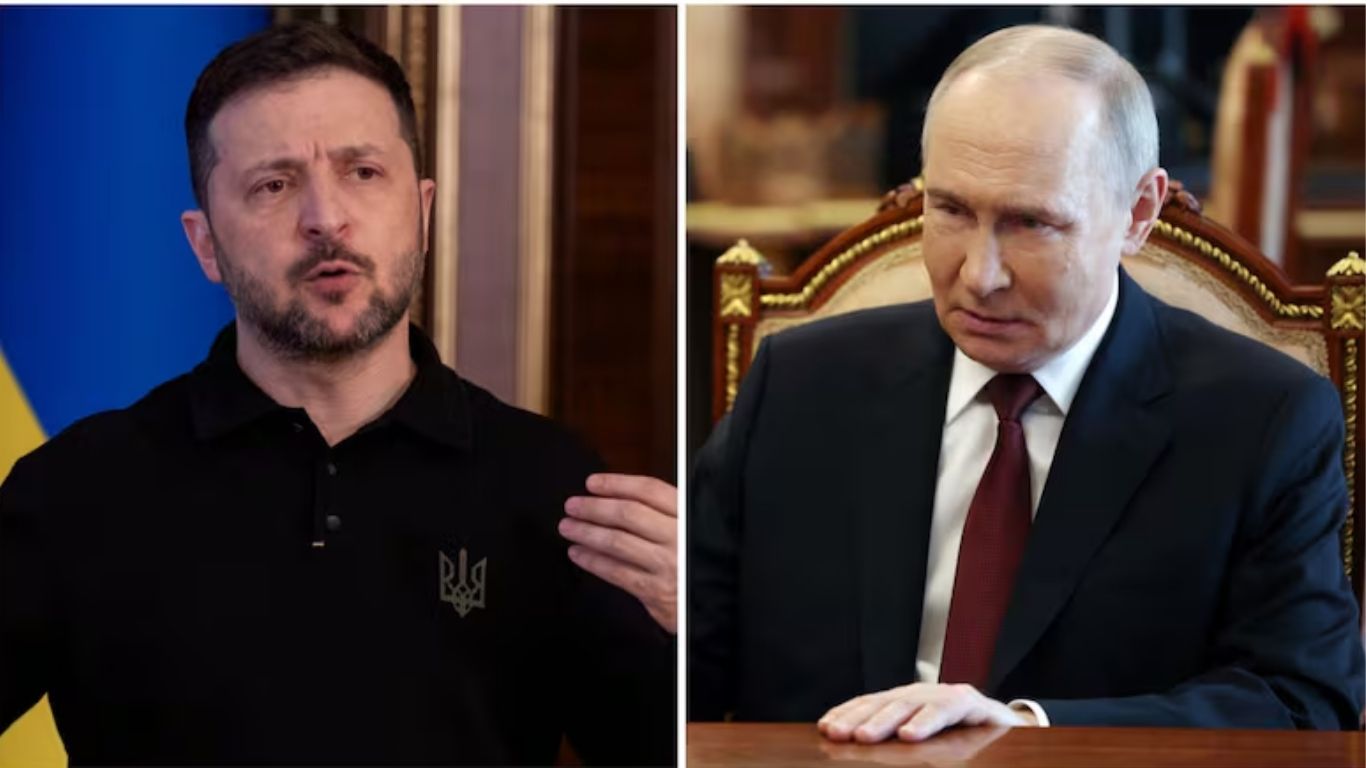
February 24, 2026, marks four years since Russia launched its full-scale invasion of Ukraine. What began as a rapid military operation has become one of the longest and most destructive conflicts in modern Europe, with hundreds of thousands of casualties, millions displaced, and entire cities reduced to rubble. In that time, Ukraine has transformed its international position from a country fighting for survival to one actively pursuing membership in the European Union. President Volodymyr Zelenskyy has made EU accession a central goal, framing it as the ultimate guarantee of security and the clearest break from Russia’s sphere of influence. Yet the path remains long, complicated by war damage, internal reforms, and the shifting calculations of EU capitals. At the same time, the battlefield situation has settled into a grinding war of attrition, with neither side able to deliver a decisive blow. This milestone anniversary invites a closer look at where Ukraine stands today: closer to Europe than ever before, or still locked in a conflict that could stretch for years? The interplay between EU ambitions and the realities of war will likely define the country’s trajectory—and Europe’s security—for the rest of the decade.
How Has Ukraine’s EU Bid Evolved Since the Invasion Began?
Ukraine formally applied for EU membership on February 28, 2022, just four days after the invasion started. The speed of the application reflected both urgency and strategy: Kyiv wanted to lock in Western support by tying its future to the European project. The European Commission delivered its opinion in June 2022, granting candidate status that December. This was a historic step—faster than any previous applicant—and sent a clear political signal of solidarity.
By early 2026, Ukraine has opened formal accession negotiations. Several negotiating clusters have been launched, covering fundamentals such as the rule of law, public procurement, and external relations. Progress has been made on aligning legislation in areas like energy, transport, and digital markets. The government has passed important reforms, including judicial changes, anti-corruption measures, and de-oligarchization laws. These steps address long-standing EU concerns about governance and transparency.
Yet the process is far from complete. Accession typically takes eight to ten years even in peacetime; Croatia, the last country to join, needed almost a decade after candidate status. Ukraine faces unique obstacles: much of its territory remains occupied or damaged, making full implementation of the acquis communautaire impossible in some regions. Economic reconstruction costs are estimated in the hundreds of billions of dollars. Corruption perceptions have improved but remain a concern for some member states. Several EU countries—particularly Hungary—have expressed reservations about moving too quickly while the war continues.
Parallel to the formal track, Ukraine has received substantial practical integration. It joined the EU’s single energy market, participates in the roaming-free zone, and has aligned with many foreign-policy decisions. These steps create a de facto integration that goes beyond legal status. The war has also changed the political calculus inside the EU: the bloc now sees Ukraine’s membership as part of its own security architecture, a way to anchor the country firmly in the West.
What Progress Has Been Made on the Battlefield After Four Years?
The front line has moved far less in the past two years than in the first two. After Ukraine’s successful counter-offensives in Kharkiv and Kherson in late 2022, and Russia’s partial mobilization, the conflict settled into positional warfare. By 2026, Russia controls roughly 18–20% of Ukraine’s territory, including Crimea and large parts of Donetsk, Luhansk, Zaporizhzhia, and Kherson oblasts. Ukraine has held most of its ground and inflicted heavy losses, but it has not retaken significant territory since 2022.
Both sides face manpower and equipment constraints. Russia relies on large-scale recruitment, foreign fighters, and steady industrial output, particularly in artillery shells and drones. Ukraine depends on Western aid for advanced weapons, air defense, and long-range systems. The arrival of F-16 fighters, ATACMS missiles, and Storm Shadow/SCALP systems has improved Ukraine’s capabilities, but not enough to break the stalemate. Russia’s fortified lines, minefields, and drone swarms have made large-scale offensives extremely costly.
Diplomatically, the past year has seen little movement toward negotiations. Both sides maintain maximalist positions: Ukraine insists on full withdrawal to the 1991 borders, while Russia demands recognition of its claimed territories. Ceasefire talks remain stalled, with neither side willing to accept terms that look like defeat. External players—particularly the United States and European Union—continue to provide support but face growing domestic debates about the cost and duration of aid.
How Do Global Powers View Ukraine’s EU Path and the Ongoing War?
The European Union remains the strongest backer of Ukraine’s membership bid. Most member states support eventual accession, seeing it as a strategic necessity. Poland, the Baltics, and Nordic countries push hardest, while Germany, France, and Italy favor a gradual approach tied to reforms and peace progress. Hungary remains the main holdout, often using its veto power to slow decisions.
The United States has been more cautious on EU membership—viewing it as a European process—but has strongly supported Ukraine’s NATO aspirations as a long-term security guarantee. The Biden administration’s successor has maintained aid levels while emphasizing burden-sharing with Europe. NATO has deepened cooperation through the Ukraine–NATO Council and pledged irreversible steps toward membership, though full entry remains distant while war continues.
Russia views both EU and NATO tracks as existential threats. Moscow frames Ukraine’s Western integration as the root cause of the conflict and insists on neutrality as a precondition for any settlement. China has stayed formally neutral but has provided economic and diplomatic cover for Russia, while avoiding direct military involvement.
Other global players show mixed positions. India and Brazil call for negotiations without taking sides. African and Latin American countries often abstain in UN votes, prioritizing economic ties with both Russia and the West. The Global South’s reluctance to fully align against Russia complicates Ukraine’s diplomatic campaign.
What Does the Future Hold for Ukraine’s European Path and the War?
Four years on, Ukraine is closer to the European Union than at any point in its history, yet farther from ending the war than many hoped in 2022. EU accession remains a long process—likely measured in decades rather than years—but the war has compressed timelines and shifted political will. Practical integration is advancing faster than formal membership, creating a middle ground that strengthens Ukraine’s position even without a final treaty.
The battlefield outlook remains grim but stable. Neither side can force a decisive victory without massive escalation, which both avoid. A negotiated end appears distant, but frozen conflicts can last for years before talks become possible. Ukraine’s strategy now combines military resilience, economic reconstruction, and diplomatic pressure to keep Western support strong.
The anniversary serves as a reminder of both resilience and cost. Ukraine has preserved its statehood and won broad international legitimacy. It has also paid an enormous human and economic price. The EU path offers a long-term anchor, while the war continues to shape daily life and national identity. Whether the next four years bring closer integration, a negotiated pause, or further attrition will depend on battlefield developments, Western unity, and Ukraine’s own reform efforts. For now, the country fights on two fronts: one for territory, the other for a European future. The outcome of both will determine not just Ukraine’s place in Europe, but the continent’s security architecture for decades to come.




