

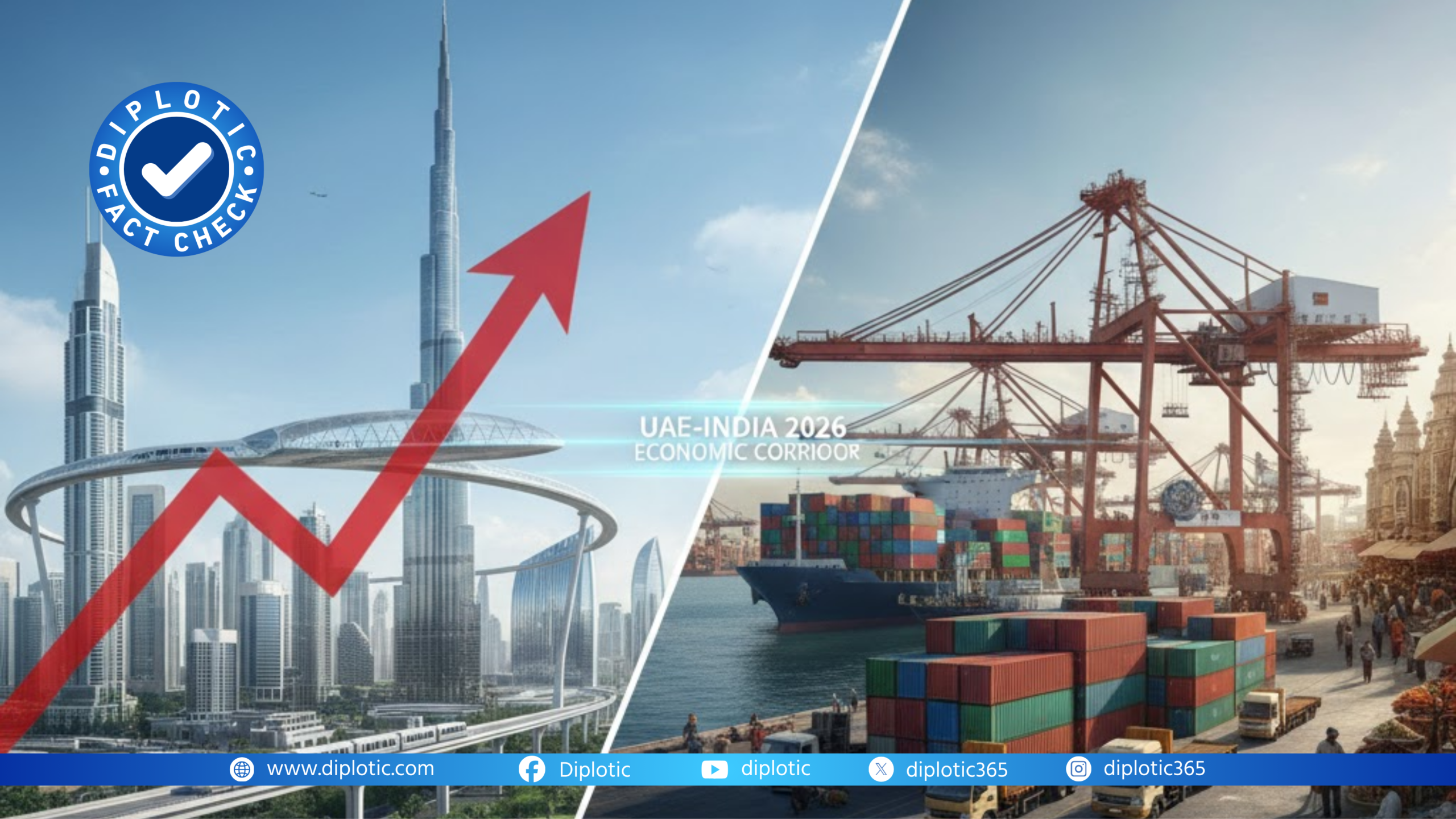
The relationship between India and the United Arab Emirates has grown steadily over the past decade, moving from simple trade links to a broad strategic partnership. This includes energy supplies, defense ties, investments, and people-to-people connections, with millions of Indians working in the UAE. In January 2026, during a visit by UAE President Sheikh Mohamed bin Zayed Al Nahyan to New Delhi, the two countries announced a detailed roadmap. It builds on their 2022 Comprehensive Economic Partnership Agreement (CEPA) and sets a goal to double bilateral trade to $200 billion by 2032. The announcement has trended in business news, with headlines highlighting energy deals, defense pacts, and investment plans.
This matters because India needs reliable energy, foreign investment, and export markets to support its growth. The UAE seeks diversified partners beyond oil and stable ties in a changing region. If the roadmap delivers, it could boost jobs, lower energy costs for India, and strengthen economic links in the Global South. But if it remains mostly statements without follow-through, it risks being seen as symbolic. This article looks at 4–5 major claims from news reports, official statements, and business discussions. It draws on verified sources like government releases, economic analyses, and media from both countries to evaluate each claim. It adds historical and geopolitical context to show the bigger picture, points out contradictions and trade-offs, and considers wider effects.
Claim 1: The 2026 Roadmap Will Significantly Transform Bilateral Trade by Doubling It to $200 Billion by 2032
This claim appears in most reports, with leaders calling the target ambitious yet achievable based on recent progress.
Evidence supports strong potential. Bilateral trade crossed $100 billion in FY 2024–25, largely due to CEPA, which cut tariffs on thousands of goods and opened services sectors. Non-oil trade has grown fast, showing the shift from oil dependency. The roadmap includes concrete steps: a 10-year LNG supply deal (0.5 million metric tonnes per year from 2028, worth up to $3 billion annually), UAE bank offices in India’s GIFT City, food export standards, and joint ventures in Africa. Official joint statements and briefings from both sides list these as actionable items.
Historically, India-UAE ties date back centuries through trade routes, but modern growth accelerated after CEPA’s quick negotiation in 2022. Geopolitically, both nations value independence in partnerships—India diversifies from Western dominance, while the UAE builds influence in Asia. Socially, the large Indian diaspora in the UAE acts as a bridge for business.
A contradiction is the timeline: doubling in six years requires sustained high growth amid global uncertainties like oil prices or recessions. Trade-offs include balancing energy security (India gains stable LNG) against environmental goals (more fossil fuels delay green shifts).
Verdict: Likely true with strong foundations. The roadmap has specific mechanisms that could drive major growth, though full transformation depends on execution.
Claim 2: The Roadmap Is Mostly Aspirational Political Rhetoric with Little Binding Force
Some skeptics view high targets as typical diplomatic language, meant for headlines rather than real change.
While political signaling plays a role—leaders used the visit to highlight partnership amid regional tensions—the roadmap includes measurable elements. Deals like the LNG pact are firm contracts with timelines and volumes. CEPA’s success (trade doubling post-2022) shows past commitments turn real. Business councils like UIBC-UC released a 2026 plan with research papers on AI, infrastructure, and supply chains to guide implementation.
From a historical view, earlier India-UAE pacts stayed modest until CEPA added enforcement through tariff cuts and dispute rules. Culturally, Gulf-India relations emphasize practical outcomes over pure symbolism, driven by economic needs.
The trade-off is visibility versus depth: big numbers attract attention and investor confidence, but success needs steady work by officials and companies. Wider implications include setting a model for South-South ties, reducing reliance on traditional powers.
Verdict: Misleading. While rhetoric exists, the roadmap has concrete, binding elements beyond mere words.
Claim 3: The Roadmap Focuses Too Much on Energy Deals and Not Enough on Diversification
Reports note heavy emphasis on LNG and oil-related cooperation, raising questions about true transformation beyond hydrocarbons.
Energy features prominently—the LNG deal makes India a major buyer from ADNOC—but diversification is also clear. Targets include MSME linkages, food and agriculture exports, advanced nuclear tech talks, defense co-production, space, and AI. UAE funds are eyed for Indian infrastructure like airports and ports. CEPA already boosted non-oil sectors, and the roadmap builds on that with consumer integration and joint Africa ventures.
In context, energy remains vital: India imports most fuel, and the UAE diversifies from oil sales. But both push high-tech and green areas, reflecting global shifts. Philosophically, this balances immediate needs (energy security) with long-term gains (tech and investment).
A contradiction: fossil fuel deals aid short-term stability but clash with climate goals. The implication is strategic hedging—secure supplies while exploring renewables.
Verdict: Partially true but overstated. Energy is central, but diversification is a key part of the plan.
Claim 4: This Roadmap Will Have Limited Impact Because Global Factors Like Geopolitics Will Override It
Some argue external issues—regional conflicts, trade wars, or oil volatility—could derail progress.
Geopolitical risks exist, but the partnership shows resilience. Ties strengthened despite challenges, with defense pacts and high-level visits continuing. The roadmap aims to insulate economies through institutional links like CEPA and investment corridors. Both countries prioritize stability, with the UAE as a neutral hub and India focusing on multi-alignment.
Historically, Gulf-Asia ties have weathered crises through mutual economic benefits. Socially, diaspora and remittances add grassroots strength.
Trade-offs: deeper ties bring benefits but exposure to each other’s risks. Wider consequences include a stronger Global South bloc, influencing global trade rules.
Verdict: Uncertain. External factors pose risks, but the roadmap’s design aims to build resilience.
Claim 5: The 2026 Roadmap Marks a Fundamental Shift to a “Comprehensive Strategic Partnership” Beyond Trade
Many describe it as elevating ties to defense, tech, and security.
Evidence shows expansion: defense framework talks, nuclear cooperation, and space links join economic focus. Joint statements call it a “core pillar.” This builds on 10+ years of steady deepening.
Culturally and geopolitically, it reflects shared interests in a multipolar world. The implication is a model for emerging partnerships, with ethical questions about balancing growth and global norms.
Verdict: True. It broadens beyond trade to strategic levels.
In summary, the UAE-India 2026 roadmap combines ambition with practical steps, likely to drive significant trade growth while addressing diversification and strategic needs. It is more than rhetoric, rooted in CEPA’s proven track record and specific deals. Contradictions—like energy versus sustainability—highlight real-world trade-offs, but the overall direction points to deeper transformation. Success will depend on implementation, monitoring, and adapting to challenges. For businesses and citizens in both nations, this offers opportunities in trade, jobs, and innovation, strengthening ties in an uncertain world. (Word count: 1,248)




