

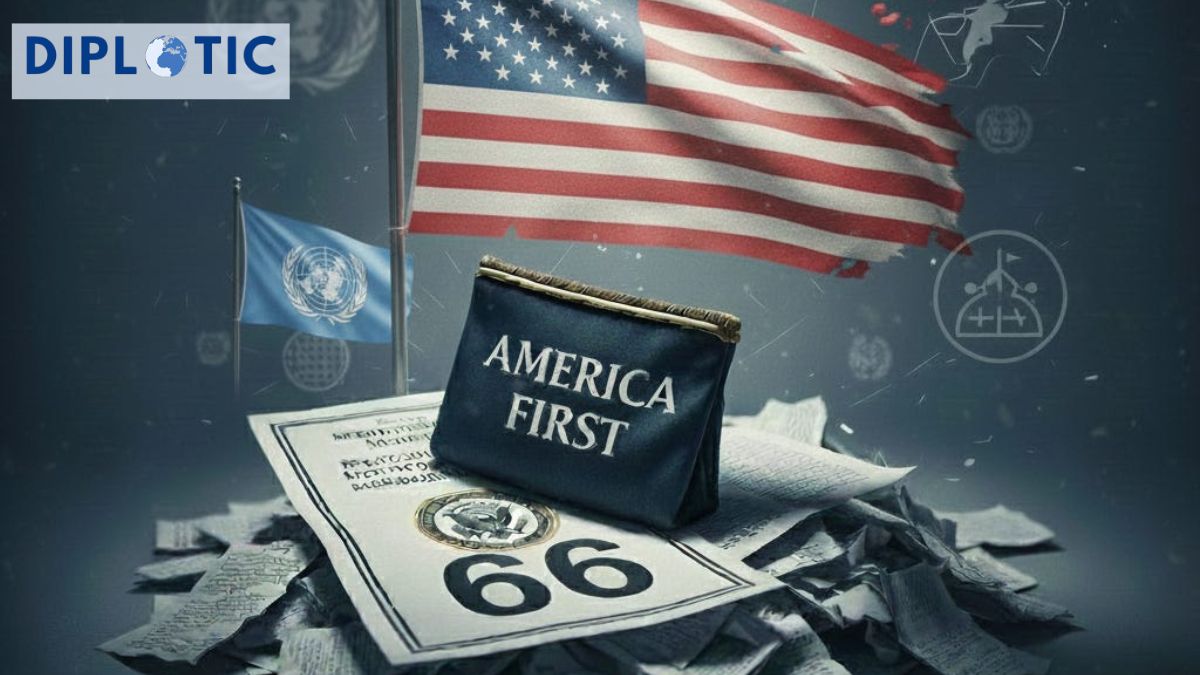
The U.S. has announced its withdrawal from 66 international organizations, marking a dramatic retreat from multilateral diplomacy and reshaping global cooperation. This diplomatic analysis explores the motivations, legal implications, international reactions, and the future of global governance.
In one of the most significant foreign policy realignments in recent decades, the United States has formally announced its intent to withdraw from 66 international organizations, including 31 entities associated with the United Nations and 35 non-UN intergovernmental bodies. This sweeping move reflects a decisive shift in U.S. diplomatic strategy toward an America-First framework, emphasizing sovereignty, national interests, and fiscal restraint over multilateral engagement.
The decision, signed into effect via a presidential memorandum, signals a fundamental rethinking of how Washington perceives global cooperation, prioritizing unilateral influence and bilateral leverage over traditional multilateralism. This article provides a detailed examination of the legal rationale, strategic motivations, geopolitical implications, and international reactions that surround this bold geopolitical recalibration.
The Official Rationale: National Interests and Sovereignty
According to the White House fact sheet, the United States government justified the withdrawals on the basis that continued participation was “contrary to U.S. national interests, security, economic prosperity, or sovereignty.” The executive directive requires all relevant agencies to cease funding and involvement in organizations deemed redundant, inefficient, or framed around agendas that conflict with American priorities.
The emphasis on reducing the foreign aid burden, safeguarding taxpayer resources, and eliminating support for global “bureaucratic structures” that Washington views as unaccountable reinforces an ideological shift toward unilateral diplomatic action. Many of the organizations targeted focus on climate policy, gender equality, sustainable development, humanitarian assistance, and global governance domains that critics argue reflect changing domestic political priorities within the U.S. administration.
Key Organizations Affected
The withdrawal includes a wide array of influential global institutions:
United Nations Entities
UN Framework Convention on Climate Change (UNFCCC) – the foundational international climate pact underpinning agreements such as the Paris Climate Accord.
UN Population Fund (UNFPA) – a major global health and reproductive rights agency.
UN Women – focused on gender equality and women’s empowerment.
UN Human Settlements Programme (UN-HABITAT) – urban development and housing.
Non-UN Bodies
Intergovernmental Panel on Climate Change (IPCC) – the leading scientific authority on climate change.
International Solar Alliance – a cooperative climate and renewable energy initiative led by India and France.
Global Counterterrorism Forum and other security focused bodies.
Global Forum on Migration and Development – addressing global migration policy.
The breadth of this list highlights how deep the U.S. withdrawal extends — impacting environmental governance, gender and health programs, as well as specialized scientific agencies and policy forums.
Diplomatic and Geopolitical Implications
A Retreat from Global Leadership?
Experts argue the scale of withdrawal represents a retreat from global diplomatic leadership, with potential long-term repercussions for American influence on issues like climate change, health crises, humanitarian response, and economic cooperation. Critics contend that Washington’s exit from pivotal climate frameworks like the UNFCCC and IPCC undermines international coordination efforts needed to tackle shared global challenges.
By stepping away from these bodies, the United States risks ceding influence to rival powers, particularly China, which continues to invest heavily in multilateral institutions and allied development platforms. Some analysts note that this shift could accelerate China’s soft power expansion, especially in regions historically influenced by American diplomatic engagement.
International Legal Considerations
The legal mechanisms for withdrawal vary by organization and treaty. Some, like the UNFCCC, require formal notice periods and procedural steps under international law before membership can fully cease. Entities such as the Pacific Regional Environment Programme (SPREP) have already urged Washington to adhere to formal processes to ensure compliance with organizational statutes.
The legal intricacies raise questions about the timeline for effective withdrawal and the potential for litigation or diplomatic disputes if timelines and procedures are contested by remaining member states.
Domestic Politics and Strategic Vision
From a domestic perspective, this policy aligns with a broader political strategy favoring sovereignty, economic prioritization, and nationalism. Supporters argue it protects American taxpayers from funding what they consider ineffective or ideologically driven international agendas. Secretary of State Marco Rubio echoed this sentiment, describing the targeted organizations as “anti-American, useless, or wasteful.”
However, critics argue that this approach risks isolating the U.S. at a time when global cooperation is critical in confronting interconnected issues such as climate change, pandemics, economic instability, and transnational security threats.
Global Reaction: Praise, Concern, and Strategic Realignment
International reaction has been mixed. Some nations have voiced concern that U.S. withdrawal from climate and development platforms could hinder global progress on shared priorities such as greenhouse gas reduction and sustainable development. European climate leaders, in particular, have framed U.S. disengagement from the UNFCCC as a setback for collective environmental action.
Human rights and civil society organizations have also condemned the move, characterizing it as damaging to the framework of international cooperation established after World War II to promote peace, equity, and shared prosperity. Others suggest this reorientation reflects broader ideological realignment in U.S. foreign policy that prioritizes bilateral strategic arrangements over multilateral consensus.
The Future of U.S. Diplomatic Engagement
While the withdrawal is now underway, the long-term effects will continue to unfold over years. The United States retains the ability to negotiate new agreements or rejoin international frameworks under future administrations or revised terms. But for now, this shift signifies a dramatic departure from decades of active involvement in global governance.
Scholars and policymakers will be watching to see whether this policy strengthens U.S. autonomy or inadvertently diminishes its global sway. The strategic choice to step back from institutions that tackle climate science, humanitarian aid, population health, and global standards reflects a wider reconsideration of America’s role on the world stage.
Conclusion: A Diplomatic Turning Point with Global Consequences
The U.S. decision to withdraw from 66 international organizations is a watershed moment in contemporary diplomacy. Rooted in claims of national interest and sovereignty, this reform signals a deliberate pivot away from multilateralism and toward more autonomous international engagement.
Whether this strategy ultimately enhances U.S. global leadership or accelerates geopolitical fragmentation remains to be seen. What is clear, however, is that this recalibration will have profound implications for international cooperation, climate action, economic policy, and global governance for years to come.




