

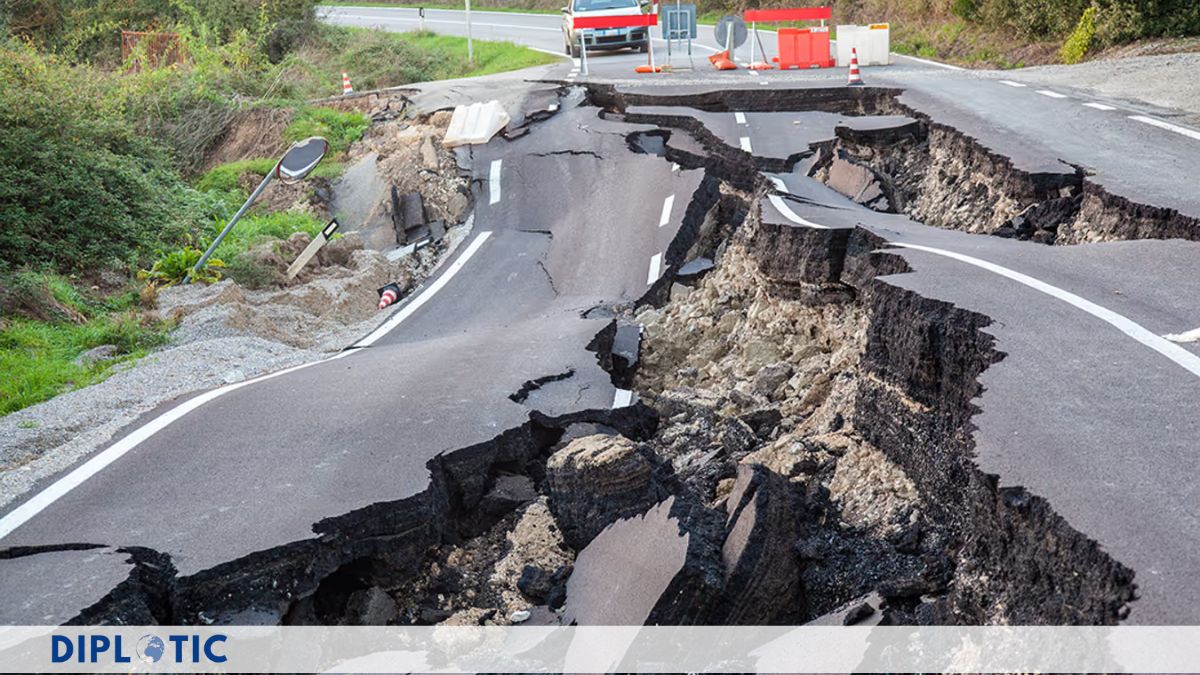
Türkiye’s landscape is as restless as a cat on a hot tin roof, shaking with quakes that range from minor tremors to catastrophic jolts. In 2022 alone, the country recorded over 20,277 earthquakes, and 2023 brought a devastating 7.8-magnitude disaster that killed over 53,000 people. Just this week, on August 10, 2025, a 6.1-magnitude quake rattled Balıkesir, collapsing buildings and sending shockwaves to Istanbul. Why does Türkiye seem cursed by seismic chaos? It’s not fate—it’s geology. Sitting at the crossroads of tectonic plates, Türkiye is a seismic bullseye, with fault lines that make earthquakes not just likely but inevitable. Let’s dig into the rocks, fault lines, and human factors that keep Türkiye trembling, and why this matters for its future.
Tectonic Trouble: A Plate Sandwich
Türkiye’s seismic woes start with its precarious perch on the Anatolian Plate, squeezed between the Eurasian, African, and Arabian plates, with the Aegean Sea Plate adding extra spice in the west. Think of it as a geological sandwich where the bread’s constantly shifting. The North Anatolian Fault (NAF), a 1,500-kilometer-long strike-slip fault, slices across northern Türkiye, while the East Anatolian Fault (EAF) carves through the southeast. These faults are like cracks in a stressed-out windshield—when pressure builds and snaps, the ground shakes.
The NAF, running from east to west, is particularly nasty, responsible for major quakes like the 1999 İzmit disaster (7.4 magnitude, 17,000+ deaths) and the 1668 North Anatolian quake (8.0 magnitude, 650 km of fault rupture). The EAF, meeting the Arabian Plate, fueled the 2023 Kahramanmaraş quake that flattened 1,718 buildings. The Arabian Plate’s northward push against the Anatolian Plate creates a “squeezing” effect, as geologist Alexander Stewart described, shoving Türkiye westward into the Aegean. This tectonic tug-of-war makes 95% of Türkiye’s land prone to quakes, with a third at high risk, including Istanbul and Izmir.
Fault Lines in Action: A History of Havoc
Türkiye’s earthquake rap sheet reads like a grim novel. The 1939 Erzincan quake (7.8 magnitude) killed over 30,000. The 1976 Çaldıran-Muradiye quake in Van claimed 4,000 lives. The 2011 Van quake (7.2 magnitude) took over 600. Fast-forward to April 2025, when a 6.2-magnitude quake hit the Marmara Sea, injuring 236 and damaging 378 buildings, with Istanbul bearing the brunt. The NAF’s Marmara Fault, creeping closer to Istanbul, still holds energy for a potential 7.4-magnitude hit, per GFZ seismologists.
Why so frequent? It’s the strike-slip nature of these faults—plates slide horizontally, building stress until they snap, unlike vertical shifts in other quake zones like the Pacific’s Ring of Fire. Shallow quakes, like the 2025 Marmara event at 10 km deep, amplify damage by releasing energy close to the surface. In 2022, Türkiye averaged 55 quakes daily, though most were minor, per Gazi University’s Bulent Ozmen. The big ones, though, keep coming.
Human Factors: Building Codes and Blind Spots
Geology sets the stage, but human choices amplify the tragedy. Many Turkish buildings don’t meet seismic standards, a point hammered home after the 2023 quake exposed shoddy construction. “Unsafe housing turns a natural hazard into a large-scale tragedy,” said ODI’s Sara Pantuliano in 2023. The 1999 İzmit quake revealed similar flaws, yet enforcement lags. In Balıkesir’s 2025 quake, a dozen buildings collapsed, trapping people in non-compliant structures.
Human activity also stirs the pot. Oil and gas extraction, plus large dam projects, can trigger quakes by altering crustal stress. While not the main driver, these add to Türkiye’s seismic burden. Urban sprawl in high-risk zones like Istanbul, near the NAF, courts disaster—16 million people live in a city expecting a major quake every 150-200 years.
Preparedness: Progress and Pitfalls
Türkiye’s not sitting idle. The Disaster and Emergency Management Presidency (AFAD) runs a nationwide early warning system, issuing alerts seconds after quakes hit. Strict building codes exist, and retrofitting programs target older structures. Regular drills train responders, and 2023’s international rescue efforts showed global solidarity, with 12,000 workers from 88 countries aiding recovery. But gaps persist. AFAD’s response to the 2023 quake was criticized as slow, leaving survivors waiting days. A 2025 X post lamented Türkiye’s failure to prep for even a “small” 6.2 quake, pointing to systemic issues.
Why It Matters: A Shaky Future
Türkiye’s in a seismic pressure cooker, with Istanbul, Elazığ, and Diyarbakır at particular risk due to their proximity to active faults. The NAF’s history suggests an 8.0-magnitude quake is the ceiling, but even smaller ones wreak havoc when buildings aren’t ready. Economic costs pile up—2023’s quake caused $103.6 billion in damages, per World Bank estimates. Socially, it’s a gut punch, with communities like Hatay still rebuilding from 2023’s devastation.
The fix? Double down on enforcement—building codes must be ironclad. Invest in early warning tech and public education. And maybe, just maybe, rethink urban planning in fault zones. Türkiye can’t move its plates, but it can brace for the inevitable. Until then, every tremor’s a reminder: the ground’s alive, and it’s not forgiving.




