

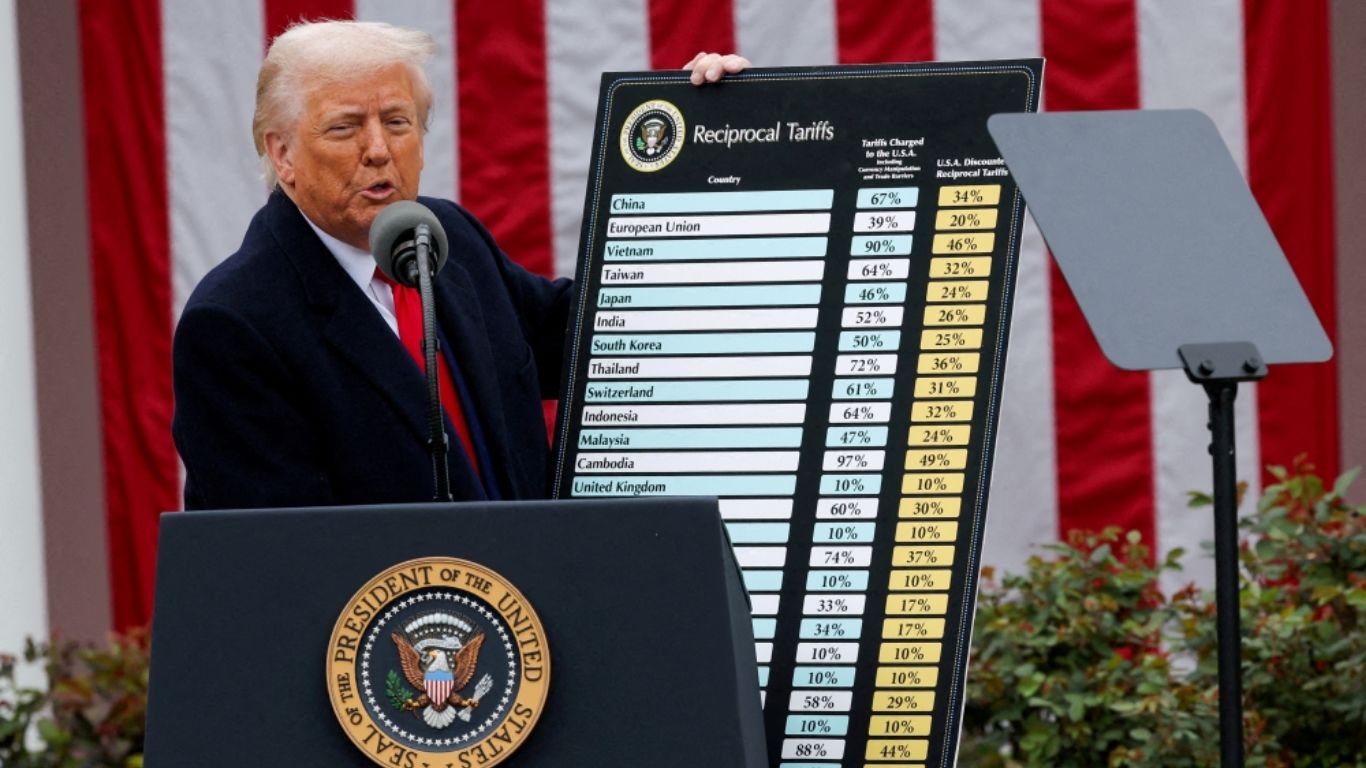
When President Donald Trump imposed sweeping tariffs through executive orders earlier this year — citing “economic emergency” and “national security” under the International Emergency Economic Powers Act (IEEPA) — he likely anticipated lawsuits. But he may not have anticipated the constitutional knife fight now headed toward the U.S. Supreme Court, one that could redefine the balance of power between Congress and the presidency in trade and foreign affairs.
Last week, the Federal Circuit Court of Appeals ruled 7–4 that tariffs are “a core Congressional power,” and that Trump’s maneuver under IEEPA exceeded presidential authority. Now, Trump has asked the Supreme Court to intervene — warning in its petition that the stakes could not be higher. Billions in collected tariffs hang in the balance, as do delicate trade negotiations with allies and adversaries alike.
The question before the Court is deceptively simple: Does the president have unilateral authority to impose sweeping tariffs under emergency powers, or is that power reserved to Congress under the Constitution’s Commerce Clause?
The Legal Backdrop: IEEPA vs. the Commerce Clause
At the heart of this fight is the International Emergency Economic Powers Act of 1977, passed after Watergate-era revelations that presidents had abused vague “national emergency” declarations. IEEPA gave the president significant latitude to restrict trade, freeze assets, or impose financial sanctions against foreign adversaries, but only in the face of “unusual and extraordinary threats” to U.S. national security or foreign policy.
Historically, presidents have used IEEPA to:
- Sanction Iranian banks during the 1979 hostage crisis.
- Freeze assets of terrorist groups post-9/11.
- Target Russian oligarchs following the invasion of Ukraine.
What no president had done — until Trump — was to invoke IEEPA to justify across-the-board tariffs against dozens of countries on the grounds of “economic imbalance.” The Federal Circuit called this a “dramatic misreading” of congressional intent.
The Constitution’s Commerce Clause (Article I, Section 8) vests Congress, not the president, with the power to “regulate commerce with foreign nations.” Courts have historically treated tariff imposition as legislative territory, with presidents enforcing laws Congress has already written.
If the Supreme Court sides with the appellate ruling, it could strike down not only Trump’s recent executive tariffs, but also future presidential attempts to bypass Congress in trade policy.
The Billions at Stake
According to the U.S. Treasury Department, Trump’s April tariffs — a 10% baseline levy plus reciprocal tariffs on over 90 nations — have already raised tens of billions of dollars in revenue. That money has largely flowed into general federal coffers, but small businesses say it came at their expense.
“These unlawful tariffs are inflicting serious harm on small businesses and jeopardizing their survival,”
— Jeffrey Schwab, Liberty Justice Center
The National Federation of Independent Business estimates that small manufacturers have absorbed a 6–12% rise in input costs since April, while retail importers report price spikes on consumer goods from electronics to clothing.
If the tariffs are struck down retroactively, the government may be forced to issue refunds — potentially in the hundreds of billions of dollars. Such an outcome would be politically explosive, benefiting importers and consumers but blowing a hole in short-term federal revenue.
The Global Trade Angle: Allies and Adversaries
Trump’s tariff gambit wasn’t just economic; it was geopolitical. His April orders targeted Canada, Mexico, and China — ostensibly for issues ranging from “drug importation” to “strategic competition.”
- Canada & Mexico: Tariffs clash directly with the USMCA trade agreement, undermining trust with America’s closest neighbors.
- China: Beijing has already filed a case at the World Trade Organization, arguing that the U.S. violated global trade rules.
- Europe: The EU has threatened retaliatory measures, warning against “emergency powers as a disguise for protectionism.”
If the Supreme Court rules against Trump, Washington may regain credibility with allies who saw the tariffs as unilateral overreach. If it rules for him, expect a wave of retaliatory tariffs and an even more fragmented global trade system.
Historical Parallels: Presidential Overreach in Trade
This isn’t the first time presidents have tested the boundaries of tariff authority.
- FDR (1930s–40s): Used emergency powers to restrict gold and foreign asset flows, but always with post-facto congressional ratification.
- Nixon (1971): Imposed a 10% import surcharge during the collapse of the Bretton Woods system — but only as a temporary measure, and quickly ratified by Congress.
- Trump (2018–19): Previously relied on Section 232 of the Trade Expansion Act of 1962 to impose steel and aluminum tariffs on “national security” grounds. Courts upheld those moves, but only narrowly.
What’s different now: Trump isn’t targeting specific industries; he’s attempting to weaponize IEEPA into a blanket tool for reshaping the global trade order.
Comparative Perspective: U.S. vs. Europe
Europe operates under a social-market economy model, where trade policy is explicitly centralized in the European Commission. Member states cannot unilaterally impose tariffs; the EU negotiates collectively, ensuring checks and balances.
The U.S. system is more fragmented, with Congress holding formal power but presidents exercising broad discretion under vague statutes. Trump’s IEEPA gambit shows the risk of that vagueness: one leader can upend decades of trade stability overnight.
By contrast, the EU’s model, while slower, creates predictability — a key ingredient for long-term investment. American businesses now face regulatory whiplash, unsure whether tariffs imposed today will survive the next court ruling.
The Road Ahead: What the Supreme Court Must Decide
The Supreme Court could rule in several ways:
- Affirm the Federal Circuit → Tariffs struck down, refunds issued, Congress reasserts dominance in trade.
- Reverse the Federal Circuit → Trump (and future presidents) gain sweeping new authority to impose tariffs under IEEPA.
- Split-the-difference → Court narrows presidential authority, but allows some tariffs under narrowly defined conditions (e.g., drugs and national security).
Given the Court’s current conservative majority, Trump may believe he has the upper hand. Yet even some conservative justices, like Neil Gorsuch, have expressed skepticism toward broad emergency powers, warning that they create an “imperial presidency.”
The Bottom Line
This case is more than a legal battle over tariffs. It is a constitutional test of presidential power in economic policy, one that could reshape America’s global role for decades.
If Trump wins, the White House will gain the tools to weaponize trade in unprecedented ways, bypassing Congress entirely. If he loses, Congress will claw back a power it ceded too easily — but not without destabilizing markets and trade diplomacy in the process.
Either way, the world is watching. The Supreme Court isn’t just ruling on tariffs; it’s ruling on who truly controls America’s economic destiny.




