

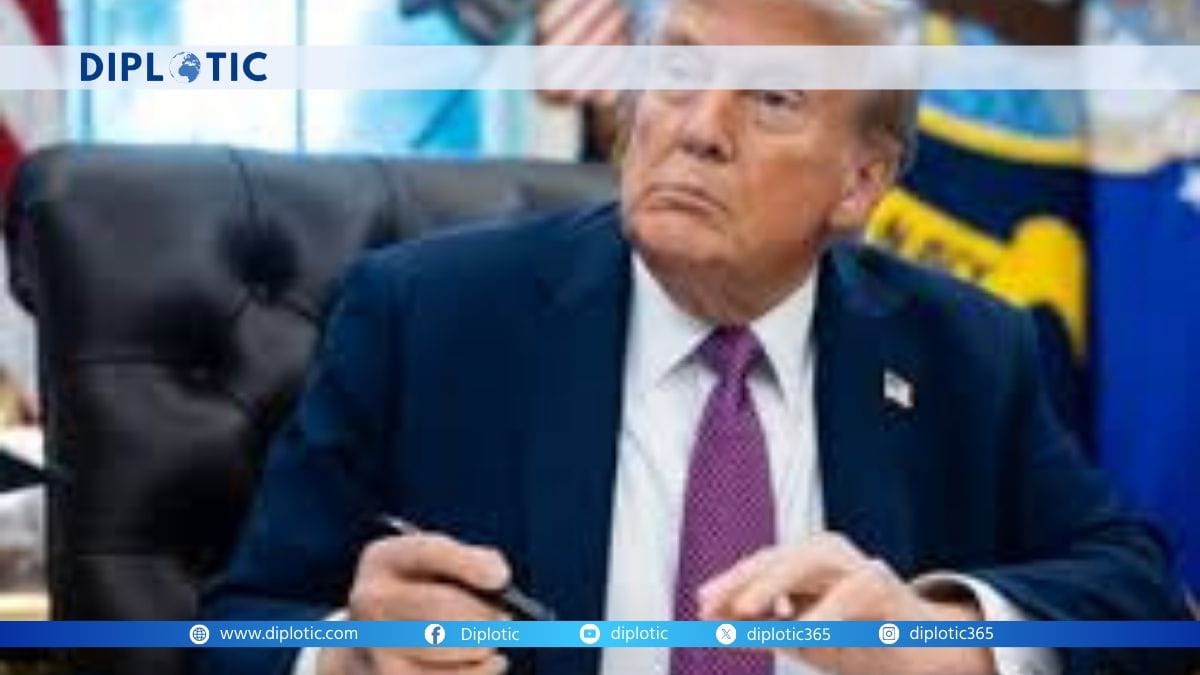
The unfinished war and Washington’s restless hand
When Donald Trump returned to the White House in January 2025, he promised to do what his predecessor could not—end the war in Ukraine quickly. Eight months later, the conflict continues without a clear path to resolution. On Sunday, Trump gave his clearest sign yet that he is preparing to escalate economic pressure on Russia. Asked if he was ready to move to “phase two” of sanctions, he answered simply: “Yeah, I am.” The words were brief, but they carried a signal of intent that both allies and adversaries were waiting to decode.
Trump’s frustration has been visible for months. He entered office arguing that his deal-making skills could bring Russian President Vladimir Putin to the table faster than years of Western diplomacy. Instead, Moscow has dug in, Kyiv remains defiant, and European leaders are watching American policy with growing unease.
The first stage of Trump’s pressure campaign leaned heavily on tariffs and selective energy restrictions. Most strikingly, Washington placed punitive tariffs on India’s exports to the United States, a move meant to squeeze one of Moscow’s key oil customers. Trump claimed this cost Russia “hundreds of billions of dollars,” though the numbers are disputed. For the White House, the logic was simple: punish those who keep buying Russian crude, and Moscow will eventually buckle.
Yet sanctions history suggests otherwise. From Iran to North Korea, embargoes have crippled economies but rarely forced regime concessions. In Russia’s case, a country with vast natural resources and deep ties to China, the risks are greater. If Trump pursues secondary sanctions against states that buy Russian oil, as his Treasury Secretary hinted, the policy could ignite new trade battles far beyond Eastern Europe. The White House may believe that this kind of shock therapy is necessary, but it is also a test of global patience.
A second phase built on old lessons and new risks
Sanctions have long been Washington’s favorite tool when diplomacy stalls. The United States used them aggressively during the Cold War and expanded their reach after the fall of the Soviet Union. Sanctions became a way to signal power without sending troops, a kind of economic warfare that could be adjusted or lifted as politics demanded. But their effectiveness has always been contested.
In the case of Russia, the first round of sanctions imposed after the annexation of Crimea in 2014 already revealed the limits of Western pressure. The Russian economy adapted, shifting trade toward Asia and creating financial mechanisms to bypass Western banks. China, India, and other buyers of discounted Russian oil have kept the Kremlin’s revenue streams alive. The Biden administration had tried to curb this through coordinated measures with Europe, including the oil price cap. Trump’s approach is more direct and more unpredictable—target not just Russia, but the countries that enable its survival.
This strategy raises a deeper question: is the U.S. prepared to sanction friends as well as rivals? India, a long-standing partner in Asia, has already felt the sting of Trump’s tariffs. If Washington extends this logic to other energy importers, even allies in the Middle East could face consequences. The message is clear—those who help Moscow will pay a price. But the danger is also clear—sanctions may weaken Western partnerships at a time when unity is most needed.
Economic historians remind us that broad embargoes often create black markets and new alliances. As the Encyclopedia Britannica explains, sanctions can produce unintended consequences, from strengthening authoritarian regimes internally to reshaping entire trade systems. Russia has already turned eastward with some success. The risk for Trump is that “phase two” could accelerate this process, creating a tighter Moscow-Beijing energy axis while alienating states Washington cannot afford to lose.
Energy markets and the global backlash
The global oil market is the battlefield on which this strategy will be tested. Russia remains one of the world’s top energy exporters. Efforts to choke off its revenues collide with the simple reality that many countries still need affordable crude. For India, discounted Russian oil is both an economic necessity and a political statement of independence. For China, it is a strategic opportunity to deepen ties with Moscow while securing stable supplies.
If Trump pushes ahead with secondary tariffs, the ripple effects could be severe. Energy prices could spike, particularly if buyers are forced to scramble for alternatives in already tight markets. Europe, which has reduced its Russian imports at great cost, may find itself once again exposed to volatility. Developing countries, already strained by debt and inflation, could face higher fuel bills and political unrest.
The irony is that Trump’s gamble depends on the very instability it may cause. Higher prices would hurt consumers everywhere, but the administration hopes they would also cut into Russia’s market share and weaken Putin’s war chest. The question is whether the collateral damage—strained alliances, economic disruptions, and a potential reshaping of global trade—will outweigh the gains.
Critics warn that sanctions without a clear diplomatic strategy are like pressure without direction. Moscow may bend under economic weight, or it may harden, finding new ways to survive. Putin has shown a willingness to absorb pain if it means projecting defiance. And for many states caught between U.S. demands and their own energy needs, the choice may be simple: adapt around Washington, rather than alongside it.
As one European diplomat put it recently, “Sanctions are only powerful if the world moves with you. Otherwise, they become noise.” The world is listening, but it is not yet clear how much it is willing to follow.
What comes next in the great sanctions experiment
Trump’s “phase two” talk is not yet policy. The White House has not published details, and the President’s remark may have been more signal than substance. Still, markets and capitals take such signals seriously. They suggest that the U.S. is preparing for a sharper confrontation with Russia’s economic lifelines, even if it means pushing partners into uncomfortable positions.
Looking ahead, the key question is not whether sanctions can hurt Russia—they can and already have—but whether they can force the political outcome Washington seeks. That outcome, an end to the war in Ukraine on terms acceptable to the West, remains elusive. Economic coercion may weaken Moscow, but it cannot by itself resolve territorial disputes, security guarantees, or the deeper clash of worldviews between Russia and the West.
The long-term impact may instead be felt in the structure of global trade. If sanctions expand, states may accelerate the creation of alternative payment systems and energy routes to reduce exposure to Washington’s leverage. This trend was already visible after 2014 and has only grown since. As one analyst noted in Britannica’s account of the Ukraine conflict, wars rarely reshape the world in isolation—it is the economic systems around them that carry the longer shadow.
Trump may see “phase two” as a necessary escalation to deliver results where diplomacy has failed. But it could also become the moment when sanctions cease to be a weapon of dominance and instead turn into a catalyst for a more fragmented, less U.S.-centric economic order. In trying to weaken Russia, Washington may discover it has forced the world to move away from its orbit faster than it anticipated.




