

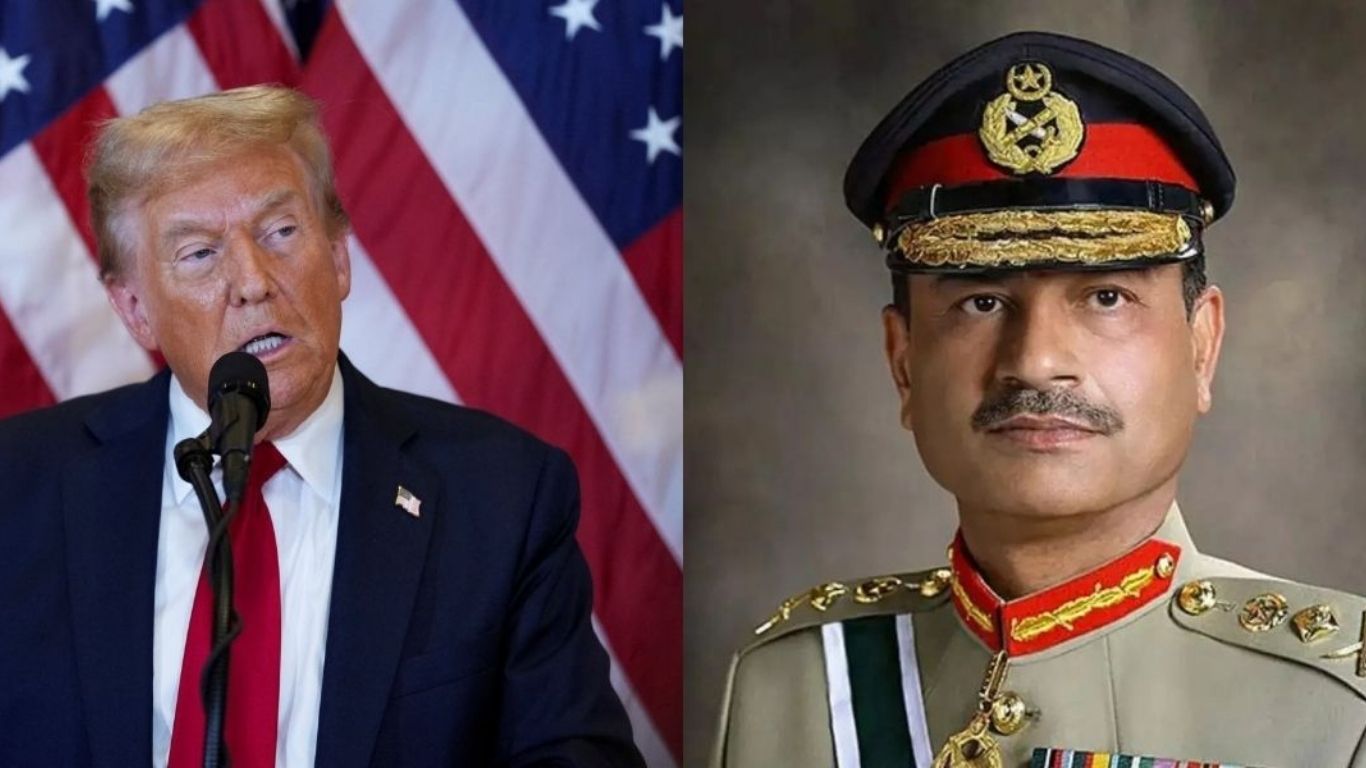
The recent White House lunch between Pakistan’s army chief, Field Marshal Asim Munir, and US President Donald Trump has sent ripples through South Asia’s diplomatic and strategic circles. For the first time in six years, a senior Pakistani official was hosted at the White House, signaling a potential recalibration of US priorities in the region. While this meeting does not herald a complete shift in American foreign policy, it does reflect a new deal-centric approach that could unsettle the delicate balance of power in South Asia, particularly for India.
A Transactional Turn in US Foreign Policy
Under former President Joe Biden, the US strategy in South Asia leaned heavily on India as a counterweight to China, emphasizing shared democratic values and a long-term Indo-Pacific vision. Trump’s administration, by contrast, is demonstrating a willingness to engage with adversaries and allies alike, favoring immediate economic and strategic interests over ideological alignment. The lunch with Munir is emblematic of this transactional approach, signaling flexibility and pragmatism rather than a wholesale change in direction.
For Islamabad, the meeting was a diplomatic coup. After years of limited engagement and being viewed in Washington as firmly within China’s sphere of influence, Pakistan is eager to reassert its relevance. Proposals on critical minerals and cryptocurrency areas that align with Trump’s business instincts highlight Pakistan’s calculated efforts to position itself as a potential economic partner in a world increasingly focused on resource security and digital innovation.
Pakistan’s Diplomatic Hedging
Pakistan’s outreach to the United States does not represent a break from Beijing. Instead, Islamabad is hedging its bets, seeking to capitalize on Trump’s deal-making instincts to expand its strategic options. This dual-track diplomacy could enhance Pakistan’s geopolitical leverage, but it also risks leaving the country caught between two superpowers with conflicting agendas.
China’s position in South and Central Asia is not easily dislodged. Its influence, cemented through the China-Pakistan Economic Corridor (CPEC) and decades of diplomatic support, is a fixture of its foreign policy. Islamabad’s renewed engagement with Washington is thus best understood as an attempt to diversify its partnerships rather than abandon its “iron brother.”
India’s Unease and Strategic Calculus
India, meanwhile, is watching these developments with growing concern. Prime Minister Narendra Modi’s recent phone call with Trump emphasizing India’s rejection of outside mediation on the Kashmir issue reflects New Delhi’s wariness of Pakistan’s re-entry into Washington’s orbit. The timing is especially sensitive, as India faces tough trade negotiations with the US over agricultural goods, automotive parts, and steel tariffs.
The looming July 9 deadline for reciprocal tariffs adds urgency to India’s efforts. If talks fail, India could face a US tariff of 26 percent, a stark contrast to Pakistan’s fast-moving negotiations, which are expected to wrap up soon to avoid a 29 percent tariff. This divergence highlights India’s challenge in remaining central to US policy under an administration focused on quick wins rather than long-term strategic alignment.
India’s frustration is palpable. After years of building closer ties with Washington, New Delhi now faces the prospect of being sidelined as Trump’s foreign policy prioritizes transactional engagement. Pakistan’s nomination of Trump for the Nobel Peace Prize further complicates the narrative for India, which has refused to acknowledge Trump’s role in halting its recent conflict with Pakistan.
Regional Implications and the China Factor
The US overture to Pakistan comes at a time when China’s influence in South Asia is stronger than ever, built on years of investment and diplomatic outreach to countries like Sri Lanka, Bangladesh, and Nepal. Pakistan’s ability to play both sides is tactically astute, but its deep ties to Beijing may ultimately limit how far it can align with Washington without compromising its core interests.
For India, the shifting dynamics may prompt a strategic reassessment. If the US continues to pursue a deal-driven approach, New Delhi could seek to diversify its partnerships, potentially deepening ties with other major powers or regional groupings to hedge against American unpredictability. This could lead to a more divided region, with India looking for new partners to deal with an unpredictable US, while China remains the most reliable player in South Asia.
The Road Ahead: Uncertainty and Realignment
The real question is whether Trump’s overtures towards Pakistan could force India to scale back its global ambitions and refocus on the shifting power dynamics in its immediate neighborhood. As the US signals a willingness to deal with all players, the region could see a realignment of alliances and a more complex web of partnerships.
While renewed US-Pakistan cooperation in counterterrorism and development is possible, it remains to be seen whether such efforts can deliver meaningful results in a region full of competing interests. The risks of transactional diplomacy are clear: it can introduce volatility, undermine long-term trust, and make it harder to build lasting partnerships.
Conclusion: A Delicate Balance at Risk
The US shift towards Pakistan may not represent a wholesale change in policy, but it is a clear sign of a more fluid and transactional approach to South Asia. For India, this means navigating a more unpredictable environment one where alliances are flexible, and strategic patience will be key to maintaining its influence in the region.
As Pakistan hedges its bets and the US pursues immediate gains, the South Asian balance of power is entering a period of uncertainty. India’s challenge will be to adapt to this evolving landscape without losing sight of its broader ambitions both as a regional power and as a key player in the Indo-Pacific. The coming months will reveal whether this new phase of US-Pakistan engagement marks a temporary adjustment or a deeper realignment in South Asian geopolitics.




