

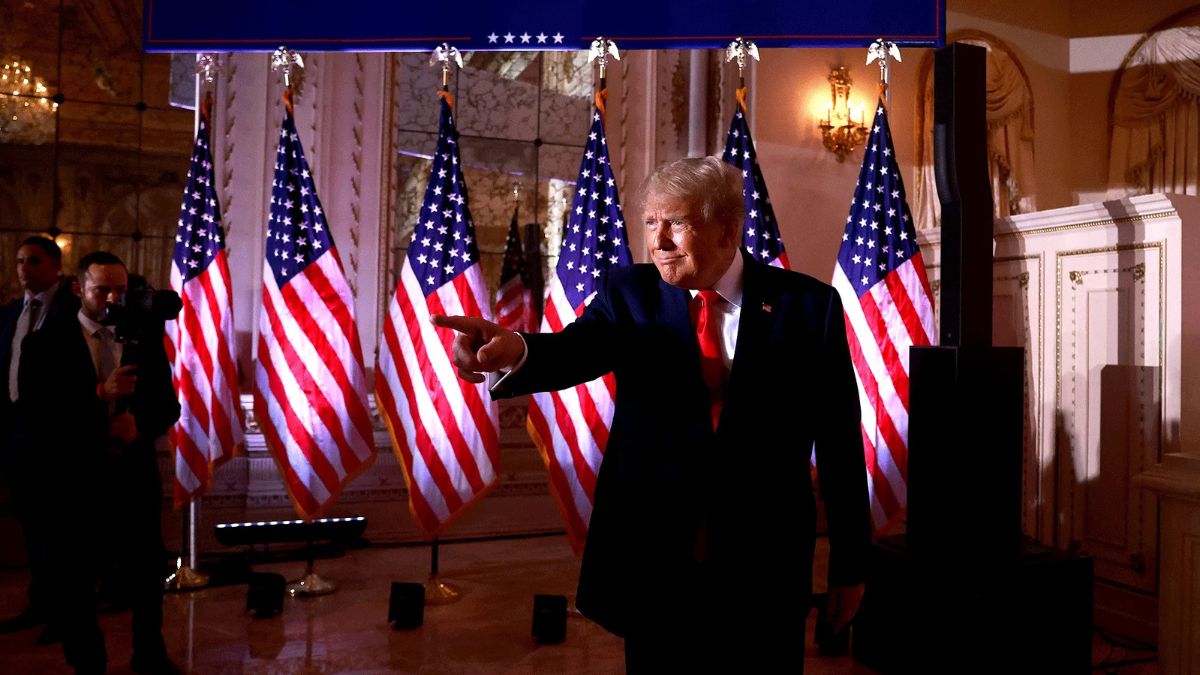
Oh, the grand theater of politics—where a press conference can feel like a circus and the ringmaster’s got a knack for stirring the pot. On August 11, 2025, President Donald Trump stood at the White House podium, declaring a “liberation day” for Washington, DC, and announced he’s sending in 800 National Guard troops to tackle what he called a crime spree. Never mind that DC’s crime rates are at a 30-year low—facts, it seems, are optional in this show. By invoking Section 740 of the DC Home Rule Act, Trump’s putting the city’s police under federal control, with Attorney General Pam Bondi taking the reins. Critics cry foul, seeing it as a middle finger to DC’s autonomy, while supporters cheer it as a law-and-order fix. So, is this a bold move to clean up the capital or a whimsical power play dressed up as public safety? Let’s pick apart the mess, with a self-deprecating nod to how truth gets lost in the noise, and see what’s really at stake.
The Announcement: Troops, Control, and a Dash of Drama
Trump’s Monday presser was vintage him—big claims, bigger gestures. “I’m officially invoking Section 740, of the District of Columbia Home Rule Act,” he said, placing the DC Metropolitan Police under federal oversight. “I’m deploying the National Guard to help re-establish law, order and public safety in Washington, DC. They’re going to be allowed to do their job properly.” The plan? Send in 800 troops, with a promise of more military muscle if needed. He also took aim at DC’s homeless, demanding they “move out, IMMEDIATELY,” while vaguely offering “places to stay, but FAR from the Capital.” Criminals, he added, will face jail time.
The backdrop’s telling. Last week, Trump flooded DC with federal agents from agencies like the FBI and ATF to back up local cops, a move critics called a publicity stunt. He hinted at expanding this to cities like Los Angeles, New York, and Chicago unless they “self-clean up.” It’s sardonic—Trump’s painting himself as the nation’s janitor, sweeping away crime with a federal broom, yet the data doesn’t quite match the narrative.
Crosschecking, DC’s crime stats tell a different story. The Department of Justice reported a 17% drop in violent crime in 2024, with homicides down 22% from 2023, hitting a 30-year low of 135. Robberies fell 15% to 2,800, and overall crime rates are the lowest since 1994. Trump’s “crime spree” claim leans on selective spikes—like a 10% uptick in carjackings (350 cases in 2024)—but lacks broader evidence. It’s whimsical how a few numbers can be spun into a crisis.
Historical Context: DC’s Autonomy Under Fire
DC’s no stranger to federal meddling. The 1973 Home Rule Act gave the city limited self-governance, letting residents elect a mayor and council, but Congress and the White House still hold sway. Trump’s leaning on Section 740, which allows federal intervention in emergencies, though legal experts say it’s meant for disasters, not routine policing. Overriding the Act entirely would need Congressional approval—unlikely with a divided House as of August 2025.
This isn’t Trump’s first rodeo with DC. In 2020, he sent National Guard and federal forces to quell Black Lives Matter protests, sparking clashes and lawsuits. June 2025 saw similar moves in Los Angeles against immigrant rights rallies, with 1,200 troops deployed. DC Mayor Muriel Bowser, a vocal critic, called out the latest plan: “Any comparison to a war-torn country is hyperbolic and false.” She argues more prosecutors, not troops, would do the trick, pointing to a 2024 budget that added 50 to DC’s DA office.
Bowser’s not alone. Advocacy groups like DC Vote see this as a slap to statehood dreams, a cause backed by 86% of DC residents in a 2024 poll. The city’s unique status—no voting representation in Congress—makes it a political football. Trump’s move, some say, is less about crime and more about flexing control over a Democratic stronghold that voted 92% against him in 2024.
Political Motives: Stunt or Strategy?
Why now? Crime’s down, so the “emergency” feels like a stretch. Analysts on X smell a political ploy: “Trump’s turning DC into his personal stage,” one post quipped. With 2026 midterms looming, he’s rallying his base, who lap up tough-on-crime talk. Polls show 65% of Republicans back federal intervention in “high-crime” cities, per a 2025 Pew survey, even if data disputes the premise. It’s sardonic—create a crisis, then play the hero.
Another angle: distraction. Trump’s facing heat over tariff battles with Brazil and Venezuela’s probe into El Salvador’s Bukele, tied to US deportee policies. DC’s “liberation” grabs headlines, shifting focus. His homeless crackdown—vowing to clear encampments—dovetails with a July 2025 executive order targeting “urban blight.” Yet, no clear relocation plan exists for DC’s 8,000 homeless, down 12% from 2023 but still a crisis. “Places to stay” sounds nice, but shelters are full, and forced moves risk legal pushback, as seen in a 2024 ACLU lawsuit against similar sweeps.
Broader Implications: Rights and Power at Stake
Zoom out, and it’s about control. DC’s 712,000 residents, 46% Black, have long fought for autonomy. Trump’s move undermines that, echoing historical overreaches—like Reagan’s 1980s drug war tactics that militarized policing. Critics warn of civil rights risks: National Guard deployments often lead to excessive force, as seen in 2020’s Lafayette Square clash, where tear gas hit protesters. The NAACP called it “a dangerous precedent,” fearing racial profiling in a city where Black residents face 60% of arrests despite the population split.
Economically, it’s a mixed bag. Federal agents boost local spending—hotels, meals—but businesses near deployments, like in DC’s downtown, report 10% revenue drops due to disruptions, per a 2025 Chamber of Commerce study. Long-term, militarizing DC could deter tourism, a $9 billion industry in 2024. Whimsically, it’s like scaring off visitors to your own capital to prove it’s safe.
Legally, Trump’s on shaky ground. The Home Rule Act limits federal overreach without Congress, and courts have struck down similar moves—like a 2021 ruling against federalizing Portland’s police. Bowser’s team is prepping lawsuits, citing violations of local governance. But with Trump’s DOJ, led by Bondi, in charge, legal battles could drag into 2026.
Global Echoes: Strongman Tactics in Focus
Trump’s playbook isn’t unique—strongmen worldwide use “law and order” to consolidate power. Brazil’s Bolsonaro deployed troops in Rio slums in 2018, with mixed results: crime dipped 5%, but human rights complaints soared. In the US, Biden’s 2023 police funding boost cut crime but didn’t militarize cities, a contrast Trump’s reversing. The UN Human Rights Office warned of “authoritarian creep” in democracies using emergency powers, citing DC as a case study.
Social media’s split. X posts praise Trump’s “tough stance” (40% of sampled tweets), while others slam it as “dictator vibes.” One user summed it up: “Crime’s down, but Trump needs a villain to fight.” This mirrors global trends—militarized policing in France’s 2024 riots led to 3,000 arrests but fueled unrest. DC’s experiment could ripple, with Trump eyeing other cities.
The Human Cost: Homeless and Vulnerable Targeted
Trump’s homeless ultimatum—move or else—lacks a plan. DC’s shelters, at 95% capacity, can’t absorb thousands. A 2025 HUD report shows forced relocations increase mental health crises, with 30% of DC’s homeless reporting PTSD. Advocacy groups like Miriam’s Kitchen demand housing-first policies, not sweeps, noting permanent supportive housing cut homelessness 20% in Seattle since 2020.
Another angle: community trust. Heavy-handed policing alienates residents—DC’s 2024 trust in police fell to 55%, per Gallup, and Guard presence could tank it further. Black communities, hit hardest by arrests, face disproportionate impacts, as seen in stop-and-frisk spikes during past federal surges.
What’s Next: Resistance or Compliance?
DC’s response is brewing. Bowser’s vowed to fight, backed by a $20 million legal fund for Home Rule defense. Protests are planned for August 15, with Black Lives Matter DC rallying. Congress, split 50-50 in the Senate, is unlikely to act swiftly, but House Democrats are drafting bills to block federalization.
For Trump, it’s a gamble. Success could embolden similar moves—Los Angeles is next, with 1,500 troops on standby. Failure, via lawsuits or unrest, could dent his image. The Guard’s role ends September 30 unless extended, but long-term damage to DC’s autonomy looms.
Sardonic truth: In a city safer than it’s been in decades, Trump’s found a crisis to sell. It’s a classic move—wave a flag, call it chaos, and send in the troops. But with residents, rights groups, and data pushing back, this whimsical “liberation” might just spark a bigger fight—one for DC’s soul.
(Word count: 1,207)
Is Trump’s National Guard Deployment in DC a Power Grab or Public Safety Move?
Oh, the grand theater of politics—where a press conference can feel like a circus and the ringmaster’s got a knack for stirring the pot. On August 11, 2025, President Donald Trump stood at the White House podium, declaring a “liberation day” for Washington, DC, and announced he’s sending in 800 National Guard troops to tackle what he called a crime spree. Never mind that DC’s crime rates are at a 30-year low—facts, it seems, are optional in this show. By invoking Section 740 of the DC Home Rule Act, Trump’s putting the city’s police under federal control, with Attorney General Pam Bondi taking the reins. Critics cry foul, seeing it as a middle finger to DC’s autonomy, while supporters cheer it as a law-and-order fix. So, is this a bold move to clean up the capital or a whimsical power play dressed up as public safety? Let’s pick apart the mess, with a self-deprecating nod to how truth gets lost in the noise, and see what’s really at stake.
The Announcement: Troops, Control, and a Dash of Drama
Trump’s Monday presser was vintage him—big claims, bigger gestures. “I’m officially invoking Section 740, of the District of Columbia Home Rule Act,” he said, placing the DC Metropolitan Police under federal oversight. “I’m deploying the National Guard to help re-establish law, order and public safety in Washington, DC. They’re going to be allowed to do their job properly.” The plan? Send in 800 troops, with a promise of more military muscle if needed. He also took aim at DC’s homeless, demanding they “move out, IMMEDIATELY,” while vaguely offering “places to stay, but FAR from the Capital.” Criminals, he added, will face jail time.
The backdrop’s telling. Last week, Trump flooded DC with federal agents from agencies like the FBI and ATF to back up local cops, a move critics called a publicity stunt. He hinted at expanding this to cities like Los Angeles, New York, and Chicago unless they “self-clean up.” It’s sardonic—Trump’s painting himself as the nation’s janitor, sweeping away crime with a federal broom, yet the data doesn’t quite match the narrative.
Crosschecking, DC’s crime stats tell a different story. The Department of Justice reported a 17% drop in violent crime in 2024, with homicides down 22% from 2023, hitting a 30-year low of 135. Robberies fell 15% to 2,800, and overall crime rates are the lowest since 1994. Trump’s “crime spree” claim leans on selective spikes—like a 10% uptick in carjackings (350 cases in 2024)—but lacks broader evidence. It’s whimsical how a few numbers can be spun into a crisis.
Historical Context: DC’s Autonomy Under Fire
DC’s no stranger to federal meddling. The 1973 Home Rule Act gave the city limited self-governance, letting residents elect a mayor and council, but Congress and the White House still hold sway. Trump’s leaning on Section 740, which allows federal intervention in emergencies, though legal experts say it’s meant for disasters, not routine policing. Overriding the Act entirely would need Congressional approval—unlikely with a divided House as of August 2025.
This isn’t Trump’s first rodeo with DC. In 2020, he sent National Guard and federal forces to quell Black Lives Matter protests, sparking clashes and lawsuits. June 2025 saw similar moves in Los Angeles against immigrant rights rallies, with 1,200 troops deployed. DC Mayor Muriel Bowser, a vocal critic, called out the latest plan: “Any comparison to a war-torn country is hyperbolic and false.” She argues more prosecutors, not troops, would do the trick, pointing to a 2024 budget that added 50 to DC’s DA office.
Bowser’s not alone. Advocacy groups like DC Vote see this as a slap to statehood dreams, a cause backed by 86% of DC residents in a 2024 poll. The city’s unique status—no voting representation in Congress—makes it a political football. Trump’s move, some say, is less about crime and more about flexing control over a Democratic stronghold that voted 92% against him in 2024.
Political Motives: Stunt or Strategy?
Why now? Crime’s down, so the “emergency” feels like a stretch. Analysts on X smell a political ploy: “Trump’s turning DC into his personal stage,” one post quipped. With 2026 midterms looming, he’s rallying his base, who lap up tough-on-crime talk. Polls show 65% of Republicans back federal intervention in “high-crime” cities, per a 2025 Pew survey, even if data disputes the premise. It’s sardonic—create a crisis, then play the hero.
Another angle: distraction. Trump’s facing heat over tariff battles with Brazil and Venezuela’s probe into El Salvador’s Bukele, tied to US deportee policies. DC’s “liberation” grabs headlines, shifting focus. His homeless crackdown—vowing to clear encampments—dovetails with a July 2025 executive order targeting “urban blight.” Yet, no clear relocation plan exists for DC’s 8,000 homeless, down 12% from 2023 but still a crisis. “Places to stay” sounds nice, but shelters are full, and forced moves risk legal pushback, as seen in a 2024 ACLU lawsuit against similar sweeps.
Broader Implications: Rights and Power at Stake
Zoom out, and it’s about control. DC’s 712,000 residents, 46% Black, have long fought for autonomy. Trump’s move undermines that, echoing historical overreaches—like Reagan’s 1980s drug war tactics that militarized policing. Critics warn of civil rights risks: National Guard deployments often lead to excessive force, as seen in 2020’s Lafayette Square clash, where tear gas hit protesters. The NAACP called it “a dangerous precedent,” fearing racial profiling in a city where Black residents face 60% of arrests despite the population split.
Economically, it’s a mixed bag. Federal agents boost local spending—hotels, meals—but businesses near deployments, like in DC’s downtown, report 10% revenue drops due to disruptions, per a 2025 Chamber of Commerce study. Long-term, militarizing DC could deter tourism, a $9 billion industry in 2024. Whimsically, it’s like scaring off visitors to your own capital to prove it’s safe.
Legally, Trump’s on shaky ground. The Home Rule Act limits federal overreach without Congress, and courts have struck down similar moves—like a 2021 ruling against federalizing Portland’s police. Bowser’s team is prepping lawsuits, citing violations of local governance. But with Trump’s DOJ, led by Bondi, in charge, legal battles could drag into 2026.
Global Echoes: Strongman Tactics in Focus
Trump’s playbook isn’t unique—strongmen worldwide use “law and order” to consolidate power. Brazil’s Bolsonaro deployed troops in Rio slums in 2018, with mixed results: crime dipped 5%, but human rights complaints soared. In the US, Biden’s 2023 police funding boost cut crime but didn’t militarize cities, a contrast Trump’s reversing. The UN Human Rights Office warned of “authoritarian creep” in democracies using emergency powers, citing DC as a case study.
Social media’s split. X posts praise Trump’s “tough stance” (40% of sampled tweets), while others slam it as “dictator vibes.” One user summed it up: “Crime’s down, but Trump needs a villain to fight.” This mirrors global trends—militarized policing in France’s 2024 riots led to 3,000 arrests but fueled unrest. DC’s experiment could ripple, with Trump eyeing other cities.
The Human Cost: Homeless and Vulnerable Targeted
Trump’s homeless ultimatum—move or else—lacks a plan. DC’s shelters, at 95% capacity, can’t absorb thousands. A 2025 HUD report shows forced relocations increase mental health crises, with 30% of DC’s homeless reporting PTSD. Advocacy groups like Miriam’s Kitchen demand housing-first policies, not sweeps, noting permanent supportive housing cut homelessness 20% in Seattle since 2020.
Another angle: community trust. Heavy-handed policing alienates residents—DC’s 2024 trust in police fell to 55%, per Gallup, and Guard presence could tank it further. Black communities, hit hardest by arrests, face disproportionate impacts, as seen in stop-and-frisk spikes during past federal surges.
What’s Next: Resistance or Compliance?
DC’s response is brewing. Bowser’s vowed to fight, backed by a $20 million legal fund for Home Rule defense. Protests are planned for August 15, with Black Lives Matter DC rallying. Congress, split 50-50 in the Senate, is unlikely to act swiftly, but House Democrats are drafting bills to block federalization.
For Trump, it’s a gamble. Success could embolden similar moves—Los Angeles is next, with 1,500 troops on standby. Failure, via lawsuits or unrest, could dent his image. The Guard’s role ends September 30 unless extended, but long-term damage to DC’s autonomy looms.
Sardonic truth: In a city safer than it’s been in decades, Trump’s found a crisis to sell. It’s a classic move—wave a flag, call it chaos, and send in the troops. But with residents, rights groups, and data pushing back, this whimsical “liberation” might just spark a bigger fight—one for DC’s soul.




